Clear Sky Science · en
Integrating fruit and seed traits to support the conservation of the threatened tree Stephanopodium engleri
A Rare Tree Fighting to Survive
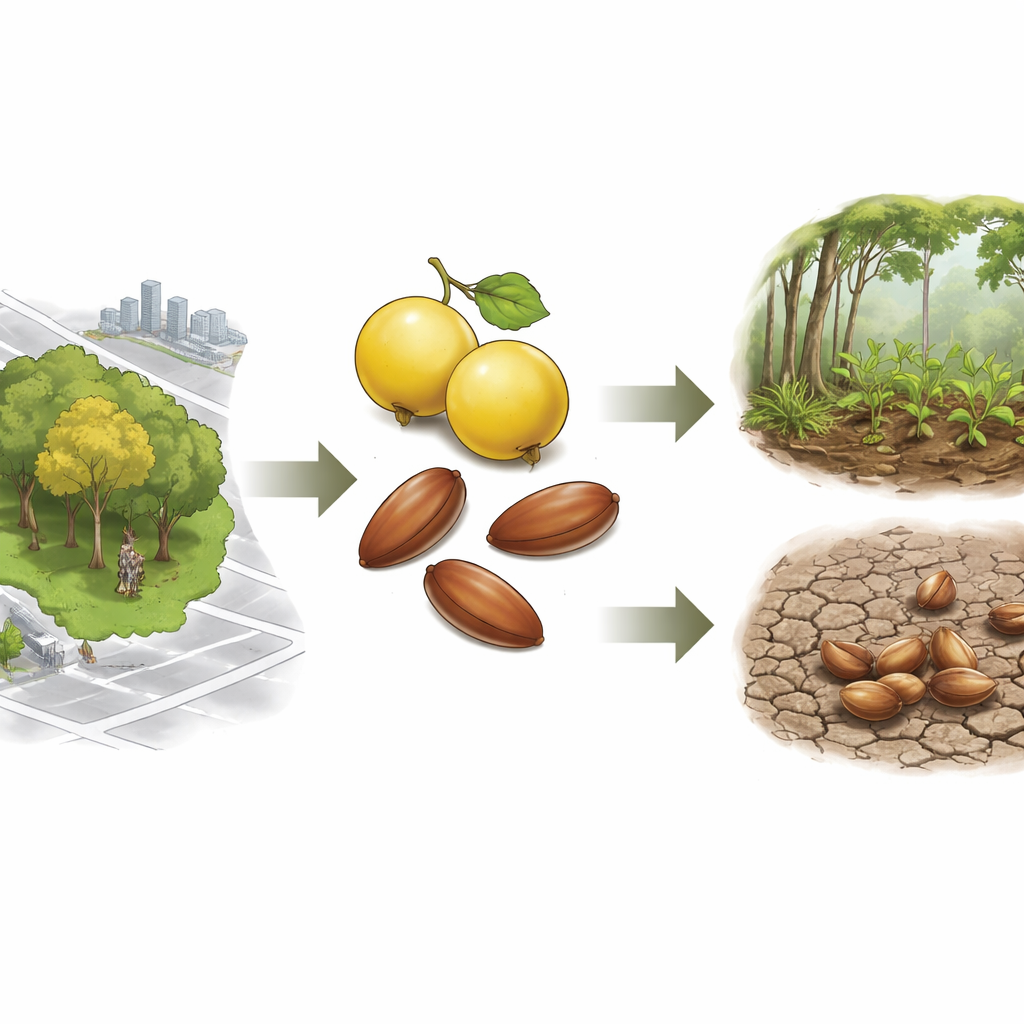
In a small corner of Brazil, a little-known tree is quietly struggling for survival. Stephanopodium engleri lives only in a few patches of semideciduous forest in the Quadrilátero Ferrífero, a region increasingly carved up by cities and mines. Because so few adult trees remain, every fruit and seed this species produces matters. This study looks closely at those fruits and seeds—how they are built, how they sprout, and how they cope with drying out—to figure out how we might keep this threatened tree from disappearing.
Where This Tree Lives and Why It Matters
Stephanopodium engleri is found nowhere else on Earth. Its known range covers less than 5,000 square kilometers, and the actual area it occupies is even smaller. Much of its habitat has been cleared or degraded, and only a handful of mature trees capable of bearing fruit are known in the wild. For conservationists, that makes basic information—what the fruits look like, how many seeds they have, and how those seeds behave—crucial. Without it, it is nearly impossible to collect, store, and grow new plants for restoration projects or living collections.
What the Fruits and Seeds Look Like
The researchers collected ripe fruits from 18 adult trees during the dry season and measured 300 of them in detail. The tree produces small, fleshy, yellow drupes that usually contain two internal chambers. In practice, about half of the fruits held two seeds and half just one. Both fruits and seeds showed surprisingly little variation in size, suggesting a fairly uniform reproductive strategy. Under the skin, the seed coat is fibrous and parchment-like, but it is thinner and more permeable at a small scar where the seed was attached to the fruit. That weak spot acts as a controlled gateway for water and air, helping the seed take up moisture when conditions are right.
Hidden Food Stores Power Fast Starts
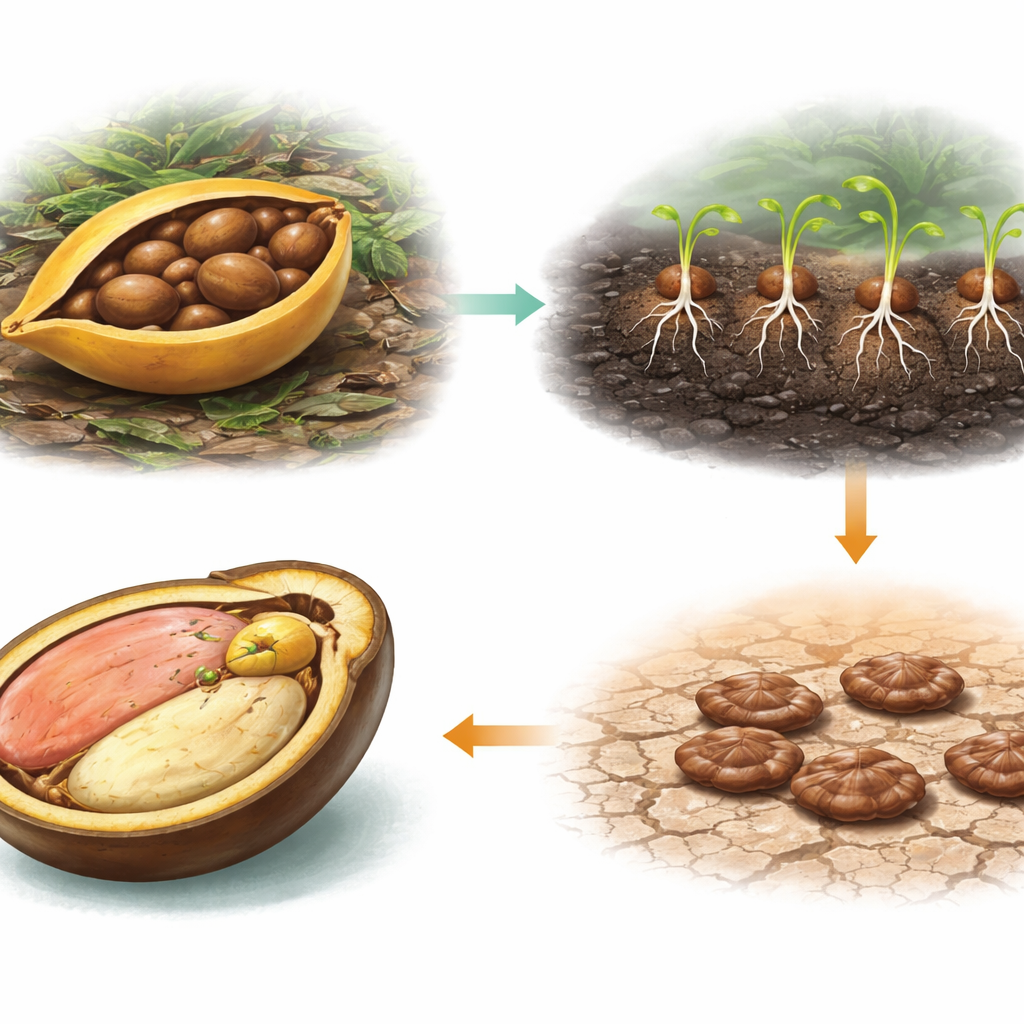
Microscope and staining techniques revealed that the inside of each seed is packed with energy reserves. The fleshy seed leaves and the endosperm contain abundant starch, proteins, lipids, and protective chemical compounds. These reserves act as a built‑in food supply that can be quickly mobilized to fuel root and leaf growth as soon as the seed absorbs water. In practice, fresh seeds germinated rapidly and almost all at once: about 92 percent sprouted in roughly 12 days at moderate temperature. Seedlings emerged vigorously, relying on the seed’s reserves for their first days and weeks in the shaded forest floor.
Seeds That Cannot Wait
The same traits that allow this tree to “hit the ground running” also make its seeds fragile. Fresh seeds had a high water content and were fully ready to germinate as soon as they were dispersed—there was no built‑in waiting period. When the team gently dried the seeds and stored them at room conditions for a total of 90 days, the moisture content dropped by roughly half and germination fell to zero. Not a single stored seed sprouted. This behavior, known as recalcitrance, means the seeds cannot survive much drying or prolonged storage, unlike the long‑lived seeds of many crop plants that can sit in seed banks for years.
What This Means for Saving the Species
For Stephanopodium engleri, survival depends on a narrow set of conditions: seeds must fall into moist, relatively undisturbed forest, stay hydrated through the dry season under leaf litter, and germinate quickly as rains return. Dry soils or damaged habitats can kill seeds before they ever sprout, effectively shrinking the tree’s already tiny range to the wettest, best‑preserved forest patches. The study shows that standard dry seed banking will not work for this species. Instead, conservation will need to rely on short‑term storage under cool, humid conditions, the use of moist substrates, and more advanced options such as cryopreserving embryos or maintaining living collections. By understanding the intimate link between this tree’s fruit and seed traits and its environment, the researchers outline practical paths to keep S. engleri from vanishing altogether.
Citation: Costa, K.J.A., Vieira, E.A., Escobar, D.F. et al. Integrating fruit and seed traits to support the conservation of the threatened tree Stephanopodium engleri. Sci Rep 16, 9899 (2026). https://doi.org/10.1038/s41598-026-39592-3
Keywords: seed conservation, endangered trees, tropical forests, recalcitrant seeds, germination biology