Clear Sky Science · en
Accurately identifying cirrhosis and its complications to create the novel statewide Indiana digital cirrhosis registry
Why finding the right patients matters
Cirrhosis, or advanced scarring of the liver, has quietly become a leading cause of death and a major driver of hospital costs in the United States. To improve care, researchers need to study very large groups of real patients over many years. That is only possible if computers can reliably pick out who actually has cirrhosis from millions of electronic records. This study explains how scientists in Indiana built and tested a smarter way to do that, and how it led to a new statewide cirrhosis registry that will fuel future research.
Big data and a common problem
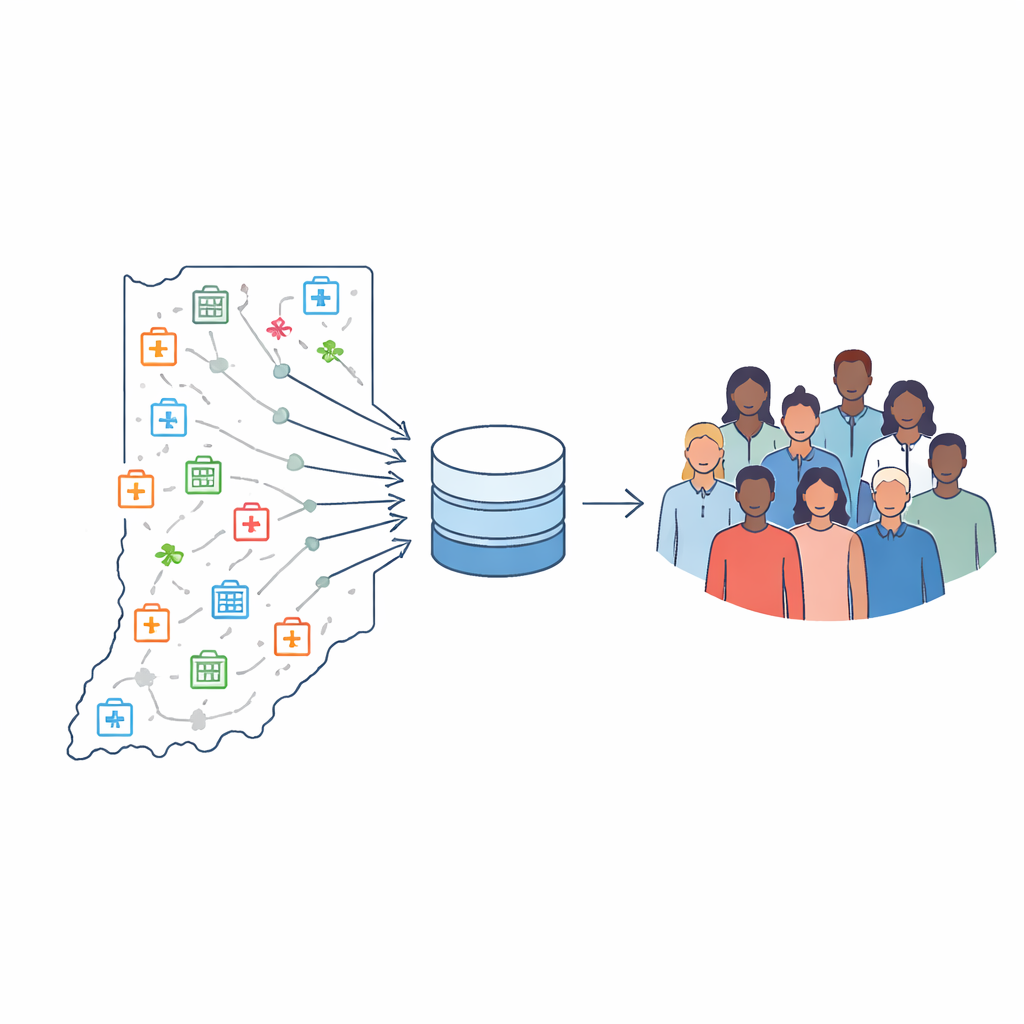
Modern health systems store enormous amounts of information, from diagnosis codes and lab results to medication lists. Most large studies of cirrhosis lean on billing codes known as ICD-10 to decide who has the disease. But earlier work showed that using codes alone can be unreliable: some people are wrongly labeled as having cirrhosis, while others are missed entirely, especially if they have milder disease without obvious complications. This uncertainty makes it harder to trust research findings and to design better policies or treatments.
Building a smarter checklist
The research team tapped into the Indiana Network for Patient Care, a health information exchange covering roughly two-thirds of the state’s residents and spanning more than 100 hospitals and clinics. They grouped patients’ records into four simple buckets: those with cirrhosis diagnosis codes; those with blood test patterns strongly suggesting liver scarring; those with codes for serious cirrhosis-related problems such as fluid in the abdomen or confusion; and those with codes or tests pointing to causes of liver damage, such as viral hepatitis, alcohol, or fatty liver disease. From these building blocks they created combinations—like “diagnosis code plus complication plus cause of liver disease”—and asked which combinations most often corresponded to true cirrhosis when charts were reviewed by liver specialists.
Testing the approach in the real world
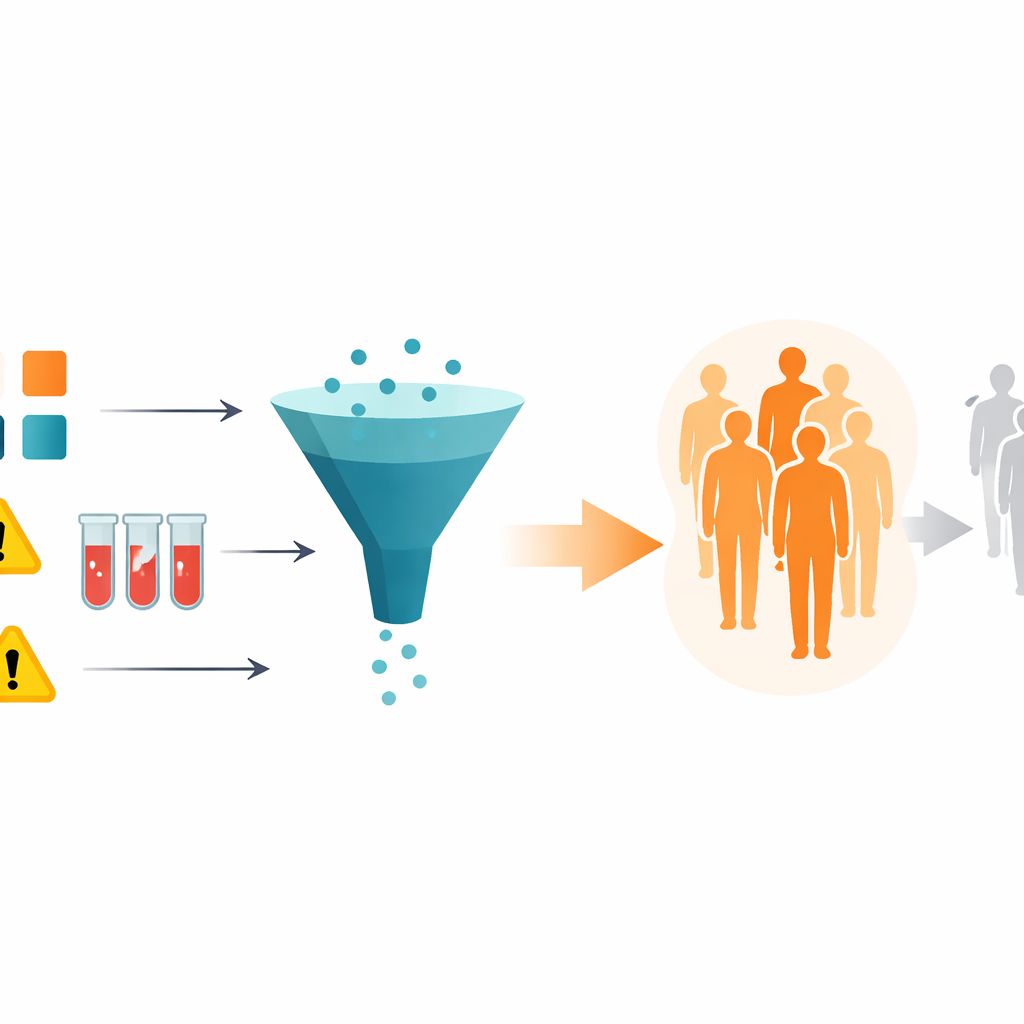
To judge accuracy, the team manually reviewed more than 700 detailed medical charts and compared their own expert judgment with what each code combination predicted. They focused on the “AX” family of rules: any patient with a cirrhosis diagnosis code plus at least one other signal (a risky lab pattern, a complication, or an underlying cause). Overall, these AX rules correctly identified cirrhosis about 86 percent of the time. Combinations that included a diagnosis code, a complication, and a cause of liver disease—sometimes also adding high-risk lab scores—performed best, with correctness often above 90 percent. Importantly, some combinations that did not rely on obvious complications still did well, meaning the method can find both early, compensated cirrhosis and more advanced disease.
Limits of codes for serious complications
The researchers also examined how well electronic records could spot two dangerous complications: confusion caused by liver toxins (hepatic encephalopathy) and fluid buildup in the abdomen (ascites). Here, simple diagnosis codes performed poorly. For ascites, only a little more than half of patients flagged by codes truly had cirrhosis-related fluid accumulation when charts were checked. For encephalopathy, pairing diagnosis codes with prescriptions for drugs commonly used to treat the condition, such as lactulose or rifaximin, improved correctness but still fell short of ideal levels. These findings echo prior studies and suggest that more sophisticated tools, such as computer analysis of doctors’ notes, will be needed to reliably track such events.
What this means for patients and future research
In plain terms, the study shows that combining different pieces of routine health data—diagnosis codes, blood tests, and underlying causes of liver damage—creates a far more dependable way to find people with cirrhosis in large databases than using codes alone. These practical rules can be used immediately by health systems, insurers, and researchers without advanced artificial intelligence or complex software. Using them, the team built the Indiana Digital Cirrhosis Cohort, a statewide registry of more than 14,000 individuals with both early and advanced cirrhosis. Over time, this resource should help answer pressing questions about who develops complications, how treatments perform in everyday practice, and how to reduce hospitalizations and deaths from chronic liver disease.
Citation: Desai, A.P., Shamseddeen, H., Lembcke, L. et al. Accurately identifying cirrhosis and its complications to create the novel statewide Indiana digital cirrhosis registry. Sci Rep 16, 10093 (2026). https://doi.org/10.1038/s41598-026-39585-2
Keywords: cirrhosis, electronic health records, ICD-10 algorithms, disease registries, hepatic complications