Clear Sky Science · en
Short-term effects of meteorological factors on hand, foot, and mouth disease in Zhengzhou, China
Why Weather Matters for a Childhood Illness
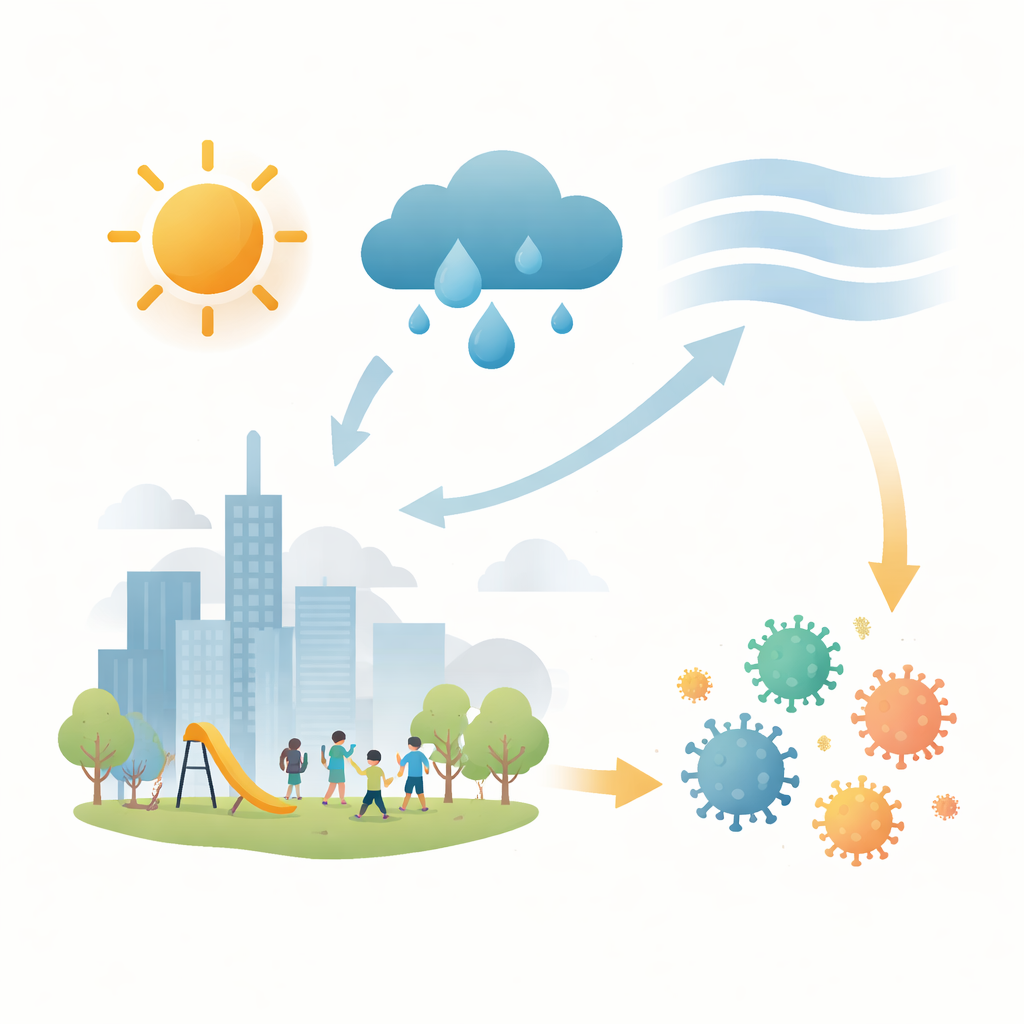
Parents usually think of hand, foot, and mouth disease as an unavoidable childhood infection that sweeps through daycare centers every spring. But this study from Zhengzhou, a large city in central China, shows that the timing and intensity of these outbreaks are closely tied to everyday weather. By tracking more than a decade of cases alongside temperature, humidity, and air pressure, the researchers reveal how certain combinations of warm, damp, high-pressure days can quietly set the stage for bigger waves of illness—and how this knowledge can be turned into earlier warnings and smarter prevention.
A Long Look at Illness Across the Seasons
The team analyzed reported hand, foot, and mouth disease (HFMD) cases in Zhengzhou from 2009 to 2023, along with daily records of temperature, relative humidity, and atmospheric pressure. HFMD mainly strikes young children and usually causes mild rash and fever, but it can sometimes lead to serious complications. Over these 15 years the city experienced repeated outbreaks, with the highest overall illness rate in 2016 and a clear seasonal rhythm: a major surge in late spring and early summer, often followed by a smaller bump in the fall. During the COVID-19 pandemic, when mask use and distancing were common, HFMD cases dropped sharply and the usual pattern changed, underscoring how human behavior and public health measures interact with the environment.
Reading the Weather’s Hidden Signals
To go beyond simple correlations, the researchers used a statistical approach that can capture both curved (nonlinear) relationships and delayed effects over several days. They found that HFMD risk followed a U-shaped curve with temperature: very cold and very hot days tended to be less risky than moderately warm days, with the highest risk around 27 degrees Celsius. For humidity, levels below the local median generally appeared protective, while risk climbed as the air became more moist, peaking near 83% relative humidity before tapering off. Atmospheric pressure showed yet another pattern: higher pressure was steadily linked to greater HFMD risk, with the strongest effects at the upper end of the city’s usual pressure range.
When Today’s Weather Shapes Tomorrow’s Illness
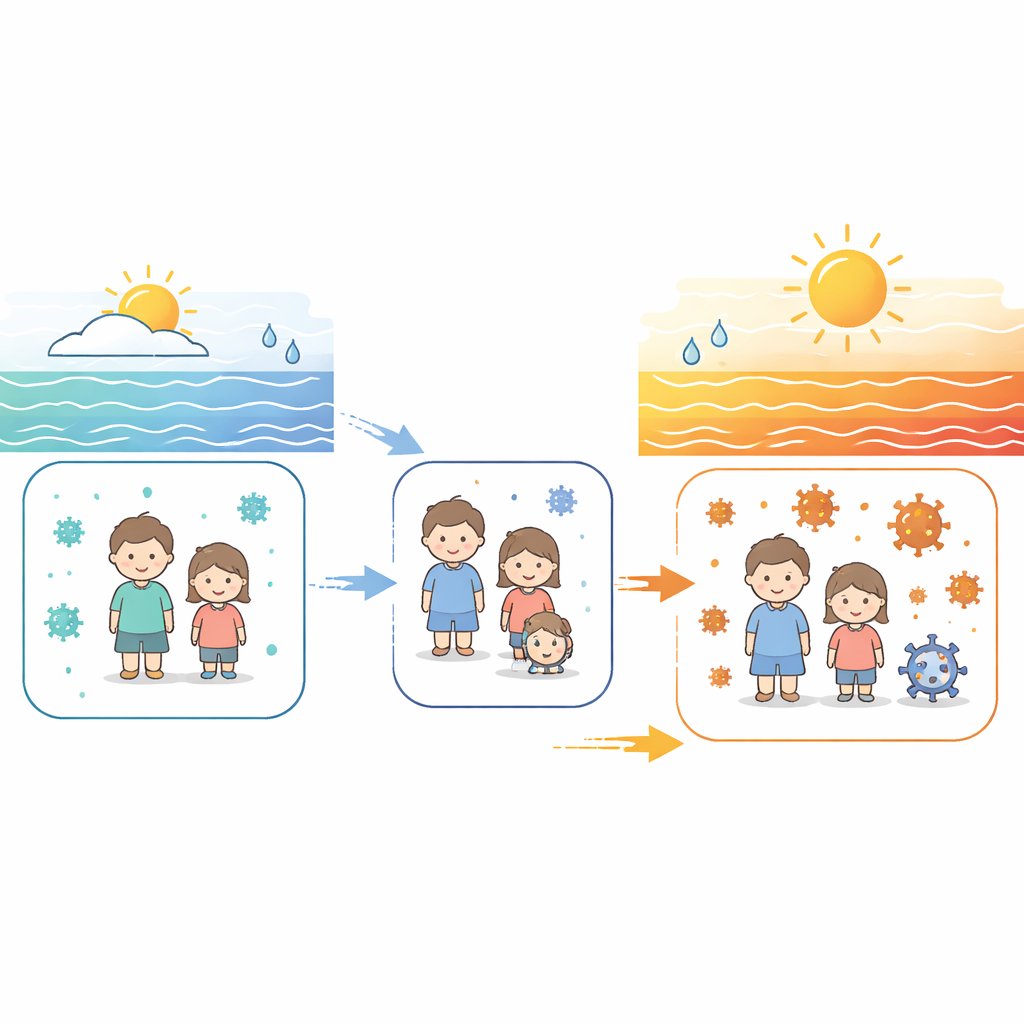
Crucially, the study shows that weather does not affect disease instantly. Instead, temperature, humidity, and pressure exert their influence over about 10 days, reflecting how long viruses can survive in the environment and how person-to-person spread unfolds. Cooler, drier, lower-pressure periods tended to offer protection when their effects were added up over this window. In contrast, stretches of unusually warm, humid, high-pressure weather raised the chance of more cases, even if the risk on any single day seemed modest. Extreme conditions told a similar story: prolonged cold and very low humidity were linked to fewer cases, while sustained heat and high humidity increased risk, though the impact of extremely damp air was more short-lived.
From Climate Clues to Early Warnings
These weather–disease links held up even after accounting for the fact that temperature, humidity, and pressure are naturally intertwined. The findings suggest that HFMD risk in Zhengzhou rises when the environment is relatively warm, moist, and under high pressure, especially in late spring and summer. Because these conditions can be forecast days in advance, health authorities could use them as triggers to step up cleaning in schools and childcare centers, remind families about handwashing and keeping sick children home, and prepare clinics for a possible uptick in cases. At the same time, recognizing that cold, dry spells are lower-risk periods can help focus resources where they are most needed.
What This Means for Parents and Public Health
In plain terms, the study concludes that ordinary weather—especially warm, humid, high-pressure days and short runs of extreme heat or moisture—plays a meaningful role in how often children get hand, foot, and mouth disease. The disease does not simply "arrive" each year; it is nudged along by the climate and by how people respond to changing conditions. By weaving weather forecasts into disease tracking, and tailoring prevention efforts to local climate patterns, communities can move from reacting to outbreaks after they appear to anticipating them while there is still time to blunt their impact.
Citation: Dai, B., Yuan, X., Chen, S. et al. Short-term effects of meteorological factors on hand, foot, and mouth disease in Zhengzhou, China. Sci Rep 16, 12449 (2026). https://doi.org/10.1038/s41598-026-39545-w
Keywords: hand foot and mouth disease, weather and health, children’s infections, temperature and humidity, disease early warning