Clear Sky Science · en
Evaluation of molecular interactions of vaping juice components with ACE2 receptor
Why Vaping Juice Meets a Key Body Gatekeeper
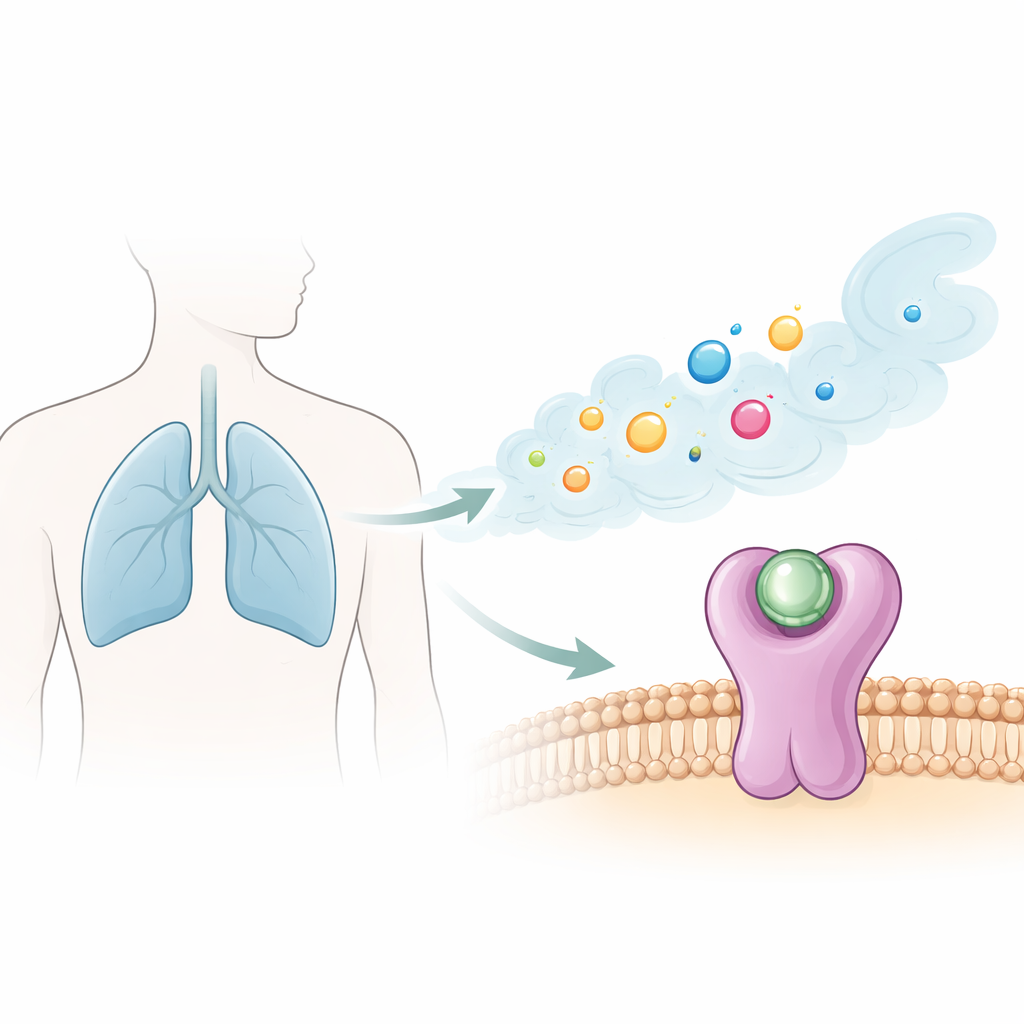
Many people see e‑cigarettes as a cleaner, safer way to get nicotine than traditional smoking. Yet every puff sends a complex cloud of chemicals deep into the lungs, where they can meet proteins that help regulate blood pressure and even serve as gateways for viruses like SARS‑CoV‑2. This study asks a simple but important question: when common vaping juice ingredients reach one of these gatekeeper proteins, called ACE2, do they stick to it, and if so, how strongly?
The Body Protein at the Center of the Story
ACE2 is a protein found on the surface of many cells, including those lining the airways. It normally helps keep blood pressure and fluid balance in check, but it is also the main doorway used by the virus that causes COVID‑19 to enter cells. Previous work mostly looked at how vaping might change how much ACE2 is made. Here, the authors instead focus on its small pocket where tiny molecules can lodge and change how it behaves. They asked whether typical vaping ingredients—nicotine, cooling and spicy flavorings like menthol and capsaicin, base liquids such as propylene glycol and glycerol, and thermal byproducts like formaldehyde and acrolein—can directly settle into this pocket.
Simulating How Vape Ingredients Stick
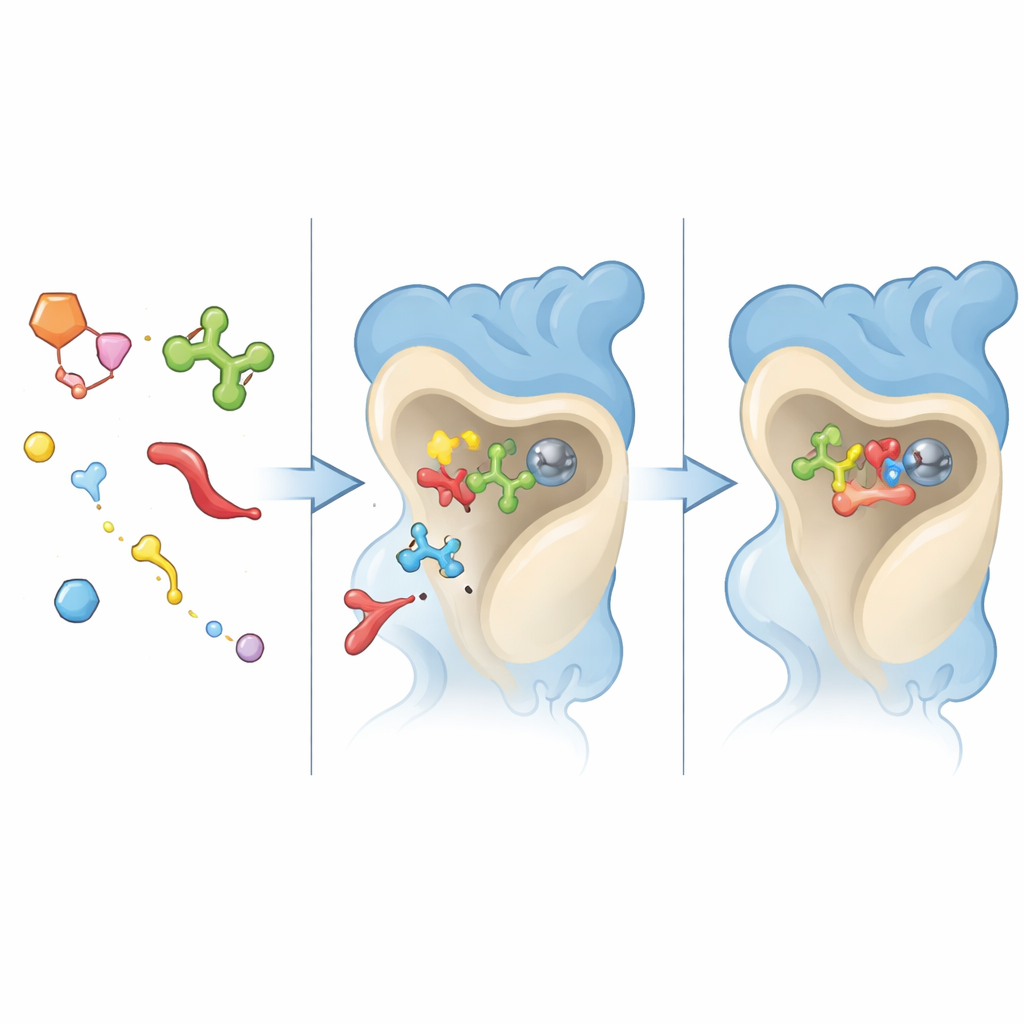
To explore this, the team first used high‑resolution structural data for ACE2 and ran computer “docking” tests, which predict how well each chemical might fit into the protein’s pocket that contains a zinc ion. Menthol showed the strongest initial fit, similar to a known laboratory ACE2 blocker, with nicotine and capsaicin close behind. All of these sat near crucial amino acids and the zinc center, suggesting they could, at least in theory, influence the protein’s activity. In contrast, the very small byproducts formaldehyde and acrolein did not form many strong contacts with the pocket in these models. The scientists then ran long molecular dynamics simulations, which follow how the protein and chemicals move together over time in a watery environment, to see whether these initial fits were stable or quickly fell apart.
Which Molecules Stay and Which Drift Away
The simulations revealed that menthol and capsaicin nestled into the pocket and remained there steadily, with small fluctuations typical of a snug fit. Nicotine behaved differently: it wandered away from its starting position but then resettled into another nearby niche within the same pocket, where it appeared to stay. By contrast, the tiny aldehydes formaldehyde and acrolein quickly drifted out into the surrounding solvent, indicating weak and short‑lived contacts. When the researchers estimated binding strengths from these trajectories, nicotine emerged as the most thermodynamically favored of the vaping chemicals, while menthol and capsaicin showed strong local interactions but overall less favorable binding in this purely watery model, likely because of their oily, water‑repelling nature.
Testing Binding in the Lab
Computer models can be misleading if not checked against experiment, so the team turned to a technique called biolayer interferometry to watch real ACE2 protein interacting with these molecules. In these tests, nicotine bound to ACE2 with moderate strength and, importantly, let go relatively slowly, indicating a more stable interaction. Menthol and capsaicin bound more weakly, and acrolein bound quickly but also detached quickly, consistent with the idea that its contacts are fleeting. All of these bindings were far weaker than that of a specialized ACE2 inhibitor used as a control, suggesting that under normal conditions vape ingredients are unlikely to fully shut down ACE2’s normal job—but they may still nudge its behavior.
What This Means for People Who Vape
For non‑specialists, the core message is that common components of vape juice do not simply pass by body proteins without effect. Several of them, especially nicotine, can latch onto a critical pocket of ACE2, the same protein that helps control blood pressure and serves as the entry point for SARS‑CoV‑2. The study stops short of proving that this alters disease risk or everyday physiology, but it clearly shows that biochemical conversations are taking place at the molecular level whenever someone inhales vapor. Future work in cells and animals will be needed to learn whether these subtle bindings translate into changes in infection risk, blood vessel health, or long‑term outcomes. Still, the findings challenge the idea of vaping as a harmless habit and point toward a more nuanced view that includes how its ingredients interact directly with key receptors in the body.
Citation: Mallawarachchi, S., Nangia, A., Ibrahim, M.J. et al. Evaluation of molecular interactions of vaping juice components with ACE2 receptor. Sci Rep 16, 10118 (2026). https://doi.org/10.1038/s41598-026-39533-0
Keywords: vaping, nicotine, ACE2, e-cigarettes, molecular interactions