Clear Sky Science · en
Effects of different administration routes of dexmedetomidine on sleep quality in patients undergoing total knee arthroplasty
Why a New Approach to Sleep After Surgery Matters
Many people are surprised to find that the hardest part of recovering from knee replacement surgery is not pain, but sleep. Up to four in ten patients struggle to fall asleep, stay asleep, or feel rested in the weeks after their operation. Poor sleep can slow healing, sap energy, and cloud thinking at a time when patients need to participate actively in rehabilitation. This study asked a simple but important question: can giving a sedative-like drug through the nose, rather than through a vein, help these patients sleep more naturally and safely after surgery?
Three Different Nighttime Plans
The researchers enrolled older adults who were already dealing with insomnia and scheduled for a single knee replacement. All patients received standard anesthesia and pain control during and after surgery. Then they were randomly assigned to one of three nighttime plans on the day of surgery: a nose spray containing dexmedetomidine (a drug that produces a sleep state similar to deep natural sleep), a nose spray with only saltwater as a placebo, or a slow drip of dexmedetomidine into a vein. Neither the patients nor the staff measuring sleep knew who was in which group, helping keep the results unbiased. 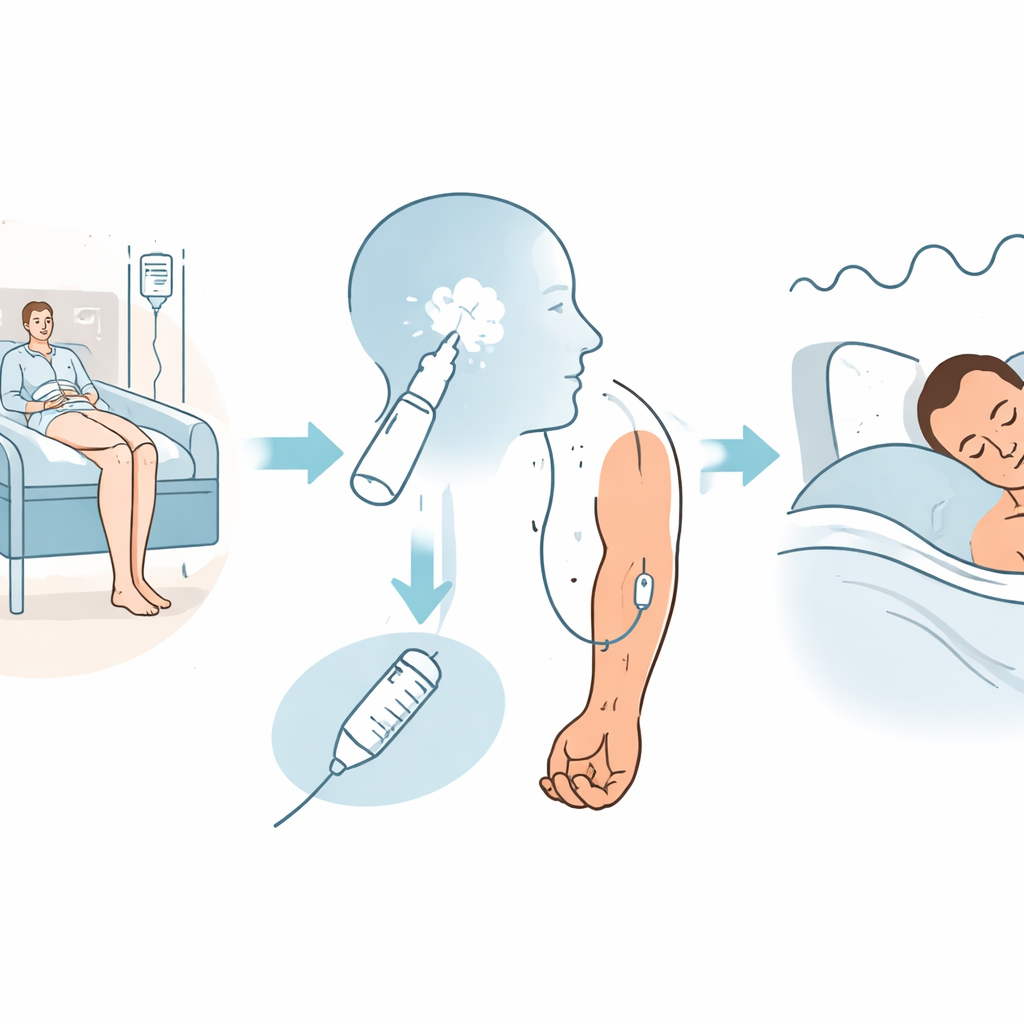
Measuring a Good Night’s Rest
To see what was really happening at night, the team used both objective and subjective tools. On the night before surgery and again on the third night after surgery, patients wore sensors that recorded brain waves and other signals, allowing the team to measure how long they slept, how quickly they fell asleep, how often they woke up, and how much time they spent in light versus deep sleep and dreaming sleep. Patients also filled out well-established questionnaires about sleep quality and insomnia symptoms before surgery, a few days afterward, and one month later. In addition, the researchers tested reaction time using a simple button-press task to make sure the drug was not leaving patients groggy or slowing their thinking.
Better Sleep, Especially With Nose Spray
Compared with their pre-surgery nights, patients who received dexmedetomidine—either by nose spray or by intravenous drip—slept longer, fell asleep faster, woke up less often, and spent more time in the deepest, most restorative stages of sleep on the third night after surgery. Their sleep ratings on questionnaires also improved and stayed better even a month later, suggesting that a single targeted intervention around the time of surgery can have lasting benefits. The placebo group, which received only saline, showed no meaningful change in any of these measures.
Same Clear Thinking, Fewer Heart Concerns
One worry with sedating drugs is that patients might feel foggy or unsteady the next day. In this study, however, both dexmedetomidine groups actually showed faster reaction times several days after surgery compared with their pre-surgery performance, and there was no difference between the nose spray and the intravenous groups. Pain scores were similar across all three groups, and pain levels did not appear to drive the sleep improvements, underscoring that the drug itself was aiding sleep rather than simply masking discomfort. 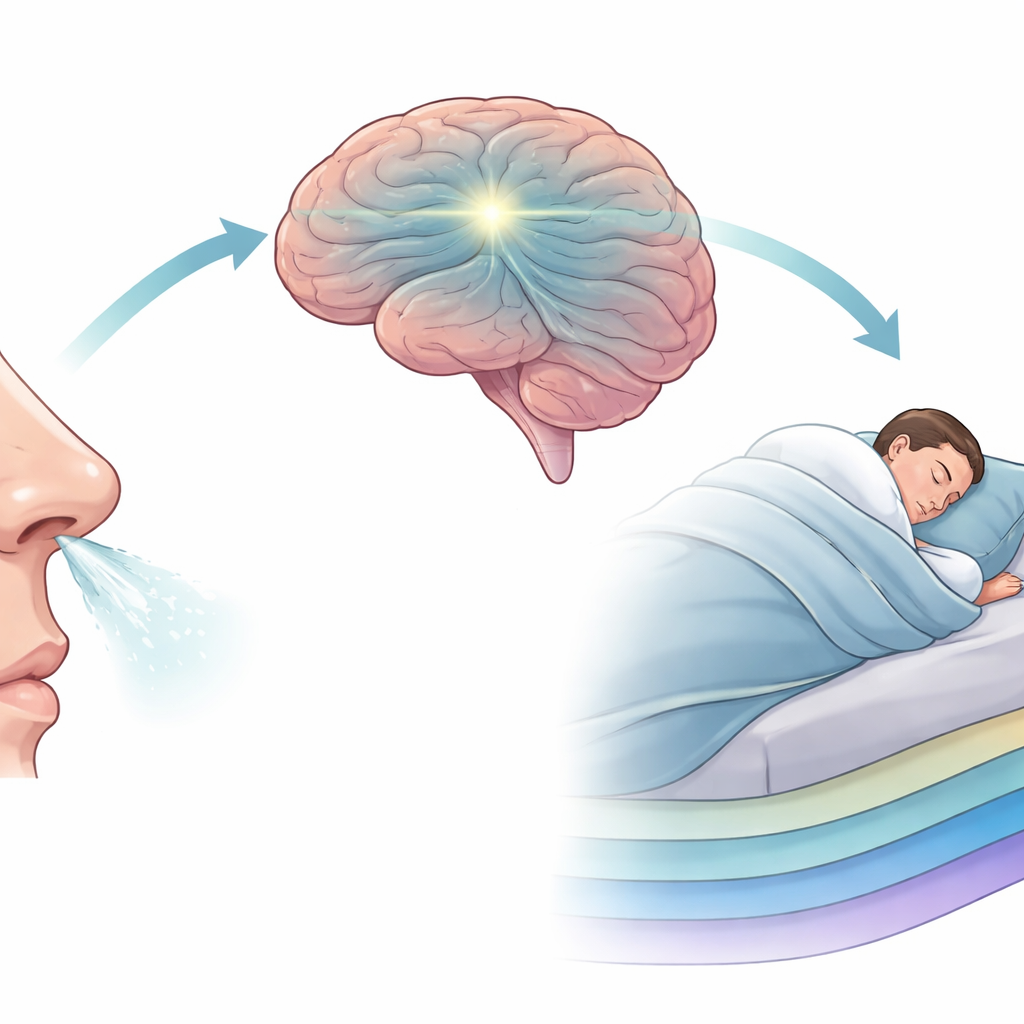
Choosing the Gentler Route
The two active treatments differed in their side effects. Patients receiving the intravenous drip were more likely to experience episodes of low blood pressure and slow heart rate, which required quick medical attention but resolved with treatment. Those using the nose spray reported more nasal dryness, but these symptoms were mild and faded on their own. Overall, the nose-spray group enjoyed the greatest boost in sleep quality with the fewest worrisome changes in heart and blood pressure.
What This Means for Patients
For people facing knee replacement surgery who already struggle with insomnia, this study suggests that a carefully dosed dexmedetomidine nose spray on the night of surgery can lead to longer, deeper, and less broken sleep without slowing the mind or causing major side effects. In fact, the benefits extended for at least a month after the operation. Compared with the traditional intravenous drip, the nasal route appeared both gentler on the heart and more effective for sleep. While larger and longer studies are still needed, this work points toward a simple, noninvasive tool that could help many surgical patients trade nights of tossing and turning for truly restorative rest.
Citation: Huang, Z., Fan, X., Lin, B. et al. Effects of different administration routes of dexmedetomidine on sleep quality in patients undergoing total knee arthroplasty. Sci Rep 16, 11842 (2026). https://doi.org/10.1038/s41598-026-39450-2
Keywords: postoperative insomnia, knee replacement, dexmedetomidine, intranasal sedation, sleep quality