Clear Sky Science · en
Silicon nanoparticles ameliorate salt stress in cluster bean by improving antioxidant defense and ion homeostasis
Why salty soils matter for everyday crops
Across the world, more and more farmland is turning salty, which quietly cuts into food and oilseed production. Cluster bean, a hardy legume grown for animal feed, vegetable use, and an industrial gum used in foods and drilling fluids, is no exception. This study asks a practical question with big implications: can tiny particles of silicon, sprayed on the leaves, help this crop stay healthy and productive in salty soils while also improving the nutritional quality of its seed oil?
Tiny helpers for stressed plants
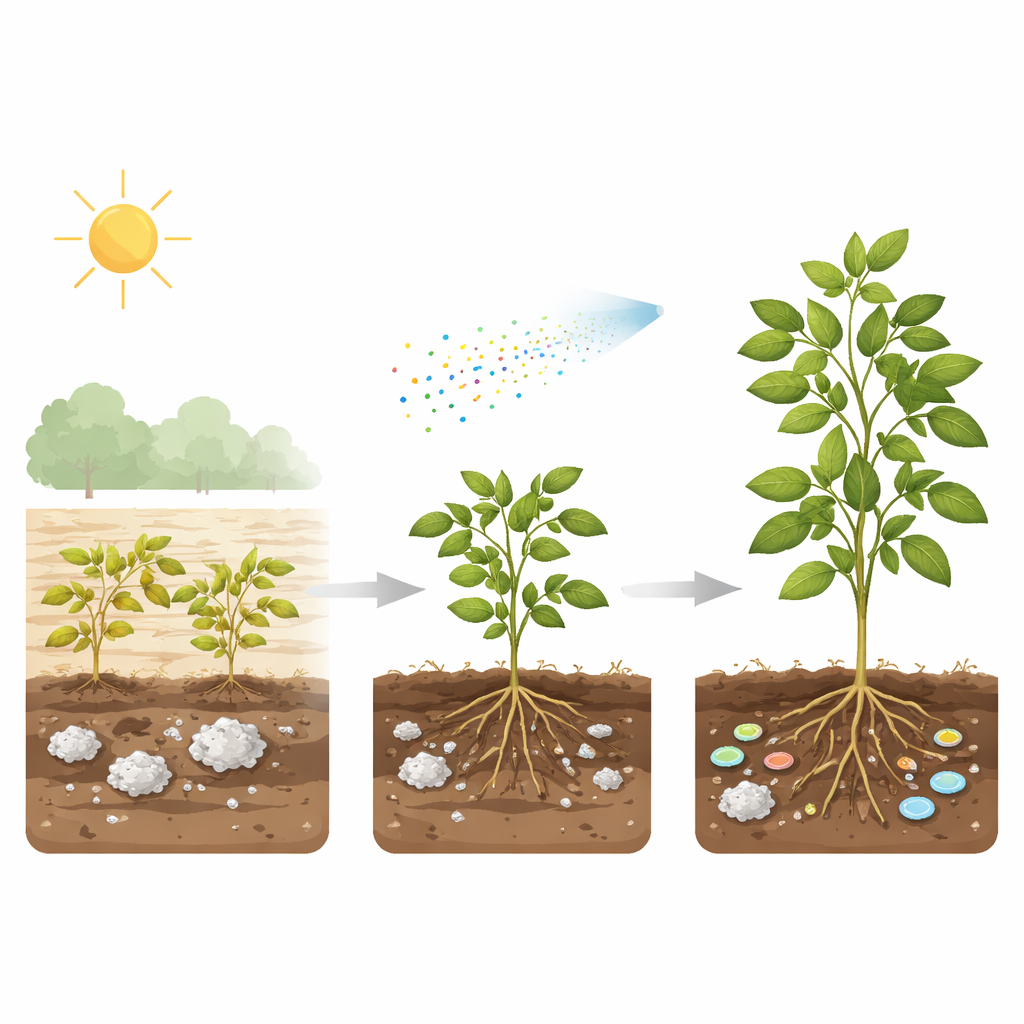
The researchers compared two kinds of silicon given as a fine mist on cluster bean leaves: ordinary dissolved silicon and nanosilicon, made of extremely small silicon dioxide particles about 20–30 nanometers across. Plants were grown in pots under controlled conditions and exposed to three levels of salt in the irrigation water, from none to strongly saline. At the same time, different concentrations of the two silicon forms were sprayed on the foliage. The team then measured how well the plants’ photosynthetic machinery worked, how much damage salt was causing inside their cells, how key mineral ions were balanced, and, ultimately, how many pods and seeds they produced and what kinds of fatty acids accumulated in the seed oil.
Keeping leaves greener and cells safer
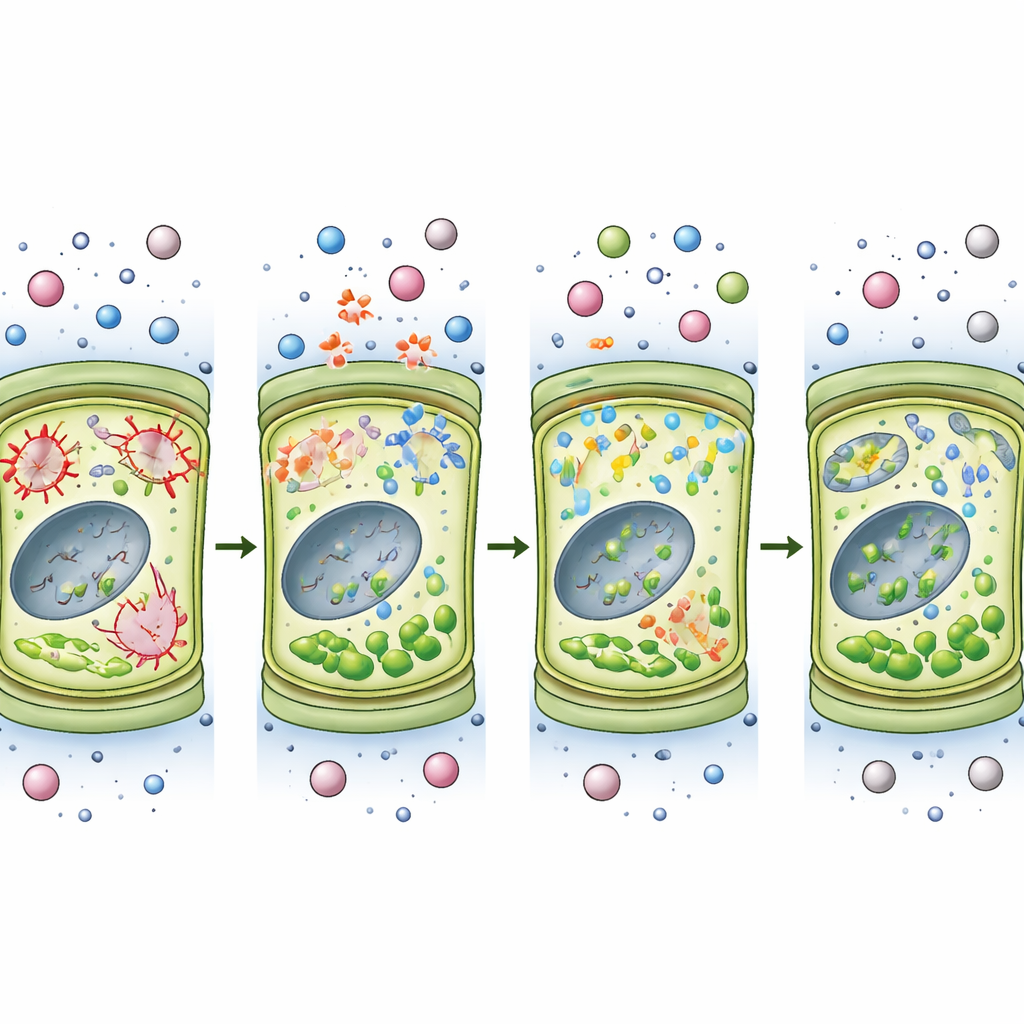
Salty water normally dulls the green color of leaves and weakens the light-harvesting system in plants, a first step toward lower yields. In this study, both kinds of silicon softened those effects, but nanosilicon at a moderate dose of 50 milligrams per liter stood out. Under strong salt stress, plants receiving this treatment held on to far more chlorophyll and protective yellow pigments than untreated plants, and their photosynthetic efficiency stayed closer to normal. Inside the leaves, salt stress usually triggers a surge of reactive oxygen molecules that attack membranes and other cell parts. The nanosilicon spray sharply boosted the activity of the plant’s defensive enzymes that neutralize these molecules, and as a result, chemical markers of damage, such as hydrogen peroxide and malondialdehyde, dropped by roughly half compared to stressed plants without nanosilicon.
Balancing salt and vital nutrients
One of salt’s most damaging tricks is to flood plant tissues with sodium while pushing out potassium, a mineral essential for enzymes, water balance, and growth. Here again, nanosilicon altered the picture. Under high salinity, untreated plants loaded up on sodium and lost potassium, but those sprayed with 50 milligrams per liter of nanosilicon took up much less sodium and retained much more potassium. The ratio of potassium to sodium in their shoots jumped four- to fivefold over stressed controls, a strong sign that the plants were keeping their internal chemistry in a healthier range. At the same time, nanosilicon encouraged the build-up of natural protective compounds such as phenols, flavonoids, and anthocyanins, which can act as extra shields against stress and help stabilize cell structures.
From healthier plants to better harvests and oils
These inner changes showed up clearly in the harvest. Rising salt levels reduced the number of pods and total seed weight in all treatments, but plants treated with nanosilicon, especially at the 50 milligram per liter dose, lost far less. Under the highest salinity, this treatment more than tripled seed weight per pot compared with unsprayed controls. The quality of the seed oil improved as well. Seeds from nanosilicon-treated plants contained a higher share of unsaturated fatty acids, particularly oleic and linoleic acids, which are considered more desirable for nutrition and many industrial uses. Statistical analysis revealed that this shift toward healthier unsaturated fats was closely tied to the stronger antioxidant capacity triggered by nanosilicon, suggesting that calmer, better-protected seed tissues favor the enzymes that introduce beneficial double bonds into fatty acid chains.
What this means for farming salty lands
In plain terms, the study shows that a carefully chosen nanosilicon spray can help cluster bean plants stay greener, keep their internal salts in balance, suffer less cellular damage, and still fill pods with seeds rich in high-quality oil, even when grown in salty conditions. While the work was done on one variety in a controlled setting, it points to nanosilicon as a promising, low-dose "booster" that could make crops more resilient on marginal, salt-affected soils. If confirmed in field trials and across different genotypes, such treatments could help farmers harvest more and better-quality food and industrial products from land that is otherwise losing its productivity.
Citation: Rahimi, H., Kazemeini, S.A., Alinia, M. et al. Silicon nanoparticles ameliorate salt stress in cluster bean by improving antioxidant defense and ion homeostasis. Sci Rep 16, 10057 (2026). https://doi.org/10.1038/s41598-026-39447-x
Keywords: salinity stress, nanosilicon, cluster bean, antioxidant defense, seed oil quality