Clear Sky Science · en
Design, synthesis, and experimental evaluation of rupestonic acid derivatives as novel anti-tumor agents guided by network pharmacology and molecular docking
From Wild Herb to Cancer-Fighting Candidate
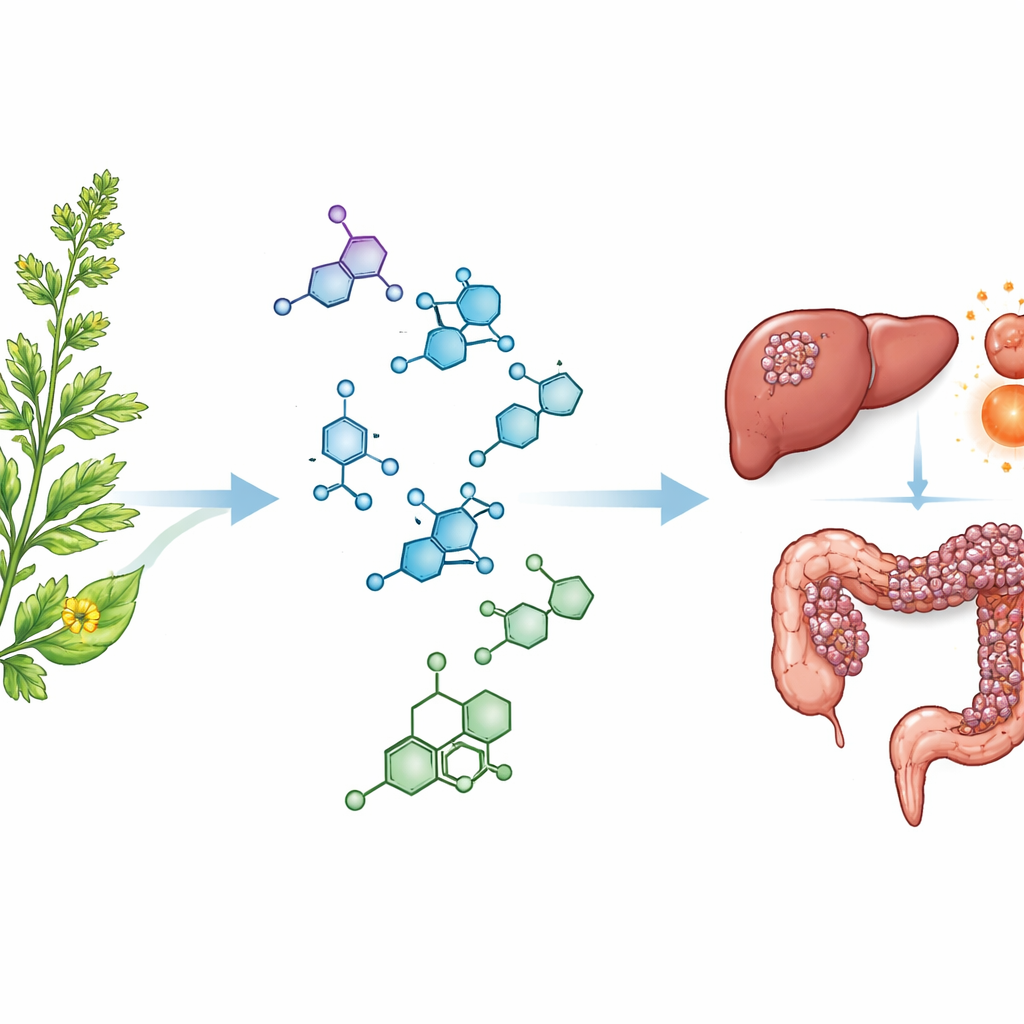
Cancer remains one of the world’s leading killers, and many current treatments come with harsh side effects. This study explores whether a traditional herbal remedy from China, Artemisia rupestris L., can be a source of gentler yet powerful anti-cancer drugs. By combining computer modeling, chemistry, and cell experiments, the researchers trace how a natural component of this plant, rupestonic acid, can be reshaped into a promising drug candidate that may one day help treat liver and colon cancers.
Why a Folk Remedy Drew Scientists’ Attention
For generations, communities in China’s Xinjiang region have used Artemisia rupestris to ease inflammation and illness, and modern reports suggested it might also slow tumor growth. Scientists had already shown that rupestonic acid, a key ingredient in this plant, could harm cancer cells and fight viruses in the lab. But no one knew exactly how it worked against tumors, or how to make it more effective and safer. The team set out to map rupestonic acid’s possible “hit list” inside the body and then redesign it to better attack cancer cells while keeping drug-like properties that would allow it to be absorbed, travel through the body, and avoid major toxicity.
Using Computers to Map the Drug’s Hidden Targets
The first step was virtual. The researchers used a technique called network pharmacology to predict which human proteins rupestonic acid might latch onto. Their analysis pointed to 55 cancer-related targets, including hormone receptors, enzymes, and signaling proteins that govern how cells grow, divide, and die. Several of these targets sit inside major control circuits that cancer cells often hijack, such as the PI3K/AKT and MAPK pathways, which help tumors survive stress and resist treatment. The results suggested that rupestonic acid does not act like a sniper that hits one protein, but more like a smart cluster of arrows that nudge multiple switches at once, potentially making it harder for tumors to escape.
Putting Cancer Cells to the Test
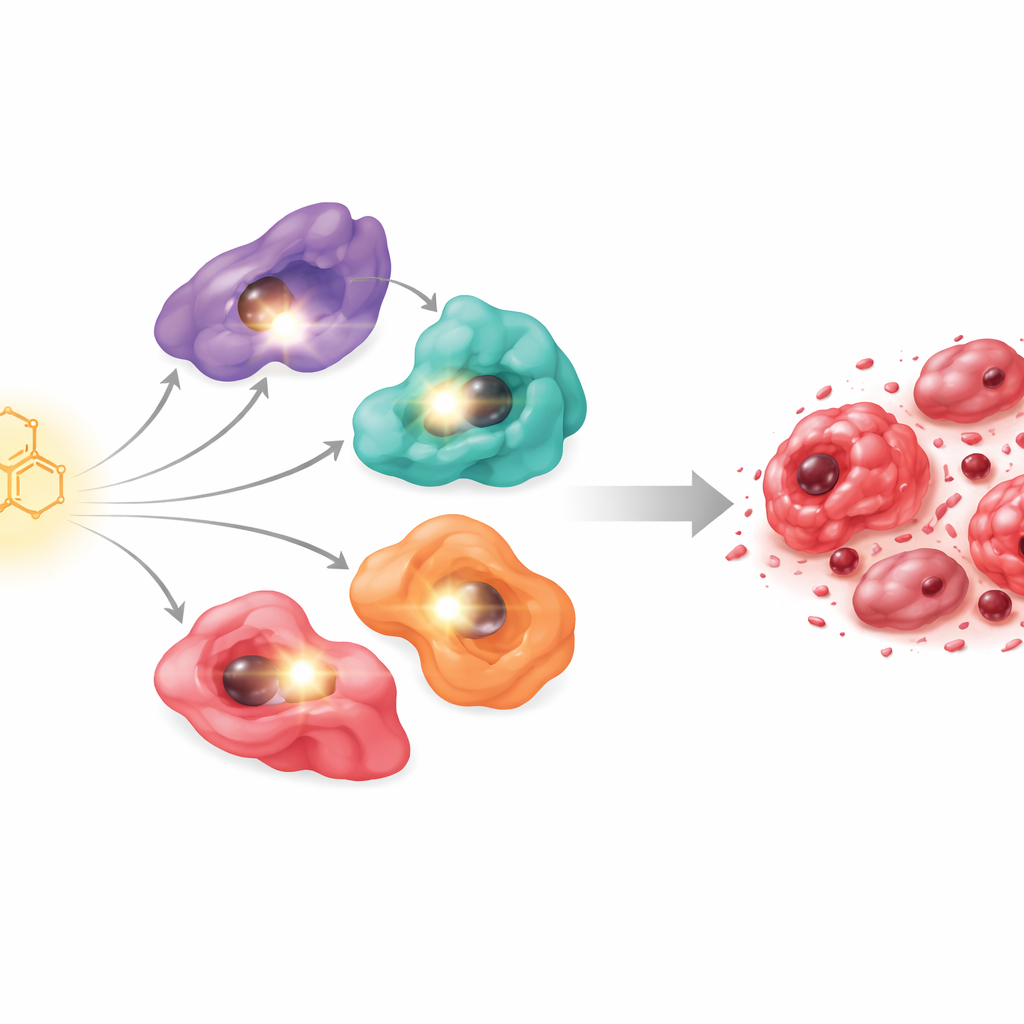
Predictions alone are not enough, so the team tested rupestonic acid directly on a panel of 30 human cancer cell lines. At higher doses, several cell types—including those from colorectal cancer (HCT116) and liver cancer (HepG2)—proved especially sensitive, hinting that these diseases might be particularly good targets. Encouraged by these results, the scientists then used rupestonic acid as a chemical backbone and attached different small ring-shaped fragments, known as heterocycles, to fine-tune its behavior. This simple modification strategy produced 27 new derivatives. Screening these new compounds against the same cancer cells revealed several with stronger tumor-killing power than the widely used chemotherapy drug cisplatin, at least in the dish.
Zooming In on the Star Compound
One molecule, called compound 15, emerged as the front-runner. It killed HCT116 and HepG2 cells at low micromolar levels, meaning only a small amount was needed to sharply reduce cell growth. Computer docking studies provided a microscopic view of why: the new side groups on compound 15 helped it fit snugly into pockets on tumor-related proteins such as 17β-HSD1 and p38 MAPK, forming hydrogen bonds and stacking interactions that stabilize binding. Molecular dynamics simulations—virtual “movies” of atoms in motion—showed that these complexes remained stable over time, with little wobbling at the binding site. At the same time, computer-based ADMET analysis, which estimates absorption, distribution, metabolism, excretion, and toxicity, suggested that compound 15 could be well absorbed in the gut, would not cross into the brain (reducing the risk of neurological side effects), and met multiple industry rules for drug-likeness, all while showing low predicted toxicity.
What This Means for Future Cancer Drugs
To a non-specialist, the main message is that a long-used folk herb has yielded a carefully engineered molecule that looks and behaves much like a modern drug candidate. By first mapping how rupestonic acid interacts with many cancer-linked proteins, then redesigning it to strengthen those interactions and checking that the new molecule still has favorable safety and absorption traits, the researchers have created compound 15—a lead compound that outperforms cisplatin in key liver and colon cancer cell lines in the lab. While much work remains, especially in animals and eventually humans, this study shows how traditional medicine, advanced computation, and synthetic chemistry can work together to transform a wild plant ingredient into a realistic starting point for the next generation of anti-cancer therapies.
Citation: Yusuf, A., Adelibieke, Q., Tursun, E. et al. Design, synthesis, and experimental evaluation of rupestonic acid derivatives as novel anti-tumor agents guided by network pharmacology and molecular docking. Sci Rep 16, 11173 (2026). https://doi.org/10.1038/s41598-026-39442-2
Keywords: rupestonic acid, natural product anticancer, network pharmacology, molecular docking, heterocyclic derivatives