Clear Sky Science · en
Impact of sedentary behavior and physical activity on stroke risk in a cohort of patients with silent brain infarction
Why Sitting Still Matters for Hidden Brain Damage
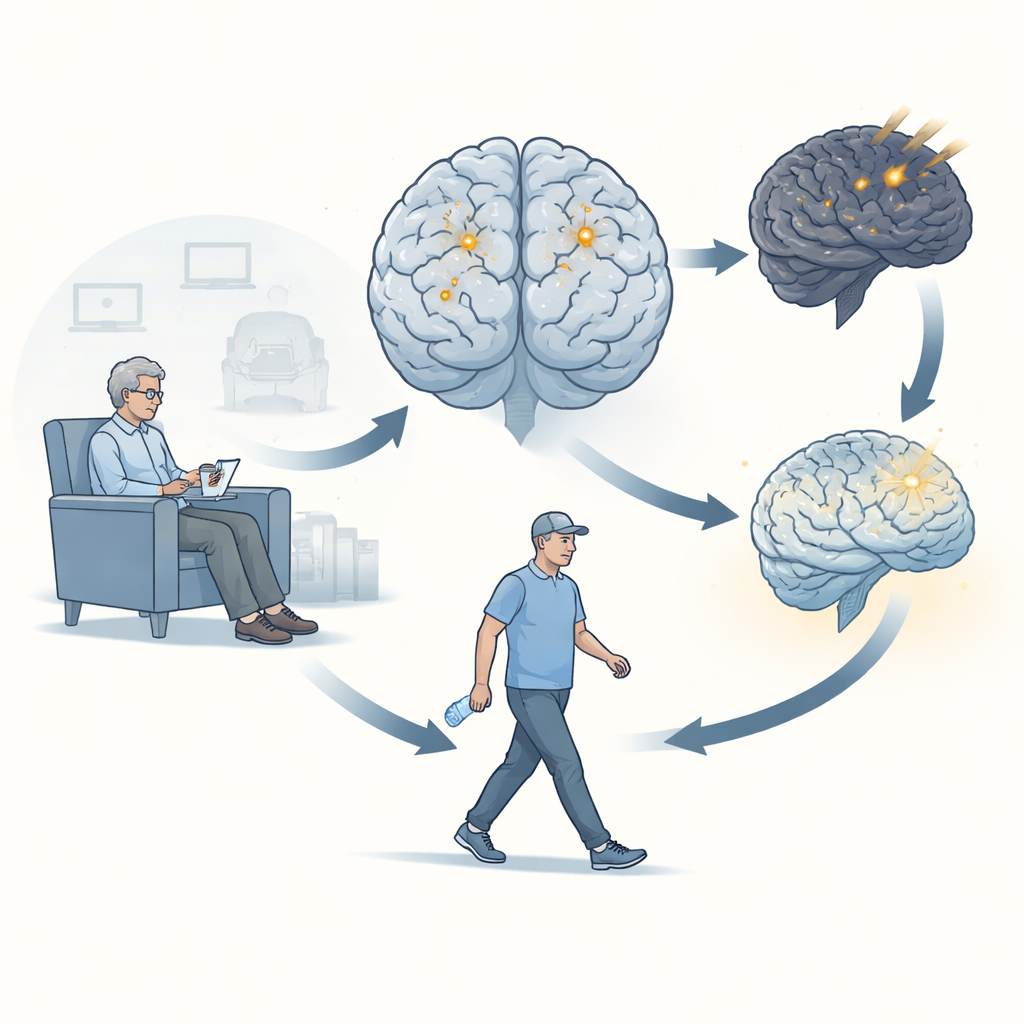
Many older adults carry tiny, symptom-free scars in their brains called silent brain infarctions. These spots usually go unnoticed, but they sharply raise the chances of having a full-blown stroke later on. This study asks a question that affects anyone who spends long hours sitting: for people who already have this hidden brain damage, how much does daily sitting time add to their stroke risk, and can regular movement help offset the danger?
Hidden Warning Signs Inside the Brain
Silent brain infarctions are small areas of damage seen on brain scans, even though the person has never noticed clear stroke symptoms. They are common in older adults and signal fragile blood vessels in the brain. Previous research shows that people with these silent injuries face two to three times the usual risk of future stroke. That makes them an ideal group for testing whether lifestyle changes—especially cutting back on sitting and boosting physical activity—could meaningfully change their odds of a serious event.
Tracking Sitting Time and Movement Over Years
The researchers followed 588 middle-aged and older adults in China who were first diagnosed with silent brain infarctions between 2013 and 2018. Everyone had detailed brain MRI scans and medical records at the start. Years later, the team contacted participants by phone to ask about their typical daily sitting time over the past year and their physical activity at work, at home, during travel, and in leisure. They calculated average hours spent sitting per day and grouped people into less than 8 hours or at least 8 hours daily. They also measured how many minutes per week people spent in moderate-to-vigorous activities such as brisk walking or exercise, grouping them into low, moderate, and high activity levels.
When Sitting Crosses a Dangerous Line
Over a median of seven years of follow-up, 86 participants went on to have a stroke. When the researchers compared people who sat more with those who sat less—while taking into account age, blood pressure, diabetes, cholesterol, and the severity of brain damage on MRI—they found a strong pattern. For every extra hour spent sitting each day, stroke risk rose by about a quarter. Most strikingly, people who sat 8 hours or more per day had more than four times the risk of stroke compared with those who sat less than 8 hours. The relationship was not simply straight-line: stroke risk climbed steadily as sitting time approached 8 hours, rose sharply between 8 and 10 hours, and then stayed high beyond that point. This suggests that roughly 8 hours a day is a tipping point where prolonged sitting becomes especially harmful for people with silent brain infarctions.
How Movement Softens the Blow of Too Much Sitting
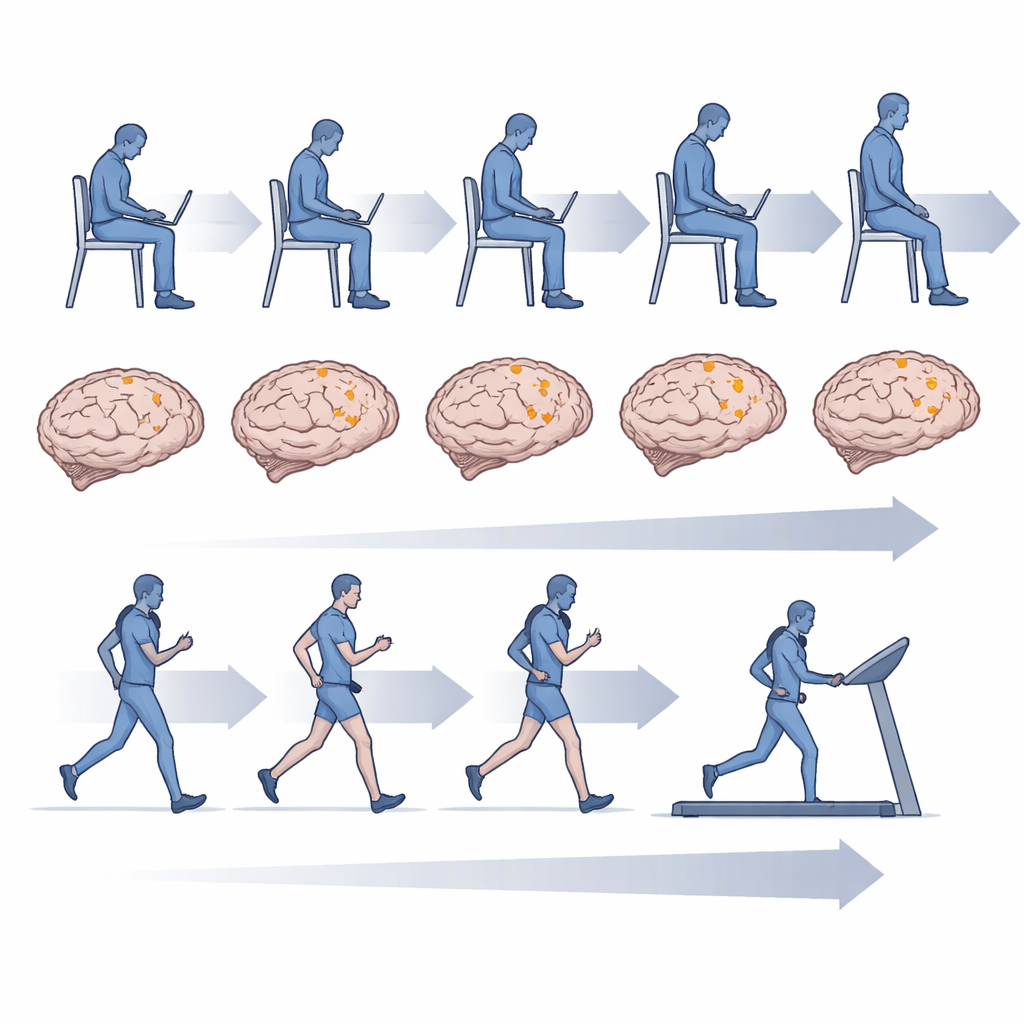
On its own, doing more moderate-to-vigorous activity was not clearly linked to a lower stroke risk after adjusting for all medical differences. However, when the researchers examined sitting and movement together, an important story emerged. Among people who sat less than 8 hours a day, stroke risk remained relatively low regardless of whether they did a little or a lot of vigorous activity. Among those who sat 8 hours or more, though, movement made a clear difference. The heaviest sitters who barely moved had the highest risk. As weekly exercise time increased—first to 150–300 minutes, then to at least 300 minutes—their stroke risk fell stepwise, though it never dropped as low as the group that both sat less and exercised more. In other words, long sitting was dangerous, but regular, higher-intensity activity partially buffered that danger.
What This Means for Daily Life
For people already living with silent brain infarctions—often without knowing it—this study delivers a simple, practical message. Spending 8 or more hours a day seated is itself a powerful, independent driver of future stroke, over and above age, blood pressure, and existing brain damage. While regular, brisk movement cannot fully erase the harm of too much sitting, it does meaningfully reduce the added risk. The clearest prescription is twofold: break up long stretches of sitting so that total sedentary time stays under about 8 hours a day, and aim for at least 300 minutes a week of moderate-to-vigorous physical activity. Together, these steps may help turn silent brain damage from a looming threat into a more manageable risk.
Citation: Bai, L., Zheng, P., Sun, X. et al. Impact of sedentary behavior and physical activity on stroke risk in a cohort of patients with silent brain infarction. Sci Rep 16, 11410 (2026). https://doi.org/10.1038/s41598-026-39428-0
Keywords: stroke prevention, sedentary behavior, physical activity, silent brain infarction, healthy aging