Clear Sky Science · en
Identification and detection of toxic substances involved in Gelsemium elegans Benth poisoning case
Hidden Danger in a Homemade Drink
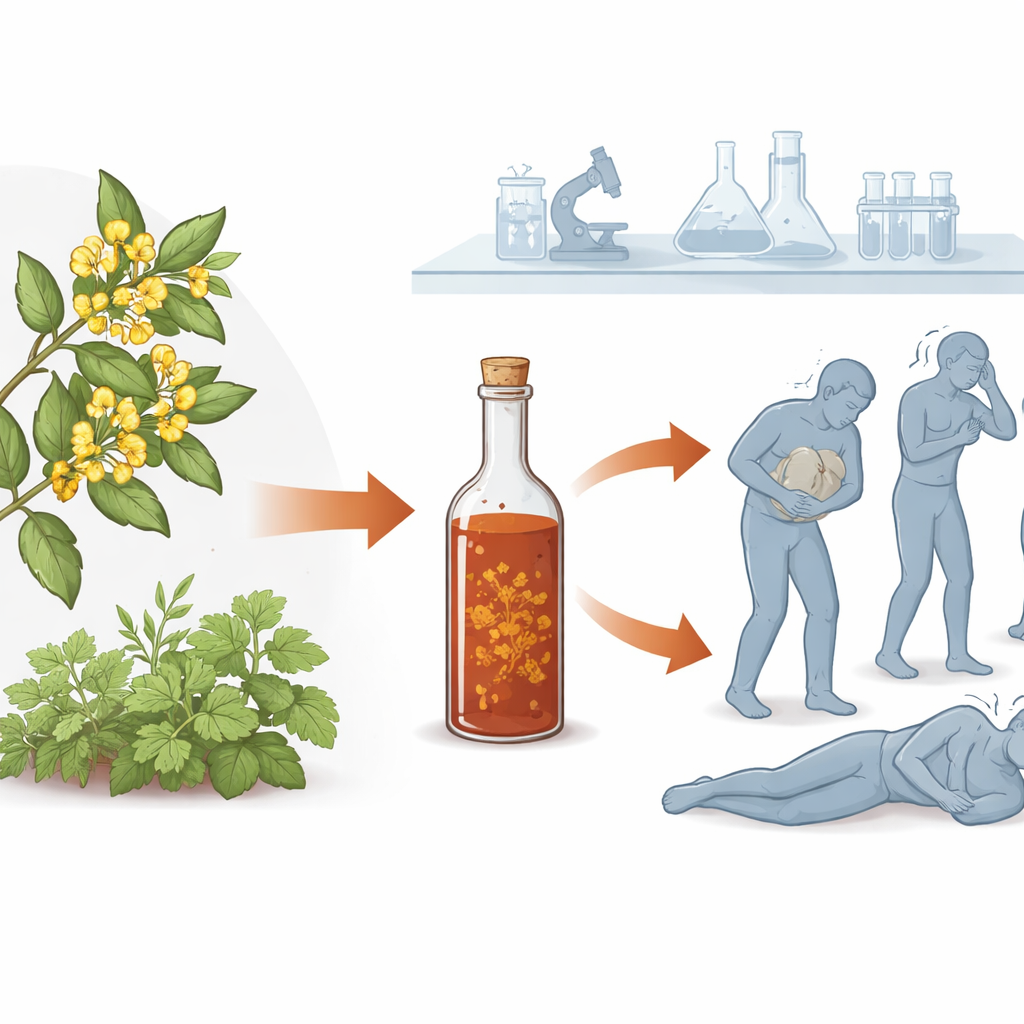
In a small community in China, four people shared a homemade "health" wine made from foraged plants. Within hours, they became desperately ill, and one person died. Doctors and public health workers needed to know, fast, what was in that bottle. This study tells the detective story of how scientists traced the culprit to one of the world’s most poisonous vines and built a rapid testing strategy that could help prevent similar tragedies.
A Plant That Mimics Medicine
The central villain is Gelsemium elegans, sometimes called the "heartbreak plant." It grows as a woody vine in southern China and contains powerful nerve poisons called alkaloids. These substances can shut down breathing and lead to coma and death. The plant’s leaves and flowers resemble some harmless herbs used in soups and tonics, so it is easy for foragers to mistake it for something safe. In regions where people commonly make medicinal broths or infused wines from wild plants, this confusion has already caused repeated poisoning events.
Why Detecting the Poison Is So Hard
When the Guizhou poisoning case occurred in 2025, investigators had two urgent questions: Was the wine truly contaminated with Gelsemium, and how much poison had the victims absorbed? Answering these questions is more complicated than it sounds. One standard method, called tandem mass spectrometry, can measure trace amounts of chemicals very precisely but usually requires a ready-made reference for each suspected toxin. Another method, high‑resolution mass spectrometry, is excellent for scanning broadly for unknown chemicals but not as good for exact measurement. Many public health laboratories also lack specialized databases and expensive standards, especially in under-resourced areas where foraging is common.
Combining Two High-Tech Lenses
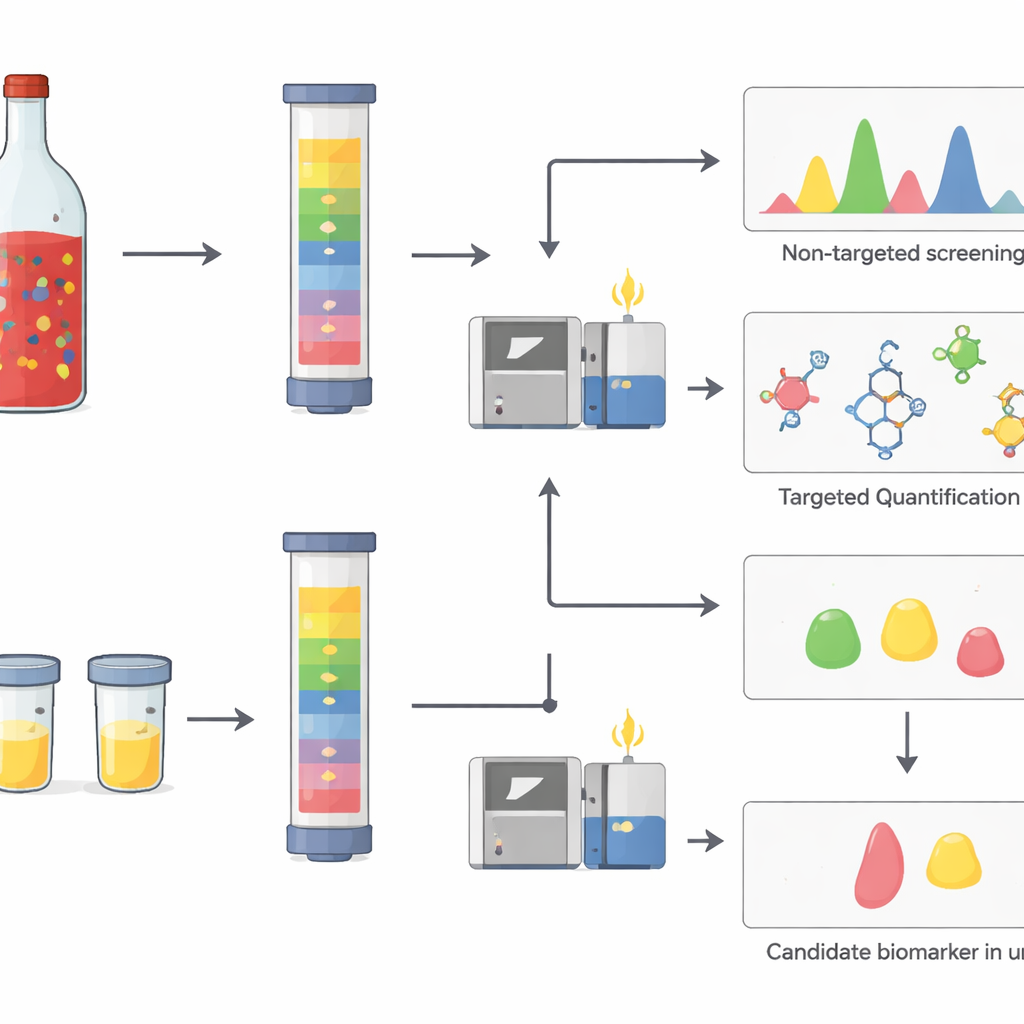
The researchers solved this problem by combining both types of instruments into one workflow. First, they built a practical library of known Gelsemium alkaloids by gathering information from scientific databases and chemical structure collections. Using high‑resolution mass spectrometry, they scanned the infused wine and patients’ urine and blood without making assumptions about which toxins were present. This broad search uncovered nine different Gelsemium-related compounds in the samples. Next, they selected five key alkaloids that are most common and most toxic and developed a focused measurement method for them using the more precise mass spectrometer. By calibrating the instruments carefully and matching them to real wine and urine samples, they showed that the method could accurately measure tiny amounts of these poisons.
What the Samples Revealed
When the team applied their method to the case samples, the results were striking. The wine contained very high total levels of the five measured Gelsemium alkaloids, with two—humantenine and gelsenicine—dominating the mixture. Earlier animal studies suggest that gelsenicine is especially deadly, and the amount found in the wine was high enough that a typical adult drinking just a small glass could reach a potentially lethal dose. In urine from the three poisoned individuals, alkaloid patterns varied, but one compound, humantenine, appeared in every patient. This repeat appearance hints that humantenine may serve as a reliable sign of Gelsemium exposure, a practical “flag” for doctors and laboratories checking whether someone has been poisoned by this plant.
Limits, Lessons, and Future Safeguards
The researchers also found the limits of their approach. Their quick, simple sample-preparation method worked well for wine and urine but not for blood, where a tangle of natural substances interfered with accurate measurement. They suggest that future work should refine blood testing using more advanced clean-up steps and internal reference compounds. Even so, the integrated strategy they developed already offers a valuable tool for frontline public health labs: it is sensitive, does not rely on costly internal standards, and can be used in places with limited resources. For ordinary people, the lesson is equally clear: homemade drinks made from wild plants can harbor powerful, invisible poisons, and modern laboratory tools are essential for uncovering these dangers before they claim more lives.
Citation: Lu, Z., Ye, L., Anzhong, W. et al. Identification and detection of toxic substances involved in Gelsemium elegans Benth poisoning case. Sci Rep 16, 12087 (2026). https://doi.org/10.1038/s41598-026-39403-9
Keywords: plant poisoning, toxic alkaloids, forensic toxicology, mass spectrometry, public health emergency