Clear Sky Science · en
Fault detection and diagnosis in photovoltaic systems using artificial intelligence and time–frequency analysis
Keeping Solar Power Running Smoothly
As solar panels spread across rooftops and deserts, keeping them working at their best becomes crucial. Hidden problems—like wiring faults or shaded panels—can quietly sap power and profit long before anyone notices. This study explores a new way to automatically listen to the "heartbeat" of a solar power plant using advanced pattern-recognition tools from artificial intelligence, aiming to spot trouble early, even when the data are noisy and messy, as in real life.
Why Solar Systems Can Misbehave
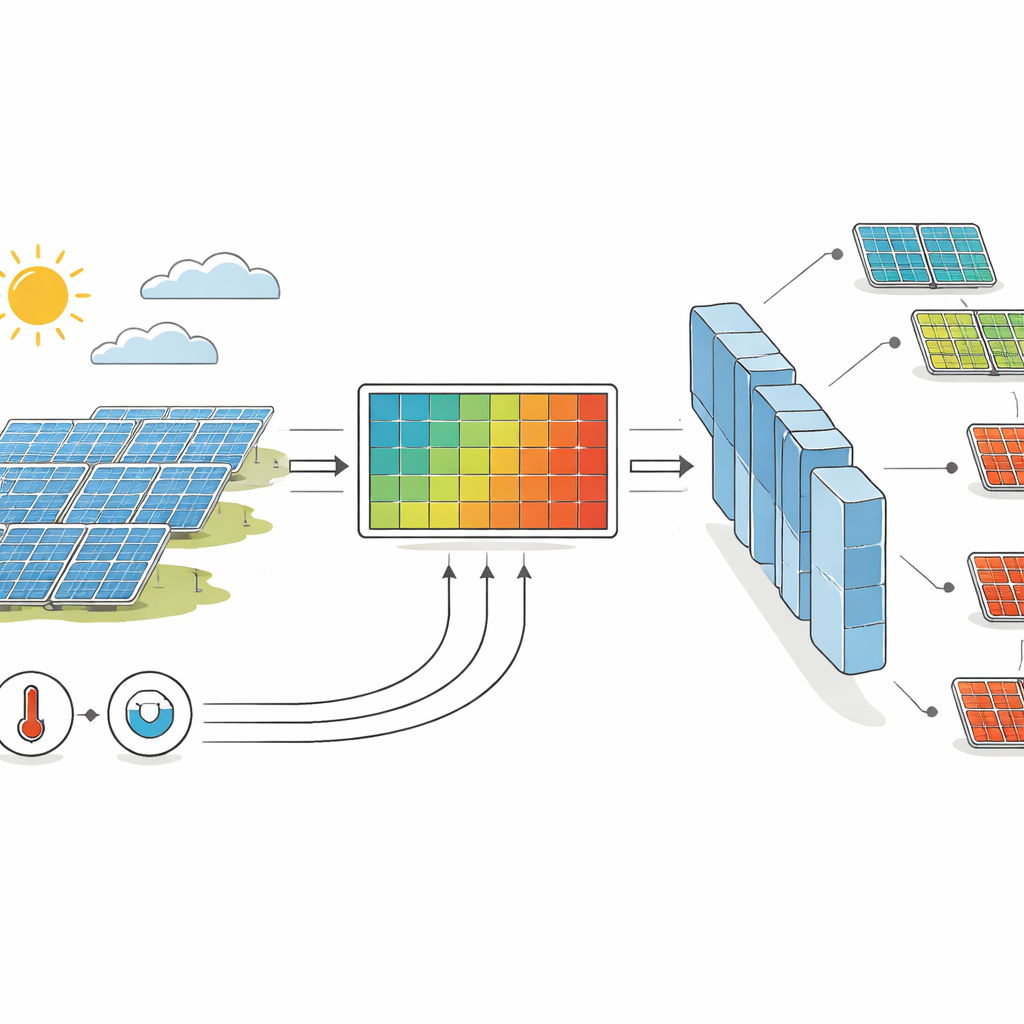
Large solar farms are made of many interconnected panels, and small issues can add up. A few cells may be shorted, entire strings of panels can be wired incorrectly, or sections may be partially shaded by trees, dirt, or nearby buildings. These problems change how the system’s electrical quantities—sunlight level, panel temperature, voltage, current, and power—evolve over the day. Traditionally, engineers have hunted for these issues with thermal cameras, visual inspections, or hand-crafted rules. These approaches are labor-intensive, can miss subtle problems, and often struggle when several faults occur at once or when sensors are old and noisy.
Turning Numbers into Pictures the Computer Can Read
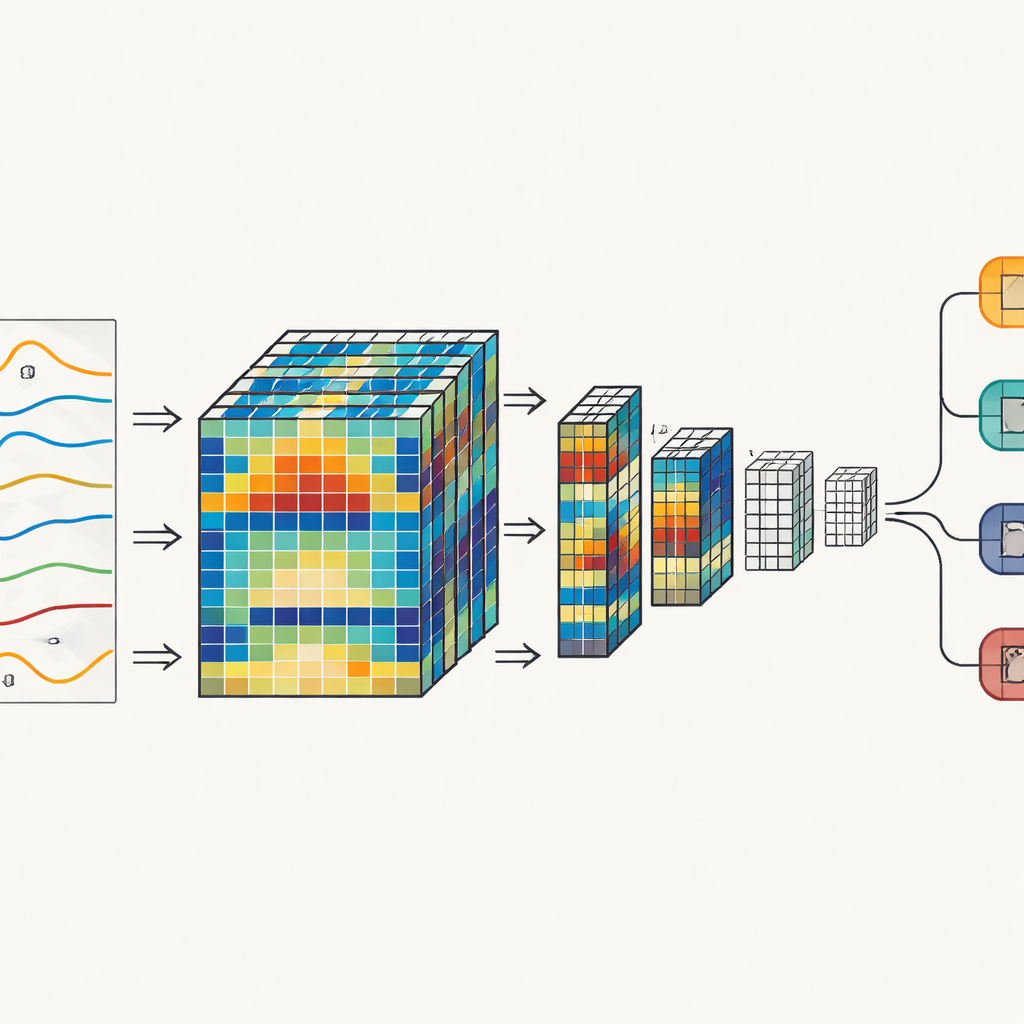
The researchers propose an unusual twist: instead of feeding raw numbers into a computer, they first convert the electrical measurements into tiny image-like maps that capture how the signals change over both time and frequency. They use a mathematical tool called the Wigner–Ville distribution, which can reveal patterns such as sudden jumps, slow drifts, or repeating ripples that correspond to different fault types. For each snapshot of the system, five key measurements—sunlight, temperature, and the voltage, current, and power at the maximum power point—are each turned into a strip of colored blocks representing their behavior over about an hour. These strips, plus a sixth one that blends them together, are stacked into a compact 6×12 tile. Each tile is a visual fingerprint of how the system is behaving at that moment.
Teaching a Digital Inspector to Read the Patterns
Once the data look like little images, the team can apply a class of AI models that excel at image analysis: convolutional neural networks. They first build a detailed digital model of a 30-panel solar array and simulate 17 different operating conditions: one healthy state and 16 fault types, ranging from a few shorted modules to widespread partial shading and complex line-to-line faults between strings. For every case, and under both clear and cloudy skies, they generate long sequences of realistic sensor readings, convert them into 6×12 maps, and label them according to the underlying fault. The convolutional network then learns, from thousands of examples, which arrangements of color and shape in these maps correspond to each specific problem. In parallel, the authors also test simpler neural networks and classic machine-learning tools such as support vector machines and random forests, all trained on the same transformed data, to see which method proves most accurate and most resilient.
Putting the Method to the Test in Noisy Conditions
In perfectly clean simulations, traditional neural networks that work directly on the five numerical inputs reach almost flawless accuracy—above 99%—in telling the different faults apart. The image-based convolutional network also performs extremely well, with accuracy just over 97%. But solar plants do not live in a clean world: sensors age, weather is unpredictable, and measurements become noisy. When the researchers deliberately inject realistic jitter into the sunlight, temperature, voltage, current, and power readings, the rankings change dramatically. The simpler networks lose much of their edge, dropping into the low 80% range or worse. In contrast, the convolutional network, which looks at the structured time–frequency maps, maintains about 90% accuracy at normal noise levels and still identifies most faults correctly even when the noise is tripled to mimic very old or poor-quality sensors.
What This Means for Future Solar Farms
For a lay reader, the takeaway is that the way we present information to an AI model matters as much as the model itself. By turning raw solar power data into compact pictures that capture both when and how the signals wiggle, the authors enable a digital inspector that is not only accurate in ideal conditions but also tough enough to handle the messy data of real solar plants. Their approach can automatically distinguish a healthy array from many similar-looking fault types, with minimal need for human-crafted rules. In practice, such a system could run in the background of a large photovoltaic farm, warning operators early about specific problems, cutting downtime, and making solar energy more reliable and cost-effective over the long term.
Citation: Seghiour, A., Bendjeddou, Y., Mostefaoui, I.M. et al. Fault detection and diagnosis in photovoltaic systems using artificial intelligence and time–frequency analysis. Sci Rep 16, 10056 (2026). https://doi.org/10.1038/s41598-026-39386-7
Keywords: solar fault detection, photovoltaic monitoring, time-frequency analysis, convolutional neural networks, renewable energy diagnostics