Clear Sky Science · en
Advanced FCS-MPC strategy for optimized control and efficiency in photovoltaic inverters
Why smarter solar power matters
As more homes, businesses, and entire regions turn to solar power, a quiet challenge emerges in the background: how to plug vast fields of solar panels into an electrical grid that was never designed for such variable energy. When clouds pass or grid conditions change suddenly, the electronics that connect solar panels to the grid must react in fractions of a second. This paper explores a smarter way to control those electronics so that large solar plants can deliver cleaner, more stable power with fewer losses and better resilience to grid problems.
From sunlight to the electric grid
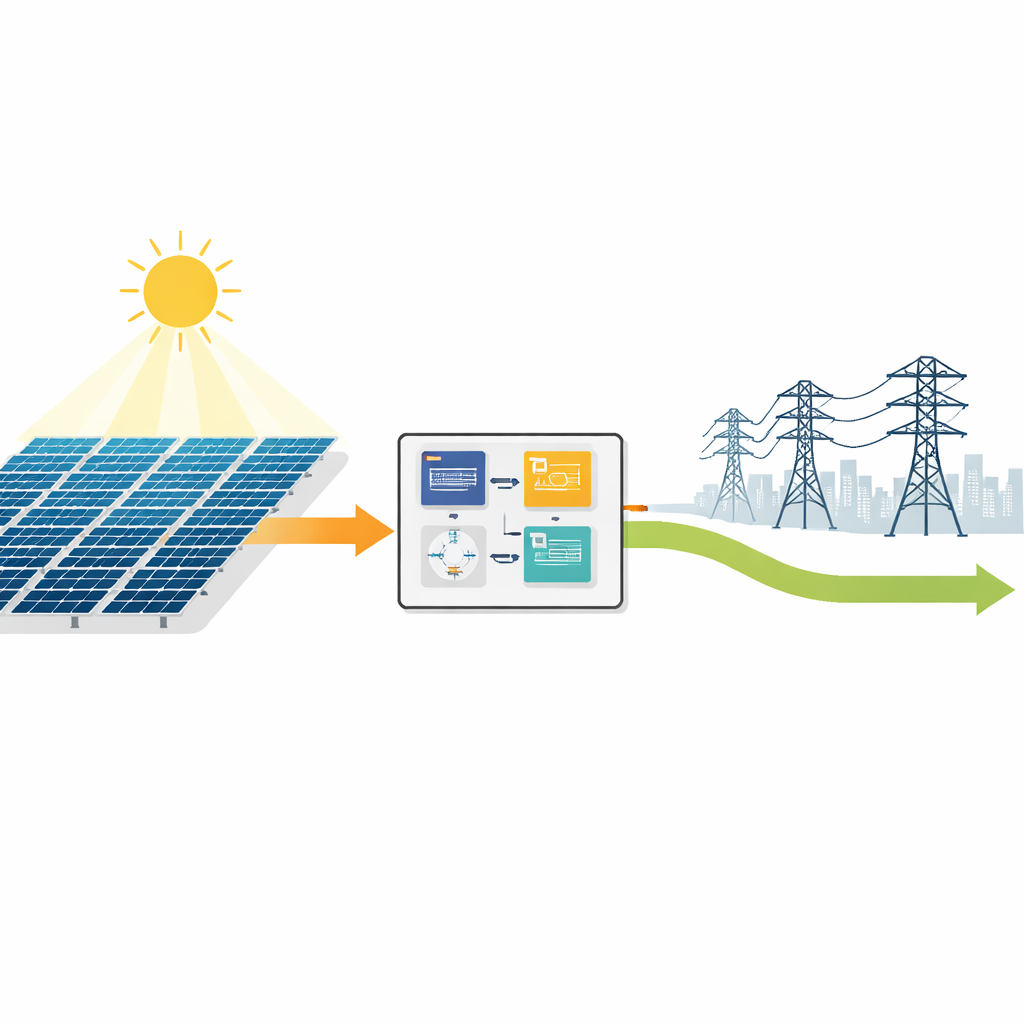
Modern solar power plants do much more than simply turn sunlight into electricity. Thousands of individual panels feed a common circuit, where a device called an inverter converts the panels’ direct current into the alternating current used by the grid. In a 1‑megawatt section of a real Algerian solar plant that serves as the case study here, this inverter must keep the grid voltage smooth, limit electrical “noise” or harmonics, and ride through sudden events such as brief drops in grid voltage. Traditional control methods can do this under calm conditions, but they are less capable when the grid is stressed or when solar power output changes quickly.
Letting the inverter look ahead
The authors focus on a control method called Finite Control Set Model Predictive Control, which can be thought of as teaching the inverter to “look into the near future.” At each tiny time step, the controller uses a mathematical model of the system to predict what will happen if it chooses each possible switching state of the power electronics. It then selects the option that best meets a chosen goal, such as keeping current and power close to their targets. The main innovation in this work is to extend that look‑ahead from one step to two, and to carefully redesign the way the controller measures success, known as the cost function, for both current and power.
Testing the approach in realistic conditions
Instead of relying on a small laboratory setup, the study builds a detailed simulation of a full‑scale 1‑megawatt grid‑connected solar unit modeled after the Oued El Kebrit plant. The system includes a standard two‑level inverter, filters that smooth the output, and a separate controller that holds the internal DC voltage steady. Within this setting, the researchers compare different predictive strategies: one‑step versus two‑step look‑ahead, and absolute versus squared versions of the cost function, applied both to the electrical currents and to the active and reactive power sent to the grid. They subject the virtual plant to demanding scenarios, including sudden voltage dips on the grid that last up to half a second and reduce the voltage by about 30 percent, conditions that often cause instability in conventional systems.
Cleaner waves, quicker recovery
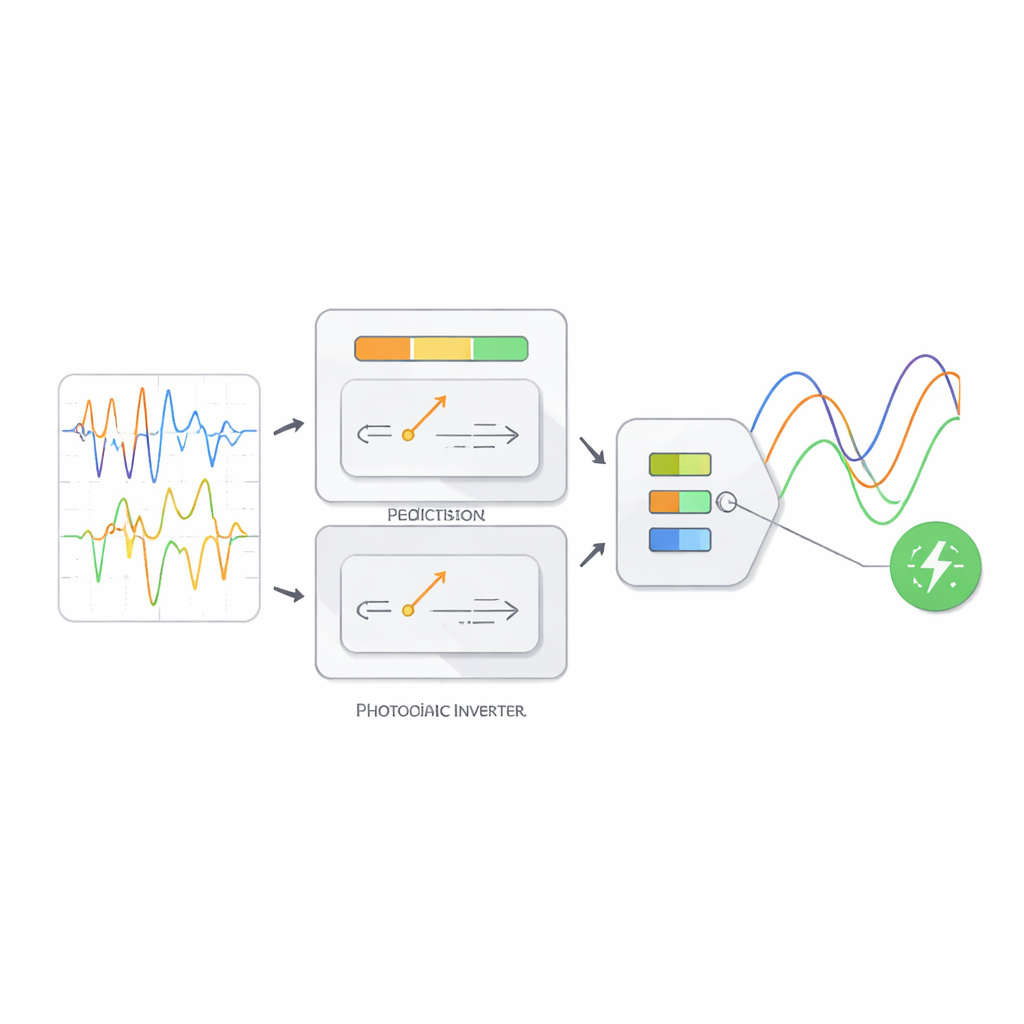
The two‑step predictive strategy consistently improves how quickly and cleanly the system recovers from disturbances. In simulations, the time needed for voltages to settle after a change shrinks from about a quarter of a second to just 0.165 seconds. Electrical noise measured as total harmonic distortion in the grid voltage stays as low as 2.08 percent—comfortably within international limits—and the distortion in current drops to as little as 0.36 percent. Although the gain in efficiency may sound modest, rising from roughly 97.63 to 97.73 percent, even a few hundredths of a percent translate into large energy savings when applied across utility‑scale solar fields operating for many years. Importantly, the system keeps power deviations within tight bounds during simulated grid faults, showing robust behavior where more basic controllers can falter.
What this means for future solar plants
In simple terms, the proposed control scheme lets the inverter anticipate how the solar plant and the grid will respond, rather than merely reacting after the fact. By looking two steps ahead and using carefully tuned performance measures, the controller keeps the output cleaner, more stable, and slightly more efficient, even when the grid misbehaves. While the authors note that such predictive algorithms demand considerable computing power, they argue that further optimization and hybrid methods could ease this burden. For readers, the main takeaway is that smarter control, not just better solar panels, will be crucial to making large solar farms reliable partners in tomorrow’s electricity networks.
Citation: Dekhane, A., Djellad, A., Farhat, M. et al. Advanced FCS-MPC strategy for optimized control and efficiency in photovoltaic inverters. Sci Rep 16, 9946 (2026). https://doi.org/10.1038/s41598-026-39371-0
Keywords: photovoltaic inverters, model predictive control, grid-connected solar, power quality, renewable energy integration