Clear Sky Science · en
A high density of T-cell lymphocytes and Tregs subset correlate to a worse survival in major salivary gland carcinomas
Why the Body’s Defenders Matter in a Rare Cancer
Major salivary gland cancers are unusual tumors that arise in the glands that help us make saliva, such as the parotid near the jaw. Because they are rare and come in many forms, doctors have few tailored treatments, especially when the disease comes back or spreads. This study asks a deceptively simple question with big implications: can the types and patterns of immune cells sitting in and around these tumors tell us which patients are more likely to see their cancer return? 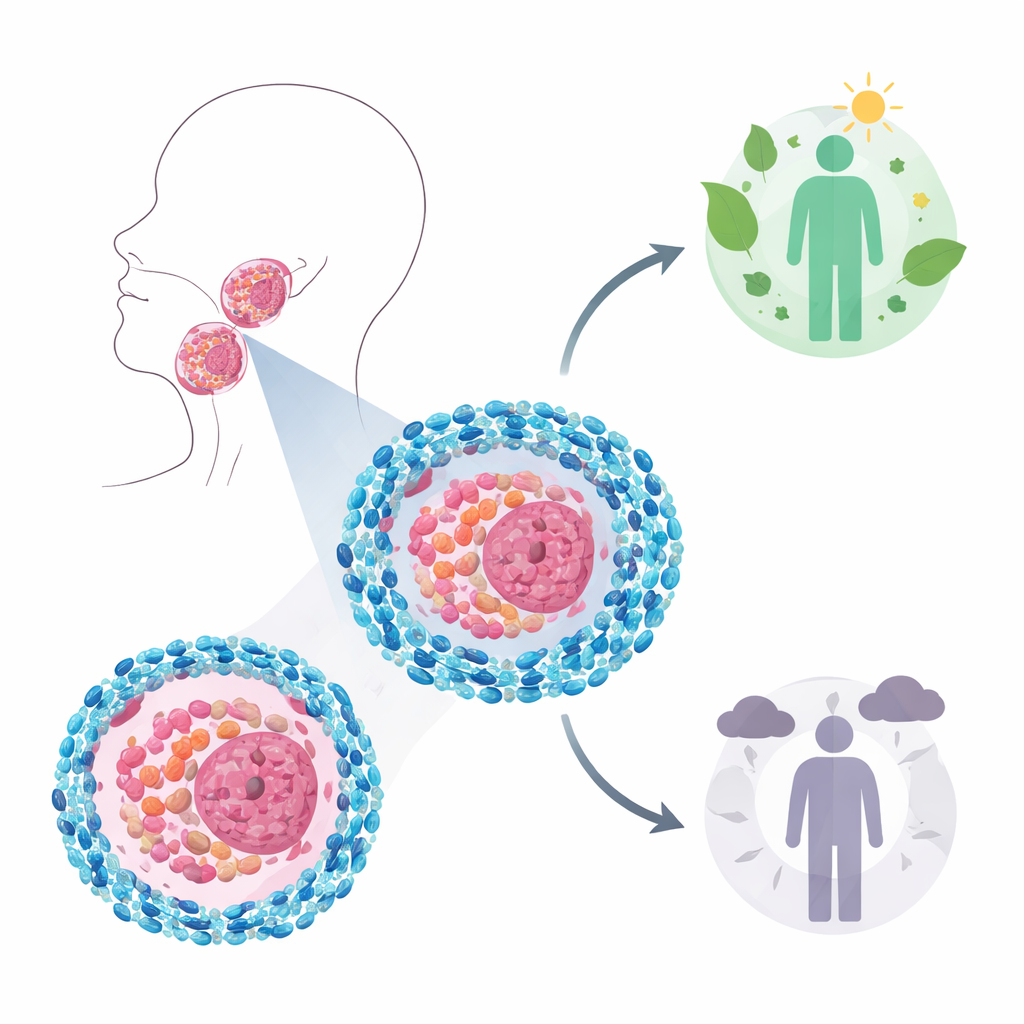
Taking a Closer Look at a Rare Disease
The researchers examined tissue from 103 people treated for major salivary gland carcinoma between 2015 and 2023. Most tumors came from the parotid gland, and nearly half were classified as high grade, meaning they looked more aggressive under the microscope. Using standard staining techniques, the team labeled different kinds of immune cells, including several flavors of T cells (key white blood cells that coordinate immune responses), B cells, and macrophages, which can either attack tumors or help them grow. They also included a small set of normal salivary glands to understand what a healthy immune pattern looks like for comparison.
Immune Cells: Friends, Foes, and Troublemakers
Rather than just counting any immune cell, the investigators focused on where these cells were located and which “subtype” they belonged to. They distinguished cells buried inside the tumor from those sitting at its border, and looked closely at specialized T cells that normally dampen immune responses, often called regulatory T cells. Using digital image analysis software called QuPath, they could measure how densely each cell type packed into hotspots within the tumor and its surroundings. They then compared these patterns to basic tumor features, such as grade and evidence of spread, as well as to how long patients stayed free from relapse.
When More Immune Cells Predict a Worse Course
The results challenge the common assumption that more immune cells are always better. Patients whose tumors contained a high density of regulatory T cells inside the cancer mass were more likely to have high-grade tumors and to experience earlier disease progression. Likewise, a heavy accumulation of general T cells in the tissue surrounding the tumor, rather than signaling a strong attack, was linked to a higher chance that the cancer would return sooner. Some macrophages with a so‑called “healing” or growth-supporting profile also tended to cluster in more aggressive tumors, hinting that they may help the cancer rather than the patient, although this trend did not reach strong statistical proof.
Digital Tools to Read the Tumor Landscape
To be sure their measurements were reliable, the scientists compared the computer’s counts of immune cells with the judgments of experienced pathologists looking at the same slides by eye. Agreement was moderate to high, suggesting that digital tools like QuPath can speed and standardize how immune landscapes are read in routine pathology images. This approach allowed them to convert complex stained tissue into quantitative maps of different cell populations, and to test how these maps related to clinical outcomes such as progression-free survival. 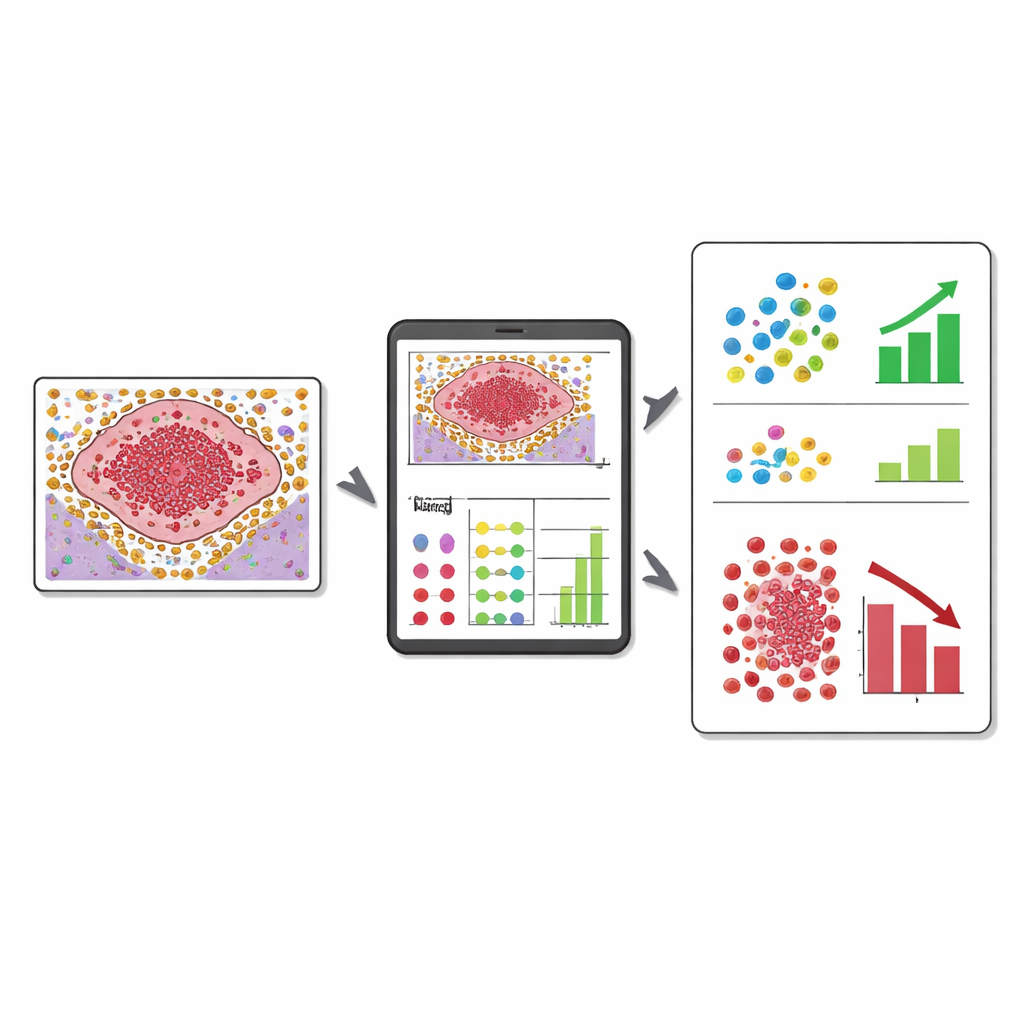
What This Means for Patients and Future Care
For people with major salivary gland cancer, the study suggests that not all immune responses are protective. A crowded presence of T cells, particularly the regulatory subset within the tumor and dense T cells at its edge, may actually mark a more hostile tumor microenvironment and a higher risk of relapse. These patterns could eventually serve as warning flags to identify patients who need closer follow-up or novel therapies that reshape the immune balance. The work also highlights how digital pathology and emerging artificial intelligence methods could help build detailed “immune scores” from routine samples, guiding future immunotherapy strategies in this rare but challenging group of cancers.
Citation: Anconelli, D., Vasuri, F., Novelli, L. et al. A high density of T-cell lymphocytes and Tregs subset correlate to a worse survival in major salivary gland carcinomas. Sci Rep 16, 11794 (2026). https://doi.org/10.1038/s41598-026-39357-y
Keywords: salivary gland cancer, tumor microenvironment, regulatory T cells, digital pathology, immunotherapy