Clear Sky Science · en
Cannabidiol mitigates secondary genital injury after thoracic trauma by regulating systemic inflammation and hormone receptor signaling
Why Chest Injuries Can Affect Reproductive Health
Most of us think of a severe blow to the chest as a problem for the lungs and ribs alone. This study suggests the story is wider: damage to the lungs can send a wave of inflammation through the bloodstream that quietly harms far‑away organs, including those involved in female reproduction. Using a rat model, the researchers explored whether cannabidiol (CBD) – a non‑intoxicating compound from the cannabis plant – could soften this ripple effect and protect delicate reproductive tissues after chest trauma.
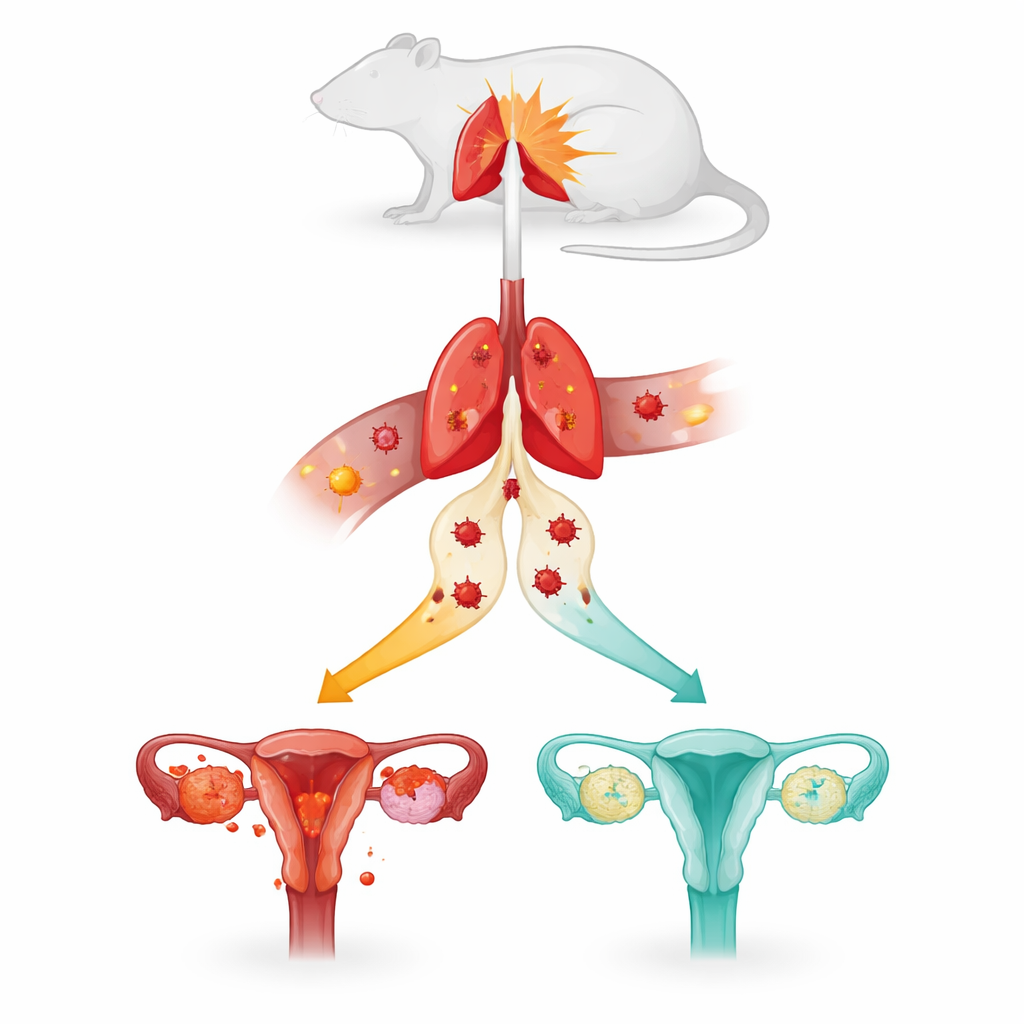
A Chain Reaction from Lungs to Reproductive Organs
Blunt trauma to the chest can bruise the lungs and trigger an "alarm" response throughout the body. Injured lung tissue releases inflammatory molecules and reactive oxygen species into the circulation. These substances can damage blood vessels, make them leaky, and reduce oxygen delivery to distant organs. Female reproductive organs – the ovaries, fallopian tubes, and uterus – are especially vulnerable because they rely on a rich blood supply and finely tuned hormone signaling to function normally.
Focusing on Hormone Signals and Oxygen Stress
The team was particularly interested in three molecular signals within reproductive tissues. One is the estrogen receptor, which helps cells respond to the hormone estrogen and supports normal structure and function. The second is a protein called HIF‑1α, which rises when tissues are starved of oxygen and often accompanies inflammation and cell stress. The third is the oxytocin receptor, involved in reproductive and vascular activity. Disruptions in this trio can signal that tissues are under strain and drifting away from healthy hormone balance.
How the Study Was Done in Rats
Adult female rats were divided into four groups: a sham group (anesthesia and handling only), a chest trauma group, a trauma group pre‑treated with CBD, and a CBD‑only group. Lung bruising was produced by dropping a small weight onto the chest while the animals were under anesthesia, mimicking real‑world blunt thoracic injury. The CBD‑treated animals received a carefully purified CBD preparation by injection half an hour before the impact. Two days later, researchers examined the lungs, ovaries, fallopian tubes, and uterus under the microscope and used staining methods to measure the three key molecular signals in these tissues.
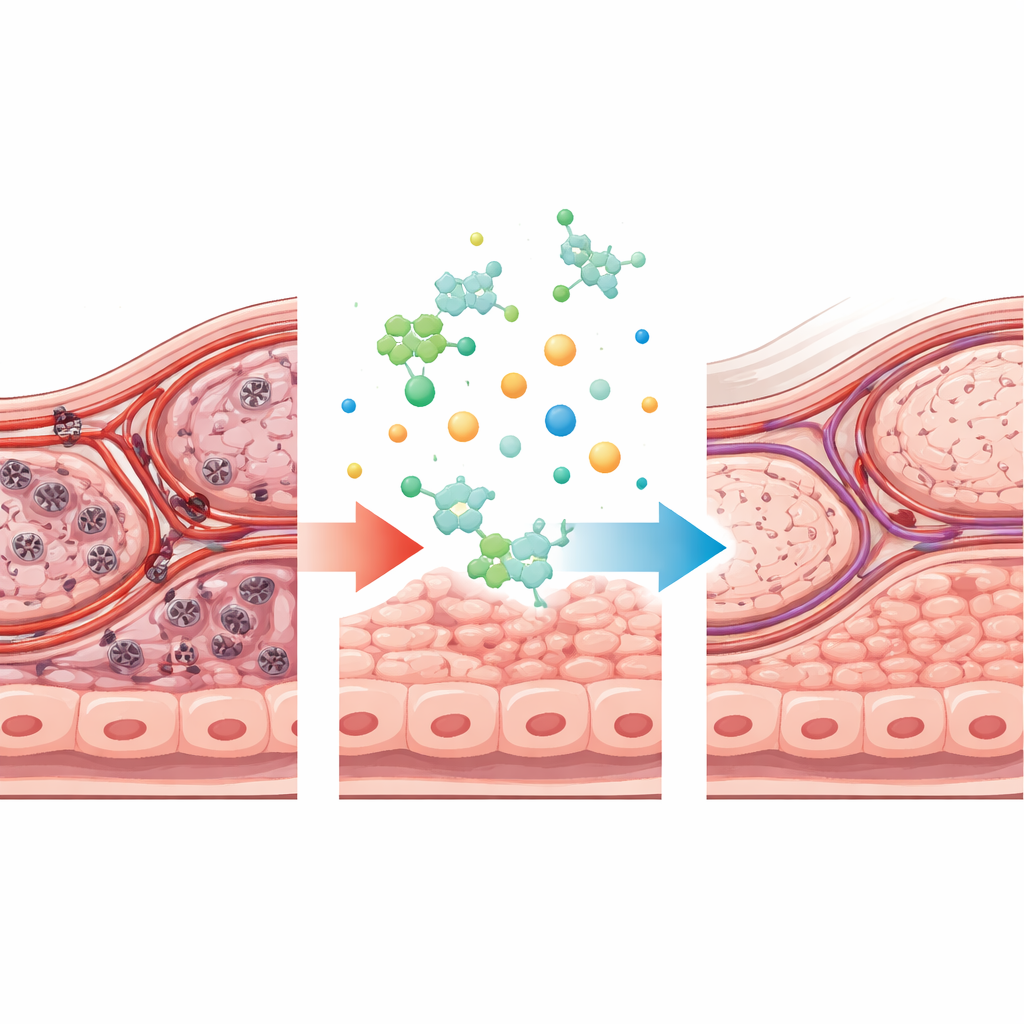
What Happened to the Tissues
In rats that experienced trauma without CBD, the reproductive organs showed clear signs of injury. Blood vessels were congested, there was swelling and inflammatory cell build‑up, and normal tissue architecture was disrupted. At the molecular level, estrogen receptor levels fell, while both HIF‑1α and oxytocin receptor signals rose, consistent with oxygen shortage and an overactive stress response. In contrast, rats that received CBD before the chest impact had reproductive tissues that looked much closer to normal. Structural damage was milder, estrogen receptor signals were better preserved, and the stress markers HIF‑1α and oxytocin receptor were noticeably lower. Rats given CBD without trauma looked similar to the sham animals, suggesting that CBD alone did not injure these organs.
What This Could Mean for Future Care
For a layperson, the main message is that a hard blow to the chest may quietly disturb reproductive organs by sending inflammatory and low‑oxygen signals through the body, at least in this animal model. CBD, given before such an injury, appeared to blunt this chain reaction and help keep hormone‑sensitive tissues closer to their healthy state. The authors caution that their work is an early, preclinical step: it does not prove exactly how CBD works, nor does it show that CBD improves fertility or outcomes in people after trauma. Still, the findings raise the possibility that CBD or similar compounds could one day be part of strategies to shield multiple organs from the hidden systemic fallout of severe chest injuries.
Citation: Ozmen, O., Asci, H., Topsakal, S. et al. Cannabidiol mitigates secondary genital injury after thoracic trauma by regulating systemic inflammation and hormone receptor signaling. Sci Rep 16, 10074 (2026). https://doi.org/10.1038/s41598-026-39310-z
Keywords: cannabidiol, blunt chest trauma, systemic inflammation, female reproductive organs, organ protection