Clear Sky Science · en
An integrated cubic Pythagorean fuzzy MAIRCA model with novel variation coefficient similarity measure for food safety risk assessment
Why safer food choices matter
Every day, people make countless choices about what to eat, trusting that the food on their plates is safe. Yet contaminated food still sickens hundreds of millions of people worldwide each year. Modern food supply chains stretch across continents, involve many companies and regulators, and generate oceans of imperfect data. This paper tackles a deceptively simple question with far-reaching consequences: how can authorities reliably compare food safety risks across regions when information is uncertain, incomplete, and influenced by human judgment? 
Challenges in judging food safety
Food safety is not governed by a single factor, but by a tangle of rules and practices: limits on pesticide residues, hygiene in factories, how clearly labels communicate risks, how easily products can be traced during a recall, and more. These criteria often push in different directions, and hard numbers are frequently missing. Inspectors and experts must describe conditions using vague terms like “very good” or “somewhat risky,” and their opinions may diverge. Traditional decision tools usually demand precise numerical inputs and struggle when asked to combine fuzzy expert opinions with scattered measurements, so their rankings of risk can be unstable or misleading.
A smarter way to handle uncertainty
The authors build on advances in “fuzzy” mathematics, a family of methods designed to work with shades of gray rather than crisp yes-or-no answers. In their framework, each expert’s judgment about a criterion—say, hygiene in a region—is captured not as a single score, but as a band of possible values plus an allowance for doubt. This richer description preserves hesitation and disagreement instead of forcing it into one number. They then introduce a new way to measure how similar two such fuzzy descriptions are, blending two well-known comparison ideas into a single similarity index. This index becomes a workhorse inside the model, helping both to weigh which safety criteria matter most and to judge how close each region is to ideal or poor performance.
Balancing expert insight and hard evidence
Risk evaluation ultimately hinges on how much importance is assigned to each safety criterion. Rather than relying only on expert rankings or only on statistical variation, the proposed approach combines both. Experts first rank the criteria according to their perceived importance, producing a set of “subjective” weights. At the same time, the new similarity index scans the data to see which criteria actually distinguish regions most sharply, yielding “objective” weights. A tuning knob then blends these two sources into final weights, allowing regulators to adjust how much they lean on expert experience versus data patterns while maintaining transparency about that choice.
Testing the model on Chinese regions
To show how the method works in practice, the authors evaluate food safety risk in five major regions of China—East, South, West, Central, and North—using seven common regulatory dimensions, including residue limits, labeling and traceability rules, hygiene, process standards, import controls, and sanitary regulations. Three specialists independently rate how well each region performs on each criterion using linguistic scales such as “fairly significant” or “exceptionally significant,” which are converted into the fuzzy form required by the model. The framework then calculates how far each region sits from a hypothetical best-case and worst-case standard, aggregates these gaps across all criteria using the combined weights, and produces an overall risk score and ranking for each region. 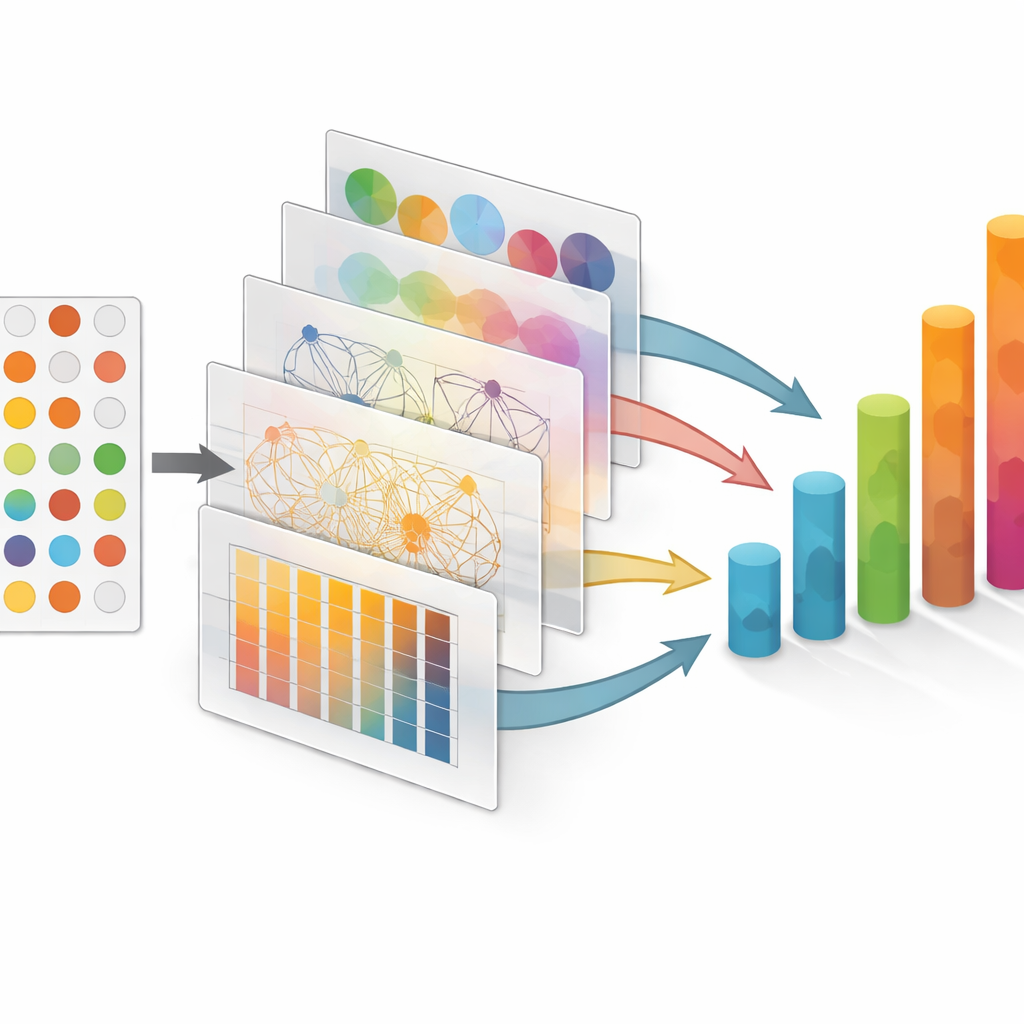
What the results say and why they matter
The analysis finds that East China has the lowest food safety risk among the five regions studied, followed by South and West China, with Central and North China lagging behind. Importantly, when the authors vary the balance between subjective and objective weights, and adjust how their similarity index behaves, the ranking barely changes. This stability suggests that the conclusions are not fragile artifacts of any single modeling choice. For policymakers, the framework offers a scientifically grounded dashboard: it highlights which regions need the most attention and which criteria contribute most to their risk. For the public, the take-home message is that advanced mathematics can help cut through confusion and conflicting opinions, offering a clearer, fairer way to prioritize food safety improvements and, ultimately, reduce the likelihood of dangerous products reaching consumers.
Citation: Liu, Z., Weng, Z., Ksibi, A. et al. An integrated cubic Pythagorean fuzzy MAIRCA model with novel variation coefficient similarity measure for food safety risk assessment. Sci Rep 16, 11323 (2026). https://doi.org/10.1038/s41598-026-39302-z
Keywords: food safety, risk assessment, decision-making, fuzzy logic, China