Clear Sky Science · en
Skin metabolomic response to medicinal shrub Myrothamnus flabellifolia and effect on skin phenotypes
Why a desert shrub matters for your skin
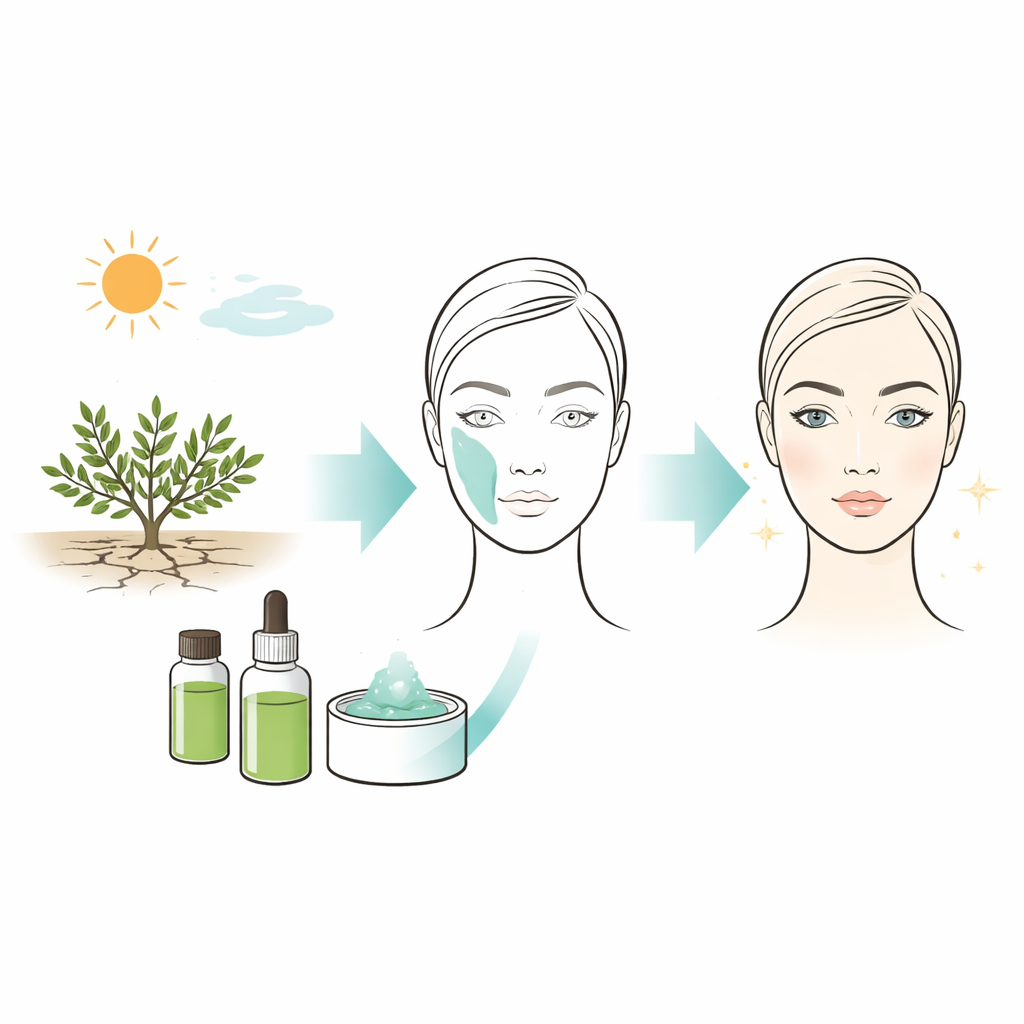
Imagine a plant that can shrivel up in scorching heat, then spring back to life when water returns. Scientists have turned to one such "resurrection" shrub, Myrothamnus flabellifolia, to ask a simple question with big implications: can molecules that help this plant survive extreme dryness also nudge tired, aging human skin toward a healthier, more radiant state? This study tracks not only how women’s faces look after using a cream made with the shrub’s extract, but also how the invisible chemical fingerprints on their skin change over time.
The desert survivor behind the cream
Myrothamnus flabellifolia grows in harsh, dry regions of southern Africa, where it endures long stretches without water. To survive, it packs its tissues with special sugars, protective vitamins, and other small molecules that help its cells tolerate dehydration and then recover. Cosmetic chemists formulated an aqueous gel containing a carefully prepared extract of this shrub, stabilized with common gel ingredients, and designed it as a daily facial product. Fifty-five Asian women aged 45 to 60 applied this gel cream twice a day for 56 days, after a washout period with a neutral moisturizer, allowing researchers to monitor how their skin looked and what was happening at the surface on a molecular level.
Measuring beauty beyond the mirror
To capture visible changes, dermatologists rated three key features—radiance, texture, and smoothness—using a standardized scale, while high-resolution imaging tools quantified fine lines, skin roughness, and color. A panel of trained experts scored wrinkle depth, spots, pores, and sagging from facial photographs, and the volunteers themselves completed detailed questionnaires about how their skin felt and looked. At the same time, the team collected ultra-thin samples from the outermost skin layer on the cheek from a subset of 32 women, both before the study started (day 0) and after 56 days. These strips were sent for untargeted metabolomics, a technique that inventories hundreds of tiny molecules—such as amino acids, sugars, lipids, vitamins, and other compounds—that together form the skin’s chemical landscape.
What changed in the skin’s chemical fingerprint
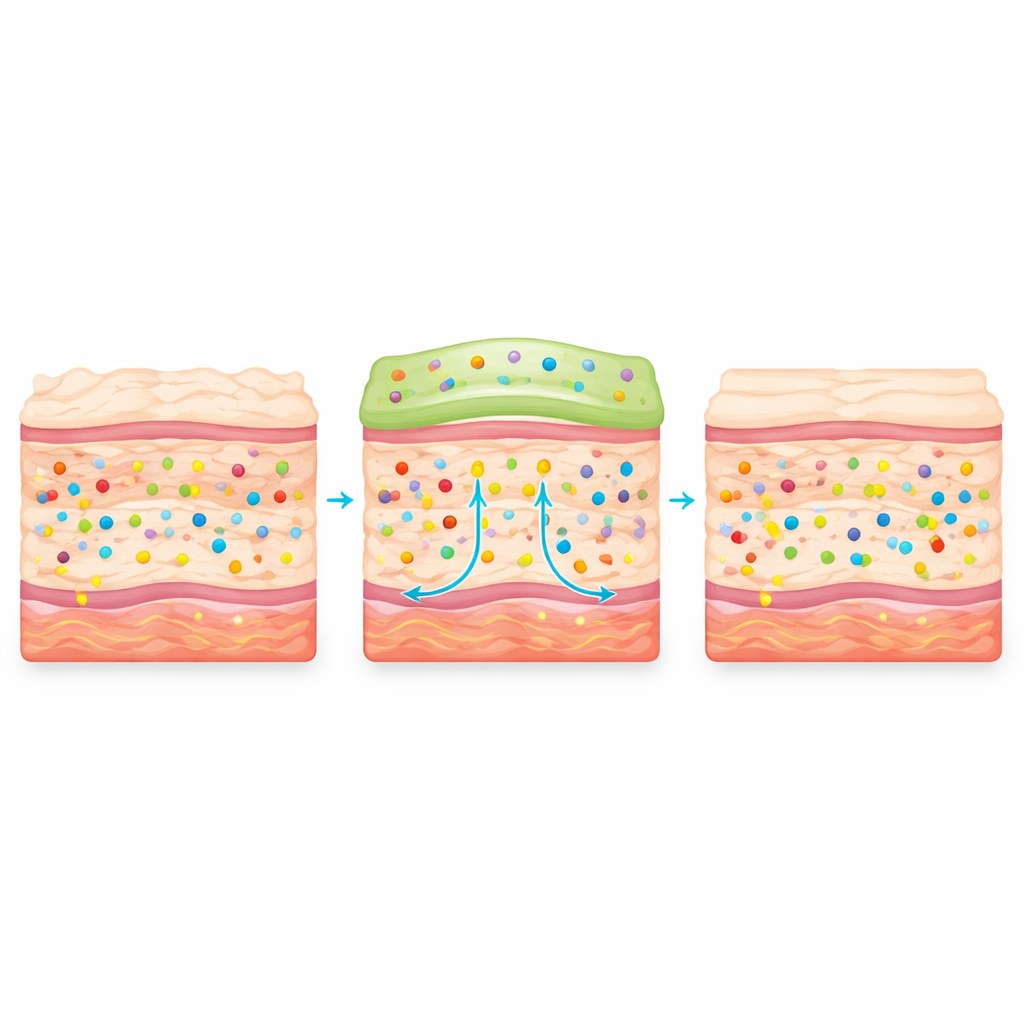
The metabolomics analysis detected 419 different compounds on the skin surface and revealed that this chemical network is highly organized, with clusters of related molecules moving together. After 56 days of using the shrub-based gel, the overall wiring of this network looked broadly similar, but certain areas shifted: connections among amino acids and small peptides became more prominent, while other clusters weakened. Eleven compounds clearly changed in abundance, including sugars like trehalose (a well-known drying-stress sugar abundant in the plant), energy-related molecules such as succinate, forms of vitamin E, several lipids, and nucleotides related to cell energy and repair. In total, 109 compounds were either altered over time or linked to visible skin features, yet only a small fraction—just 13—could be directly traced back to ingredients present in the plant extract itself, suggesting that much of the effect involves how the skin’s own metabolism responds.
Linking molecules to glow and texture
When the researchers matched specific metabolites to dermatologist scores, a pattern emerged. Certain by-products of histidine breakdown were strongly tied to better skin radiance, hinting that shifts in this pathway may brighten the complexion. Improved texture correlated mainly with a suite of lipids, including some that arise when the skin breaks down stored fats into more moisturizing, surface-active forms. At the same time, levels of free amino acids and small peptide fragments generally declined, which the authors interpret—cautiously—as a sign of reduced protein breakdown and possibly a calmer, better-hydrated outer barrier. Some vitamins, such as forms of vitamin B5 and vitamin E relatives, and compounds related to energy use and fat metabolism also tracked with subtle changes in cheek color. Together, these signals point to a broad reshaping of skin chemistry rather than a single "magic" molecule at work.
What this could mean for everyday skin care
For the women in the study, 56 days of using the Myrothamnus flabellifolia gel coincided with dermatologist-rated improvements in radiance and texture, expert-graded reductions in certain pore features, and a strong sense of better skin in self-assessments. Beneath these visible shifts, the outer skin layer showed a measurable rebalancing of its small-molecule mix, involving sugars, lipids, vitamins, and building blocks of proteins. Because the sampling was limited to the very surface and there was no placebo group, the authors are cautious: they cannot yet say exactly how deeply the plant molecules penetrate, how long the changes last, or how much of the benefit comes from the plant versus the base moisturizer. Still, the work demonstrates that it is now possible to track how a facial product reshapes the skin’s chemical fingerprint, and suggests that desert-adapted plants like Myrothamnus flabellifolia may inspire future treatments that support skin’s own pathways for resilience and youthful appearance.
Citation: Gabrielle, M., Audrey, G., Amélie-Marie, B. et al. Skin metabolomic response to medicinal shrub Myrothamnus flabellifolia and effect on skin phenotypes. Sci Rep 16, 12509 (2026). https://doi.org/10.1038/s41598-026-39282-0
Keywords: skin aging, metabolomics, botanical skincare, Myrothamnus flabellifolia, skin barrier