Clear Sky Science · en
Demography and behavioral ecology of the Indian crested porcupine (Hystrix indica) in Punjab
Why this prickly neighbor matters
The Indian crested porcupine is a familiar but little‑understood resident of farms, forests, and deserts across South Asia and the Middle East. In Punjab, Pakistan, it is both an important part of the natural landscape and, at times, a crop‑damaging pest. This study followed wild porcupines for three years to understand where they live, how their numbers change with the seasons, how they court and reproduce, and how parents and other family members care for the young. The findings reveal a surprisingly social, adaptable animal whose family life is tightly tuned to local climate and food supplies.
Where porcupines make their homes
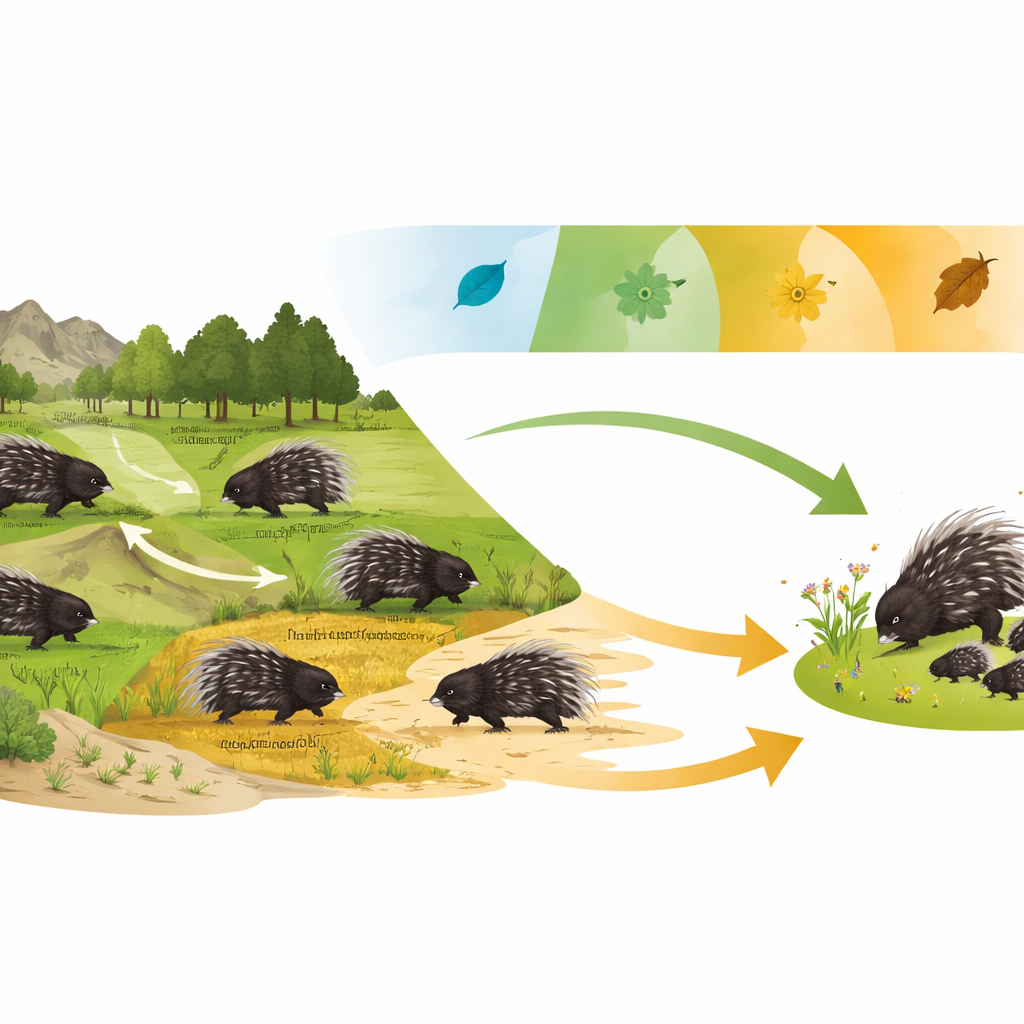
Researchers surveyed twelve sites spread across Punjab, covering irrigated forest plantations, canal embankments, sub‑mountainous hills, agricultural fields, and desert. By combining night‑time walks, tracks and droppings, and motion‑sensing cameras, they estimated a typical density of about three porcupines per square kilometer. Although numbers did not differ sharply from place to place, animals tended to be more common in irrigated forests and hilly regions than in open farmland or true desert. These favored areas provide soft soil for burrows and a steady supply of roots, bulbs, and other plant foods, while also offering cover from people and potential predators.
How seasons shape nightly activity
The team also tracked how often porcupines were seen throughout the year. Sightings peaked in summer and dropped to their lowest levels in fall, suggesting that the animals shift how much they move above ground as temperature, vegetation, and perhaps human activity change. On a finer scale, some months—especially June—stood out for especially high encounter rates. Males and females were seen in roughly similar numbers, though females were slightly more visible in summer. Together, these patterns indicate that porcupines adjust their movements to make the most of warm months while still avoiding heat and risk by remaining largely nocturnal.
Courting, mating, and raising young
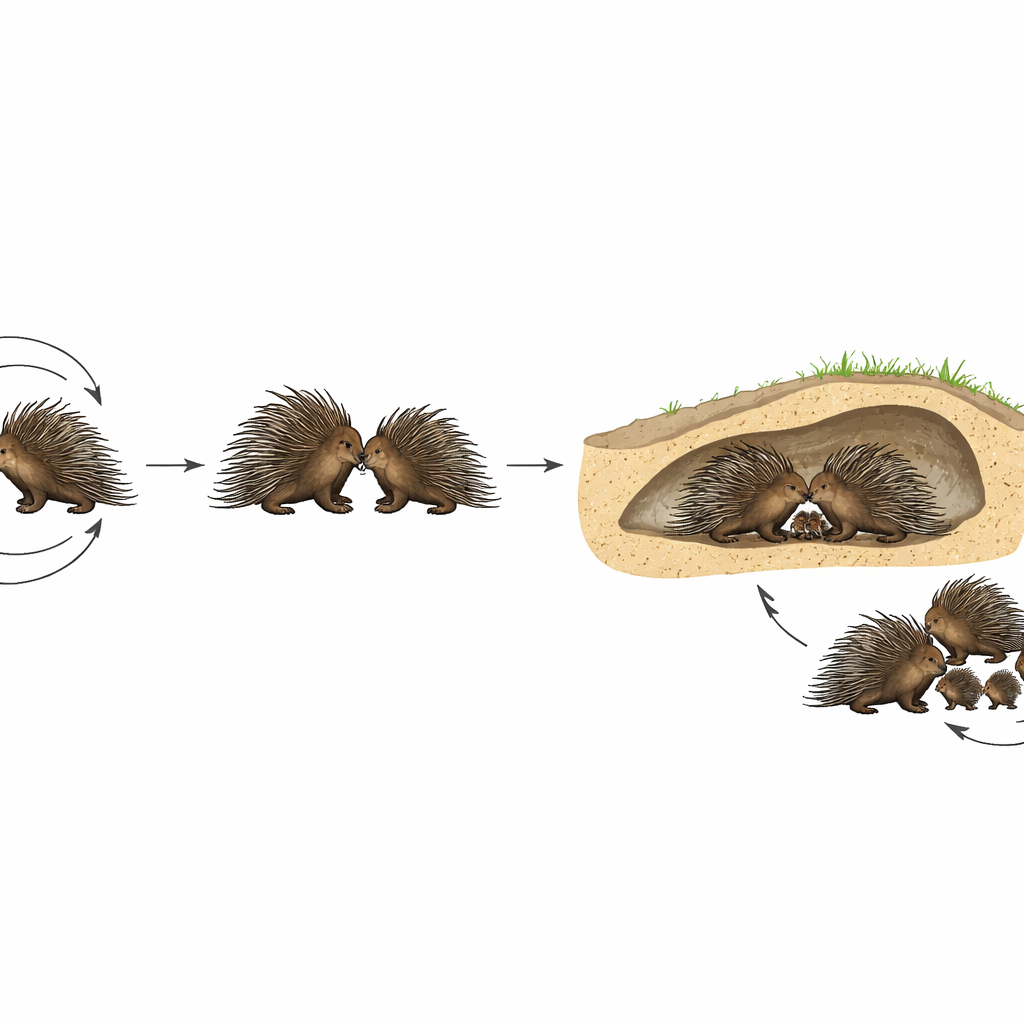
To look inside family life, the researchers focused cameras on known burrows and followed twelve mated pairs. They counted how often partners mounted each other and how often these interactions led to actual mating. Mounting was frequent but successful copulation was rare—many pairs showed dozens of attempts without a single confirmed mating event. Even so, pairs that mounted more often were more likely to mate at least once, and mounting activity was highest from February through April. Over three years the monitored families produced 21 litters totaling 33 offspring, mostly twins, with births occurring in all seasons but clustering in late winter and midsummer. This timing matches periods of better food availability, especially after monsoon rains.
Family teamwork in the burrow
The study documented nearly four thousand separate acts of parental care, such as grooming, guarding, and guiding youngsters. Most of this care was provided by both parents together, rather than by mothers alone. Fathers played a clear and active role, and older young—sub‑adults and juveniles—also helped look after new porcupettes. This pattern of shared parenting and “babysitting” by older siblings is unusual among mammals and points to a tightly knit family structure. It likely boosts the survival of young in a challenging environment where foraging trips are long and dangers can arise above and below ground.
What these findings mean for people and wildlife
By mapping how Indian crested porcupines use different landscapes, how their activity rises and falls with the seasons, and how families share the work of raising young, this study shows that they are resilient animals finely tuned to Punjab’s climate and farming rhythms. Their year‑round breeding and strong family bonds help them thrive in forests, on hillsides, and at the edges of fields, but also make them vulnerable to habitat loss, hunting, and conflict with farmers. Understanding their habits and social lives can guide efforts to protect key habitats while reducing crop damage, helping people and these prickly neighbors coexist more smoothly.
Citation: Liu, J., Zhang, Z., Yaqoob, M.A. et al. Demography and behavioral ecology of the Indian crested porcupine (Hystrix indica) in Punjab. Sci Rep 16, 10308 (2026). https://doi.org/10.1038/s41598-026-39276-y
Keywords: porcupine behavior, wildlife ecology, Punjab Pakistan, reproductive biology, parental care