Clear Sky Science · en
Greenhouse gas and ammonia emissions from duckweed cultivation systems using diluted liquid manure
Turning Farm Waste into Useful Protein
Modern farming produces huge amounts of animal manure, which can leak climate‑warming gases and nitrogen pollution into air and water. This study explores an intriguing idea: using tiny floating plants called duckweed to turn diluted cow manure into high‑quality protein, while also checking whether this new system cleans up emissions or simply changes their form. The work matters for anyone interested in climate‑friendly food, cleaner air in farming regions, and new ways to recycle nutrients instead of wasting them.
Small Floating Plants with Big Promise
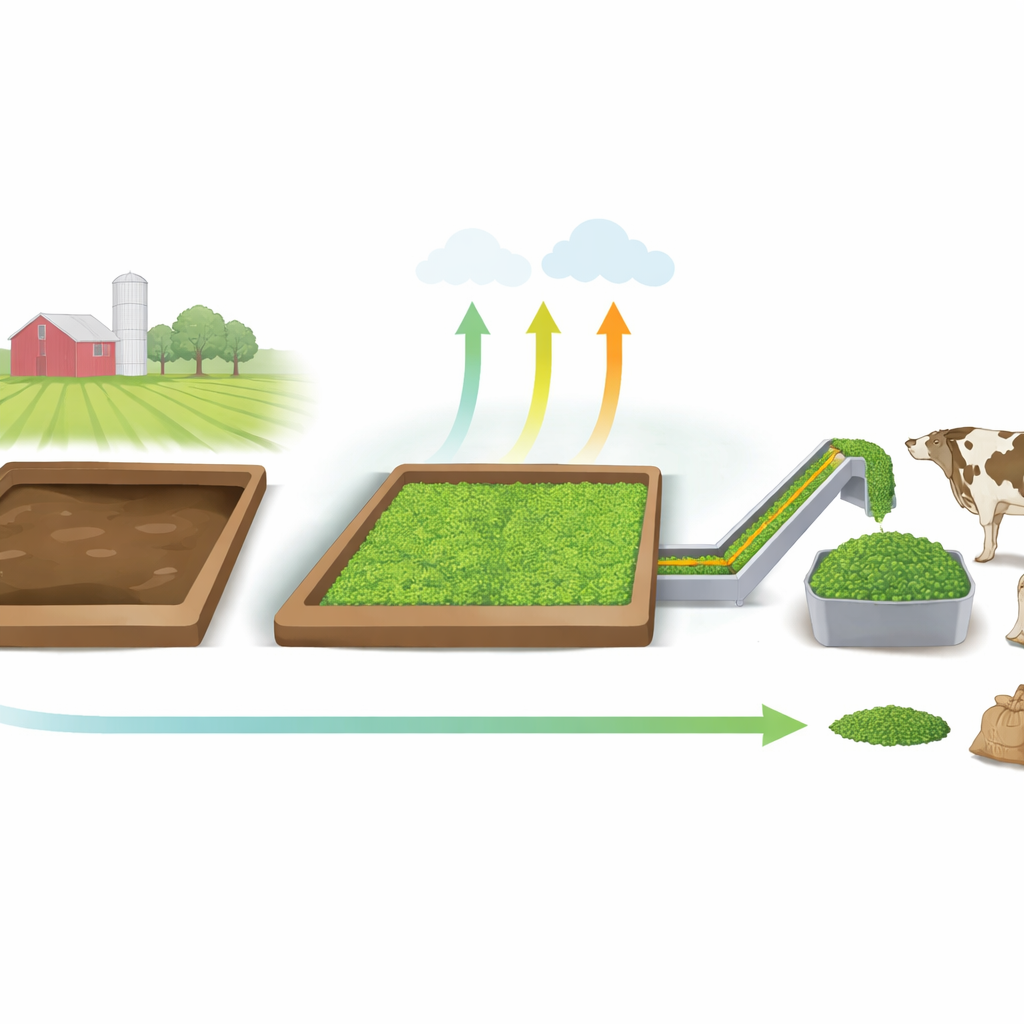
Duckweed is a group of very small, fast‑growing plants that form bright green carpets on still water. They are rich in protein and have already been tested as feed for pigs, poultry, fish, and even as food for people. Because duckweed thrives in nutrient‑rich water, some scientists see it as a way to “upcycle” the nitrogen in animal manure into valuable protein, rather than letting that nitrogen escape as pollution. Until now, however, almost nothing was known about the greenhouse gases and ammonia released when duckweed is grown directly on diluted liquid manure under real outdoor conditions.
How the Outdoor Duckweed Ponds Were Tested
The researchers set up ten large outdoor boxes filled with diluted cattle slurry, mimicking shallow farm manure ponds. Half of the boxes were covered with a layer of the duckweed species Lemna minor, while the others held slurry alone. They ran two week‑long experiments: one where the gas measurements were made in darkness to simulate night, and one where they were made in light to simulate daytime. Several times per day they sealed lids over the boxes, mixed the air above the slurry with small fans, and collected samples to measure methane, carbon dioxide, nitrous oxide, and ammonia. At the same time, they tracked how fast the duckweed grew and how much protein it produced.
What Happened to the Gases
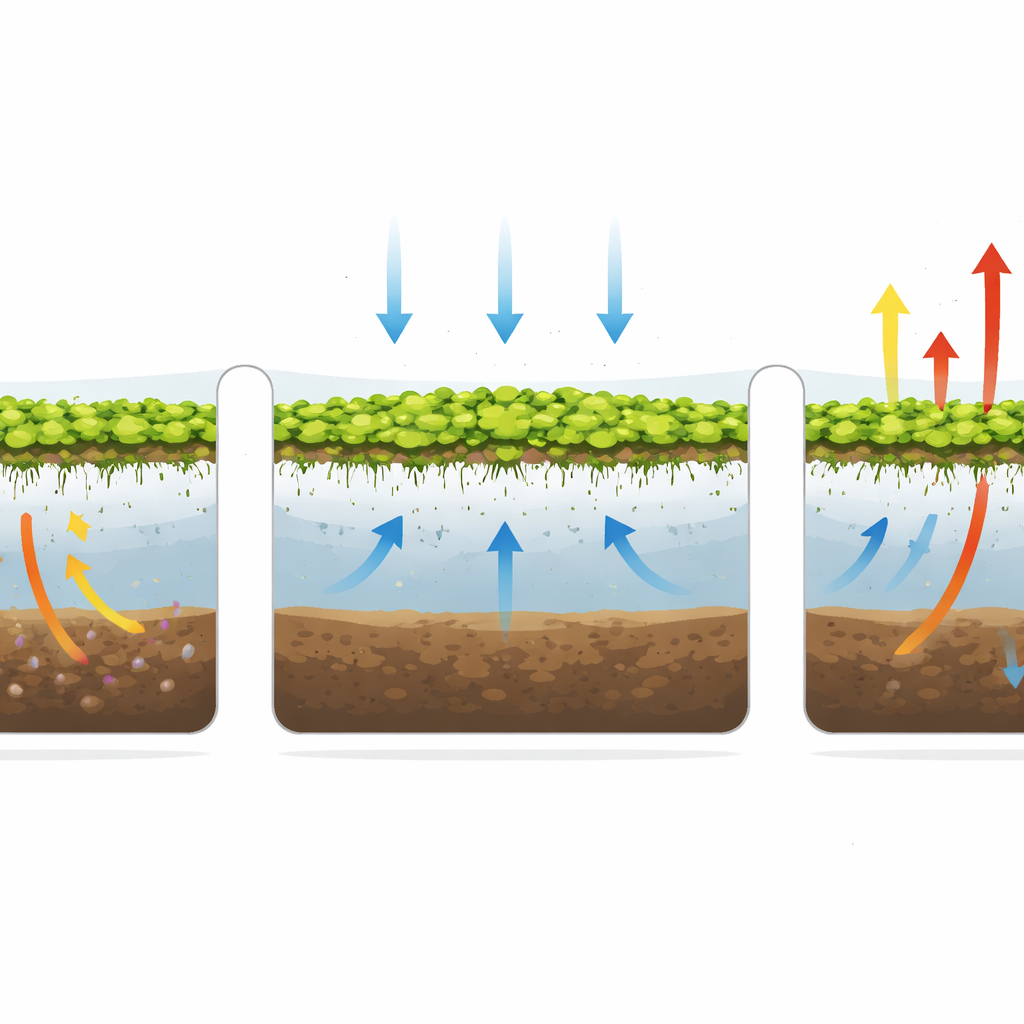
The gas measurements revealed a mixed picture. Methane, a potent greenhouse gas from manure, was high in the first hours after the systems were started but then dropped sharply in all boxes, almost to zero after a few days, whether duckweed was present or not. Carbon dioxide behaved as expected for a photosynthesizing plant: in the light, duckweed ponds drew carbon dioxide out of the air, while in the dark they released it through respiration, yet overall they acted as a carbon sink. Ammonia, which contributes to air pollution and can harm ecosystems downwind of farms, was reduced by more than 80 percent when duckweed covered the slurry, acting like a living lid that both absorbs nitrogen and physically blocks evaporation.
The Hidden Cost: Another Powerful Gas
The good news on ammonia came with an important drawback. Ponds with duckweed gave off far more nitrous oxide than slurry alone, both in light and in dark. Nitrous oxide is a greenhouse gas that, molecule for molecule, warms the planet many times more strongly than carbon dioxide. The researchers saw rising levels of certain nitrogen forms in the water that point to more intense microbial activity under the duckweed mat, likely speeding up the chain of reactions that turns ammonium into nitrous oxide. In other words, the system appeared to swap one nitrogen loss pathway (ammonia to the air) for another (nitrous oxide), rather than simply solving the problem.
How Green Is Duckweed Protein?
By combining gas emissions with protein yield, the team estimated the climate footprint of duckweed protein grown on slurry. Depending on weather and growth rate, they found values between about 3.5 and 6.5 kilograms of carbon‑dioxide‑equivalent per kilogram of protein. This range overlaps with well‑managed field crops such as faba beans and barley, even though duckweed in these trials did not yet reach its potential growth rate. Faster growth lowered the climate impact per unit of protein, showing that improving productivity is a key lever for cleaner performance.
Where This Leaves Future Farms
For a lay observer, the main message is that duckweed ponds on diluted manure could become a promising way to turn farm waste into home‑grown protein while capturing carbon and sharply cutting ammonia emissions. At the same time, the system currently boosts nitrous oxide, a serious climate concern. The authors argue that understanding the microbes and oxygen levels in the thin layer of water under the duckweed mat will be crucial for designing ways to curb this gas—through better pond design, management, or complementary treatments. If those hurdles can be overcome, tiny duckweed plants may help livestock farms close their nutrient loops and supply protein with a climate cost comparable to, or better than, many conventional crops.
Citation: Stadtlander, T., Gomez, D.M., Müller, R. et al. Greenhouse gas and ammonia emissions from duckweed cultivation systems using diluted liquid manure. Sci Rep 16, 9887 (2026). https://doi.org/10.1038/s41598-026-39270-4
Keywords: duckweed, manure, greenhouse gases, ammonia emissions, sustainable protein