Clear Sky Science · en
Energy, economic and environmental (3E) analysis of geothermal-based plant operation for reliable power production in cold climates
Powering Remote Towns Without the Smoke
Many northern communities rely on diesel generators to keep the lights on, even as fuel must be hauled in over long distances and prices keep rising. This study asks a simple question with big implications: could deep heat from beneath our feet provide cleaner, cheaper, and more reliable electricity for such places? Focusing on the remote community of Fort Liard in Canada’s Northwest Territories, the researchers explore how a geothermal power plant could replace most or all diesel generation over the long term, while saving money and cutting pollution.
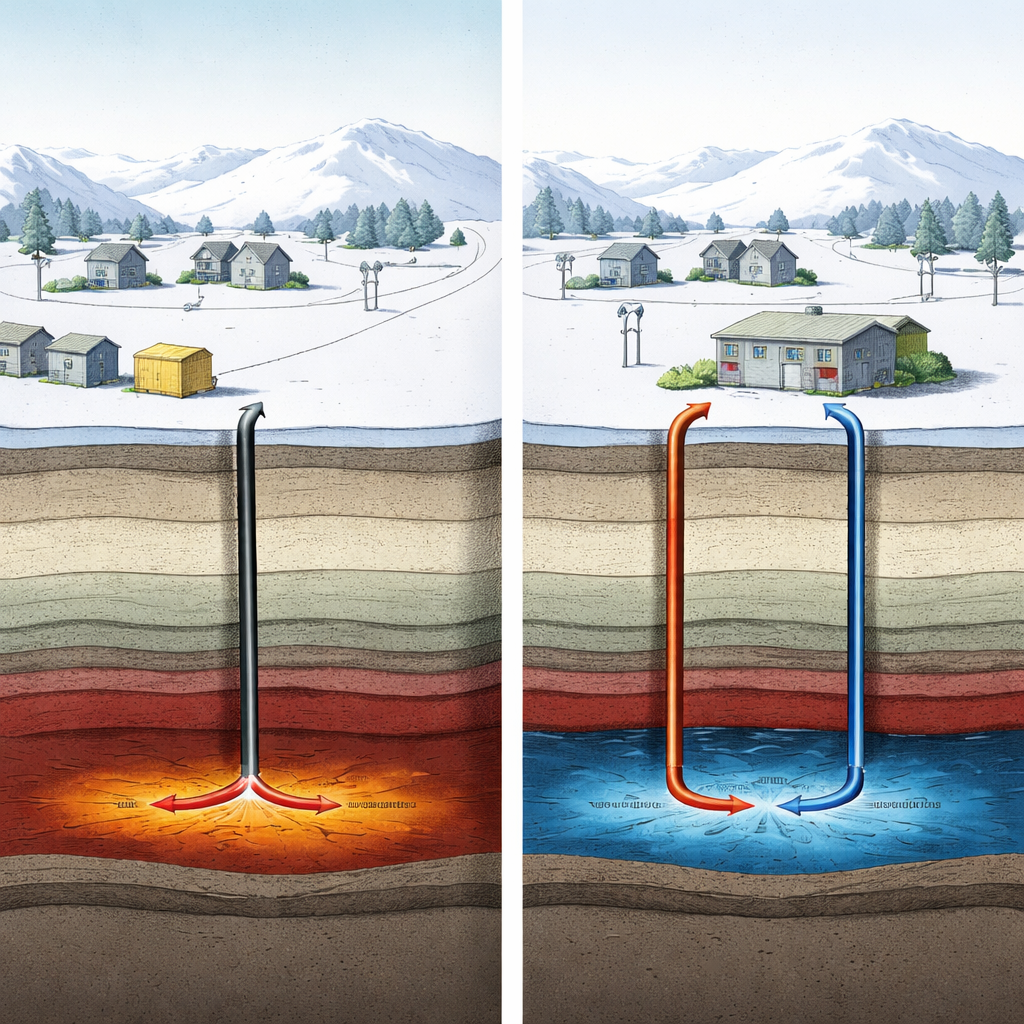
Heat From Deep Underground
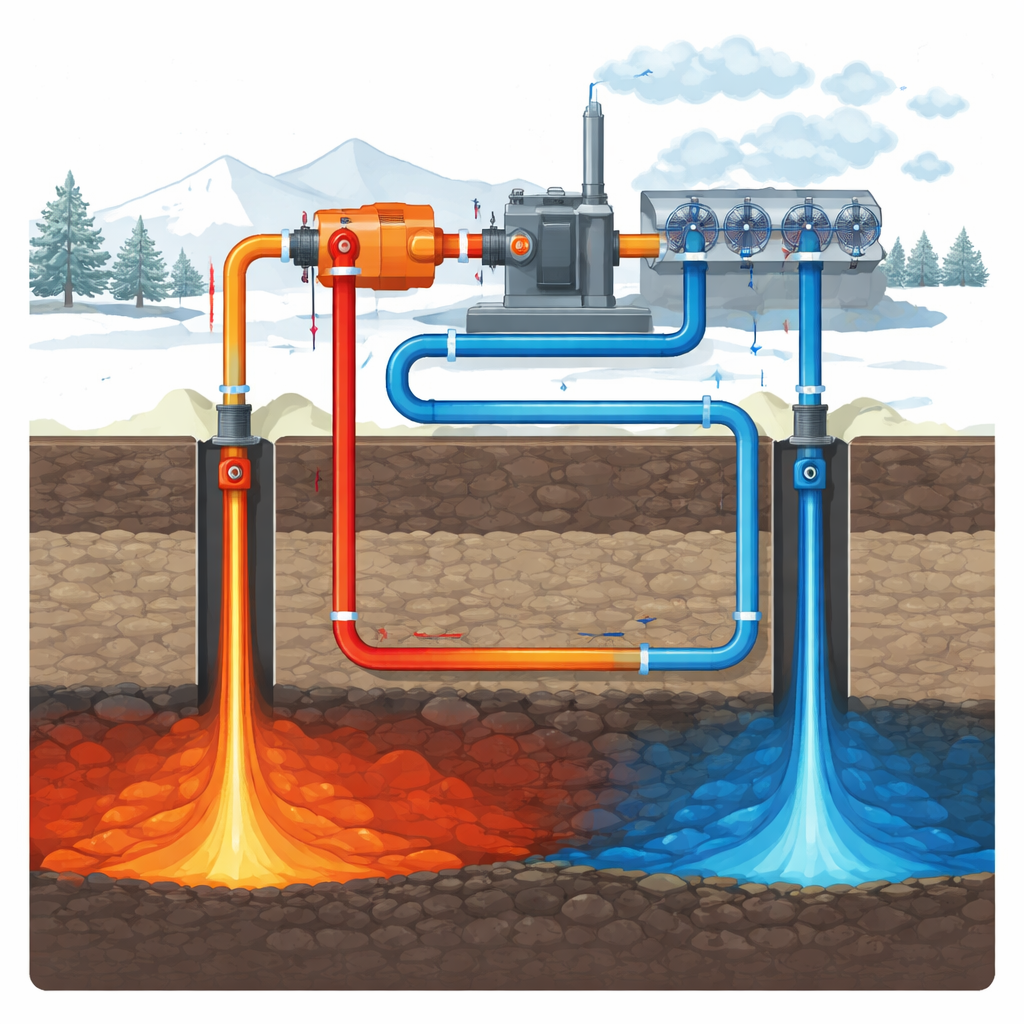
Geothermal energy taps the natural warmth stored in Earth’s crust. In Fort Liard’s case, the town sits above a hot underground water-bearing layer more than four kilometres down. That layer is hot enough—around 170–180 °C—to drive a compact power plant at the surface. The proposed system pumps hot salty water up one well, passes it through a heat exchanger that warms a separate working fluid, and then returns the cooled water to the subsurface through another well. The working fluid drives a turbine in a closed loop, so the underground water is reused rather than burned, making the system a steady, low-emission source of power that is largely independent of weather.
Three Ways to Run a Geothermal Plant
To see how this would work in practice, the team modelled three operating approaches over a 30‑year period using detailed real-world data on Fort Liard’s electricity use, local climate, and geology, plus actual quotes for equipment and construction. In the first approach, the geothermal plant runs just hard enough to meet the community’s needs, with a small diesel unit and batteries standing by for emergencies and maintenance. In the second, the plant runs at full output all year long, generating far more power than the town currently uses, which could support future growth or export of surplus electricity. The third approach is similar to the first, except the geothermal system is shut down each June, giving the underground reservoir time to recover while diesel and batteries cover that month’s demand.
Costs, Payback, and Long-Term Value
Although the upfront cost of drilling deep wells and installing the plant is high, the analysis shows that, once built, geothermal power can be much cheaper than continuing to burn diesel. Today, Fort Liard’s electricity from diesel—without government subsidies—effectively costs about 0.70 Canadian dollars per kilowatt-hour. By comparison, the modelled geothermal plant produces power for roughly 0.18 dollars per kilowatt-hour in the first and third approaches, and only about 0.07 dollars per kilowatt-hour when run at full capacity. Financial indicators tell a similar story: the investment could pay for itself in about 10 to 11 years in the more conservative modes and in just over 5 years when operating at full power, with particularly strong long-term returns in that second, high-output case.
Cleaner Air and Quieter Nights
Environmental and health impacts are also central to the comparison. When the geothermal plant supplies all routine power (the first and second approaches), the diesel unit runs only as a backup, essentially eliminating local exhaust during normal operation. In the third approach, where diesel covers one month each year, the model still shows substantial greenhouse gas and air‑pollution emissions during that period, including fine particles and gases linked to lung and heart problems. Geothermal systems are not impact‑free—they require land, materials, and careful management of underground water—but overall they offer far lower ongoing pollution than diesel generators, especially in communities where engines now run around the clock.
What This Means for Northern Communities
For Fort Liard and similar remote towns in cold regions, the study’s conclusion is straightforward: where the underground conditions are favourable, deep geothermal power can deliver dependable, around‑the‑clock electricity at a lower long‑term cost and with far less pollution than diesel. Running the plant continuously provides the strongest economic case, while more conservative modes still yield solid savings and cleaner air. Perhaps most importantly, the method used here—combining real community data with detailed energy, economic, and environmental modelling—can be copied and adapted to other isolated communities sitting above promising hot rock and water, helping them move toward more secure and climate‑friendly energy futures.
Citation: Dehghani-Sanij, A., Khakzad, N., Wigston, A. et al. Energy, economic and environmental (3E) analysis of geothermal-based plant operation for reliable power production in cold climates. Sci Rep 16, 11019 (2026). https://doi.org/10.1038/s41598-026-39264-2
Keywords: geothermal energy, remote communities, cold climate power, diesel replacement, renewable electricity costs