Clear Sky Science · en
Mixed-methods analysis on psychedelic-augmented meditation experiences from a randomized controlled mindfulness retreat
Listening In on Inner Journeys
What really happens inside people’s minds when they meditate on psychedelics—and how can scientists study experiences that are hard to put into words? This study followed experienced meditators on a three‑day retreat in the Swiss Alps, where some received a psychedelic mixture during meditation and others took a placebo. By carefully interviewing participants afterwards and analyzing their words with modern language‑analysis algorithms, the researchers tried to map the landscape of these inner journeys and understand how drugs, mindset, and setting work together to shape them. 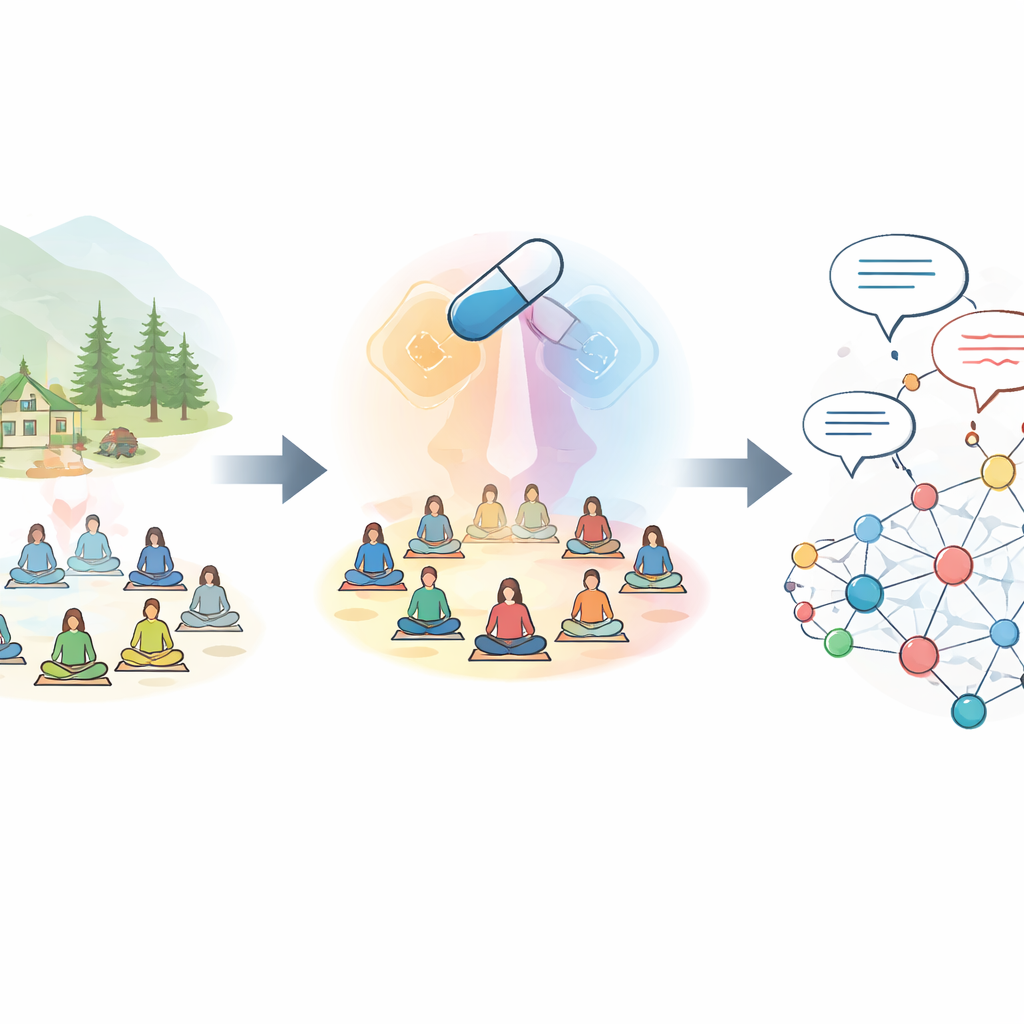
A Retreat with Two Kinds of Journeys
The research took place during a structured mindfulness retreat with 40 healthy, intermediate‑level meditation practitioners. Participants followed a typical schedule of sitting and walking meditation, mindful work, and rest. On the second day, half received sublingual tablets containing DMT and harmine, a fast‑acting psychedelic combination, while the other half received taste‑matched placebo tablets. Everyone continued meditating in the same environment, with added gentle elements like music and a gong ceremony to support the experience. Afterwards, a subset of 23 participants took part in in‑depth phenomenological interviews, designed to help them recall and describe their experiences as precisely and vividly as possible.
Turning Spoken Stories into Mapped Patterns
The team recorded and transcribed the interviews, then split the text into thousands of individual sentences. They used a modern natural language processing (NLP) method called BERTopic, which groups sentences into clusters of related themes based on subtle patterns of word use. At the same time, two human researchers read and manually coded the interviews, tagging sentences according to ideas like control, bodily sensations, emotional tone, and spiritual meaning. Comparing these two approaches allowed the team to see where human judgment and algorithmic discovery agreed, where they differed, and what each method could reveal about the structure of psychedelic and meditative experiences. 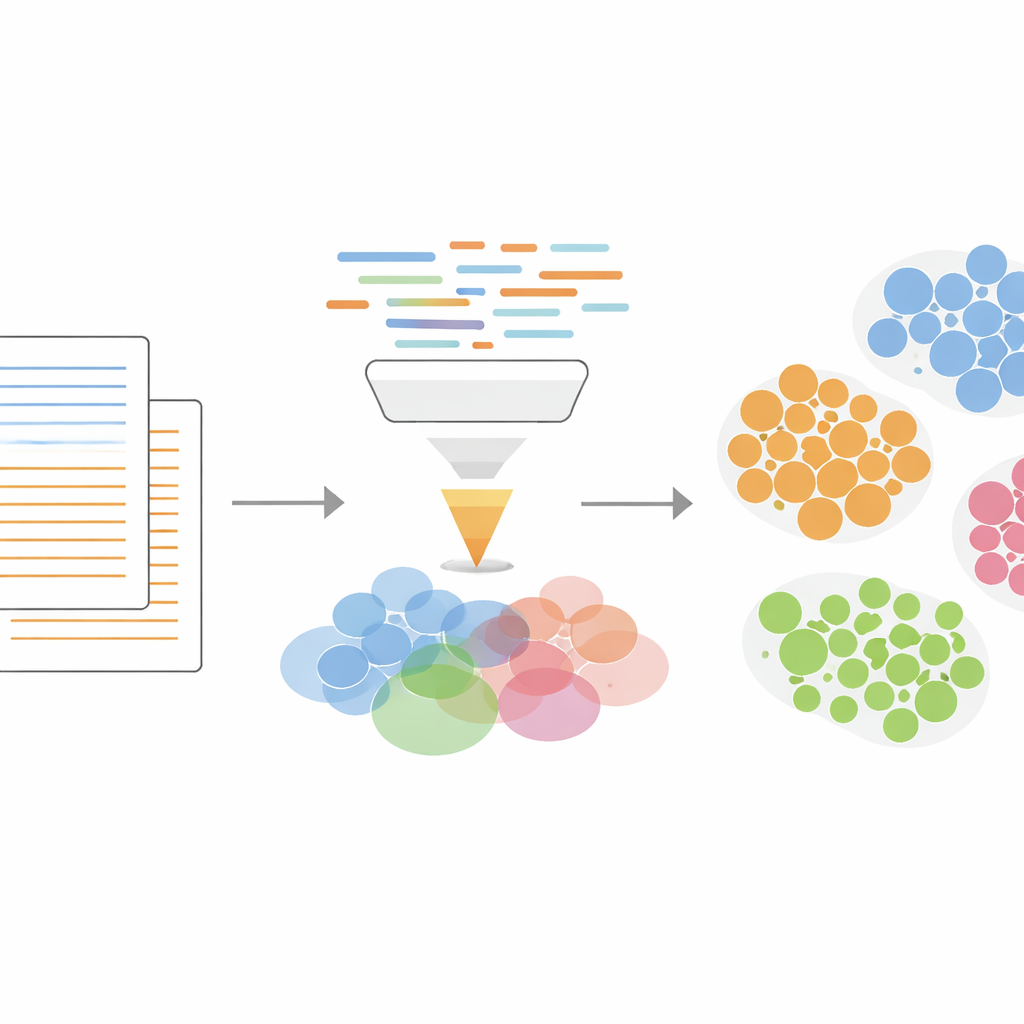
Shared Paths, Different Intensities
Across all interviews, the algorithms uncovered nearly thirty topics, most of them about immediate experiences such as shifting sense of self, strong emotions, changes in body perception, and altered hearing and vision. Strikingly, meditators in both the psychedelic and placebo groups often drew on similar language, including Buddhist ideas such as impermanence, equanimity, and compassion, to make sense of what had happened. This suggests that advanced meditation practice and spiritual training give people a shared vocabulary for unusual states of consciousness, whether those states arise from meditation alone or from psychedelics. At the same time, participants who took DMT‑harmine reported richer, more varied, and often more intense experiences, especially in visual, auditory, and emotional domains, while placebo participants focused more on physical comfort, energy, and the social and environmental atmosphere of the retreat.
Hidden Themes of Control, Trust, and Change
Beyond familiar psychedelic effects—such as mystical‑type feelings, insights, and emotional breakthroughs—the combined human and NLP analyses brought to light “latent” themes that are rarely front and center in standard questionnaires. These included ongoing negotiations between control and surrender, a sense of deep calm or equanimity in the face of powerful experiences, and the feeling that insights were not just intellectual but embodied in the whole person. Many participants reflected on how meditation and psychedelics seemed to interact: some felt that meditation grounded and steadied the drug experience; others felt that psychedelics sped up inner processes that usually unfold slowly through practice. The placebo group, for its part, frequently wrestled with whether their experiences were due to the study drug, the retreat setting, or expectation—highlighting how powerful context and belief can be, even without an active psychedelic.
Why These Findings Matter
In plain terms, the study shows that what people feel and how they describe it under psychedelics cannot be separated from their training, beliefs, and surroundings. Powerful drugs like DMT‑harmine may act less like simple chemical switches and more like amplifiers of whatever inner and outer conditions are already present. By marrying careful interviews with modern language analysis, the researchers demonstrate a new way to study these complex states without forcing them into narrow checklists. Their work suggests that both psychedelic experiences and deep meditation can produce meaningful, potentially healing states—and that understanding the words people use to describe them is key to harnessing their benefits safely and effectively.
Citation: Schlomberg, J.T.T., Meling, D., Grylka, R. et al. Mixed-methods analysis on psychedelic-augmented meditation experiences from a randomized controlled mindfulness retreat. Sci Rep 16, 14236 (2026). https://doi.org/10.1038/s41598-026-39261-5
Keywords: psychedelics, meditation, natural language processing, subjective experience, mindfulness retreat