Clear Sky Science · en
Organic solution advanced spray-dried microparticulate dry powder of doxycycline hyclate for lung delivery
Why a breathing disorder needs a new kind of medicine
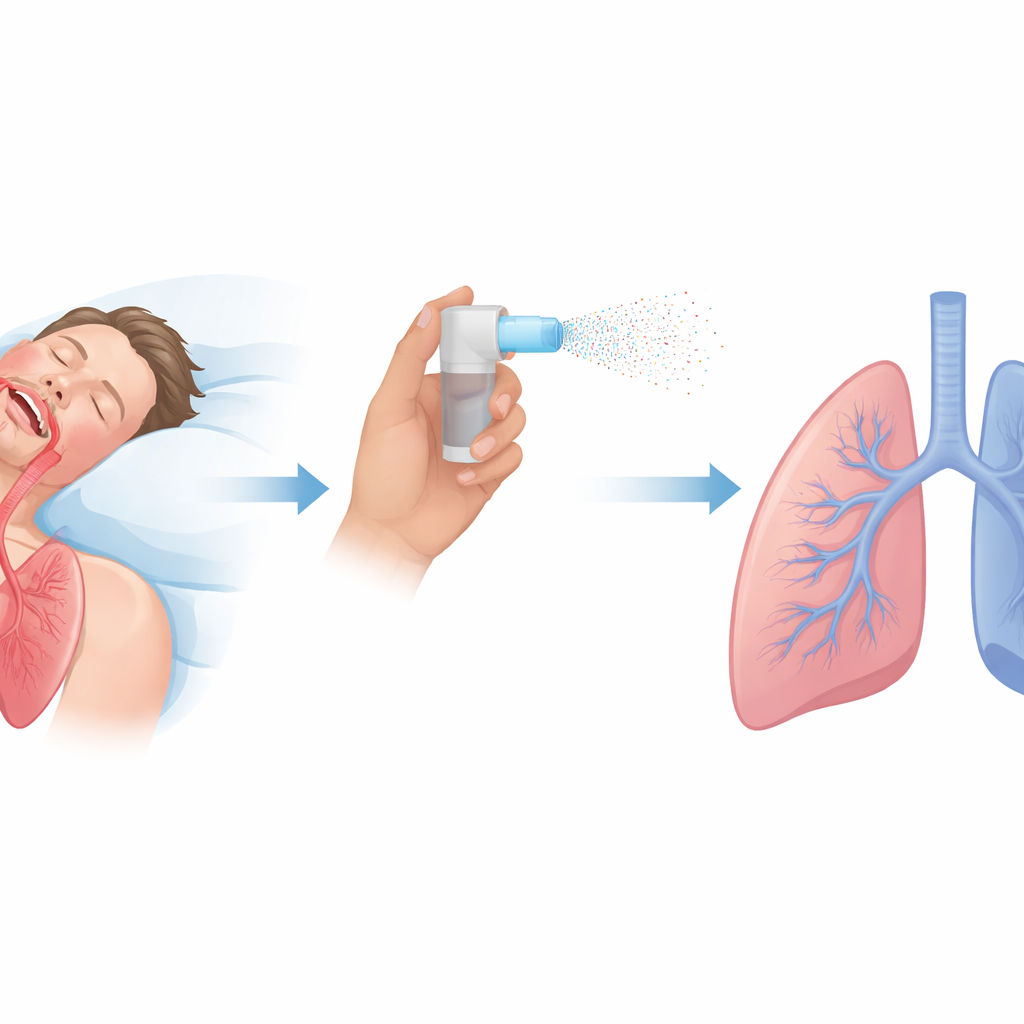
Millions of people stop breathing repeatedly while they sleep, a condition known as obstructive sleep apnea. Beyond loud snoring and daytime fatigue, this nightly struggle for air can stir up chronic inflammation in the body and raise the risk of heart disease, diabetes, and other illnesses. In this study, researchers explored a new way to deliver an old, widely used drug—doxycycline—directly to the lungs as a fine inhaled powder, with the long-term goal of calming airway inflammation linked to sleep apnea.
Turning a familiar pill into a lung-targeted powder
Doxycycline is best known as an antibiotic, but at lower doses it also quiets inflammatory signals, making it attractive for diseases in which inflammation plays a central role. No drug is currently approved specifically to treat obstructive sleep apnea, and giving medicines by mouth exposes the whole body and routes them through the liver before they reach the lungs. The team set out to transform pure doxycycline into an “excipient-free” inhaled powder—meaning the particles are made of drug alone, without added carriers—so that treatment could be concentrated in the lungs while minimizing unnecessary exposure elsewhere in the body.
Engineering tiny particles that can ride the breath
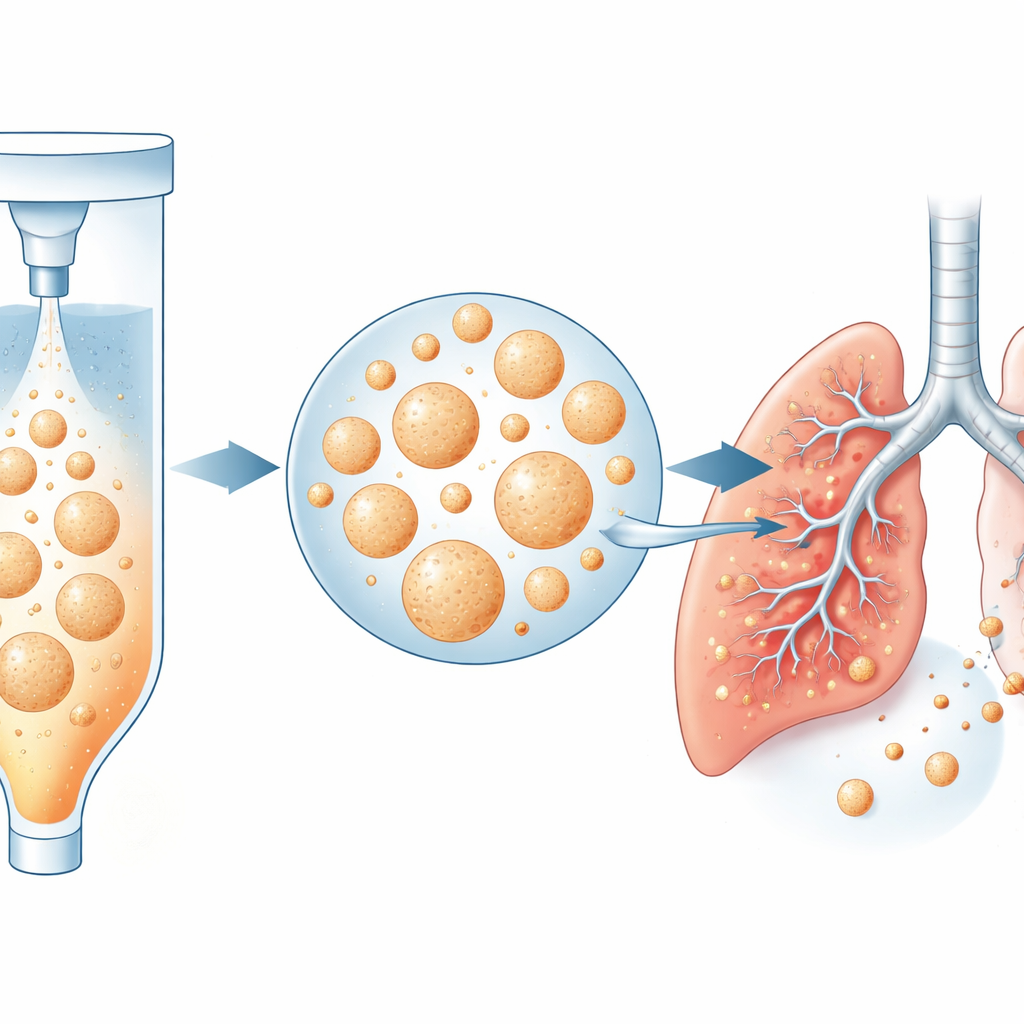
To create suitable particles, the scientists used a technique called spray drying, in which a solution of doxycycline in alcohol is sprayed into a warm chamber so that the liquid evaporates and leaves behind dry particles. By adjusting how fast the liquid feed was pumped (low, medium, and high rates), they produced microscopic spheres with hollow or dimpled interiors, all smaller than about two micrometers in size. Compared with the original raw drug—which formed large, irregular crystals poorly suited for inhalation—the new particles were much more uniform and better able to be carried by airflow deep into the lung.
Checking structure, water content, and behavior in air
A battery of tests confirmed that spray drying fundamentally changed doxycycline’s physical form. X-ray measurements showed that the sharp, ordered pattern typical of crystals disappeared in the processed powders, replaced by an “amorphous” glass-like state. Thermal and microscopic analyses supported this shift, revealing a distinct glass transition temperature well above normal body temperature, meaning the particles should remain stable in the body under typical conditions. The spray-dried powders absorbed a bit more water than the raw drug, but still remained within ranges considered acceptable for inhaled products. When the team tested how the powders dispersed using two different commercial inhalers, both devices released most of the loaded dose, but one—called NeoHaler—sent a larger share of fine particles into the size range that can reach the small air passages where inflammation often resides.
Testing safety on human lung cells in the lab
Because inhaled drugs come into direct contact with delicate lung surfaces, safety is a key concern. The researchers exposed four types of immortalized human lung cell lines, representing different regions of the airways, to a range of doxycycline concentrations. At very high levels, cell survival dropped, as expected. However, at a concentration of 10 micromolar—a level relevant for potential anti-inflammatory use—cell viability stayed above 80 percent across all four cell types, suggesting that this dose of the drug is well tolerated in vitro. These findings support moving forward to more advanced studies while keeping safety limits in mind.
What this could mean for people with sleep apnea
This work does not yet offer an approved treatment, but it lays the groundwork for one. The study shows that pure doxycycline can be turned into a stable, respirable dry powder that flows well through real inhaler devices and appears safe in preliminary lung cell tests. For people living with obstructive sleep apnea, such an inhaled formulation could one day complement mechanical therapies like continuous positive airway pressure by directly targeting the inflammation triggered by repeated drops in oxygen during sleep. Further research, including animal and human studies, will be needed to confirm whether this new powder can safely reduce airway inflammation and improve health outcomes in patients.
Citation: Alameddin, H., Alabsi, W., Eedara, B.B. et al. Organic solution advanced spray-dried microparticulate dry powder of doxycycline hyclate for lung delivery. Sci Rep 16, 12755 (2026). https://doi.org/10.1038/s41598-026-39198-9
Keywords: obstructive sleep apnea, inhaled doxycycline, dry powder inhaler, lung inflammation, spray-dried particles