Clear Sky Science · en
Comparative morphological, genomic, and functional characterization of two newly isolated lytic caudoviricetes phages targeting Escherichia coli and Salmonella
Viruses That Protect Our Food
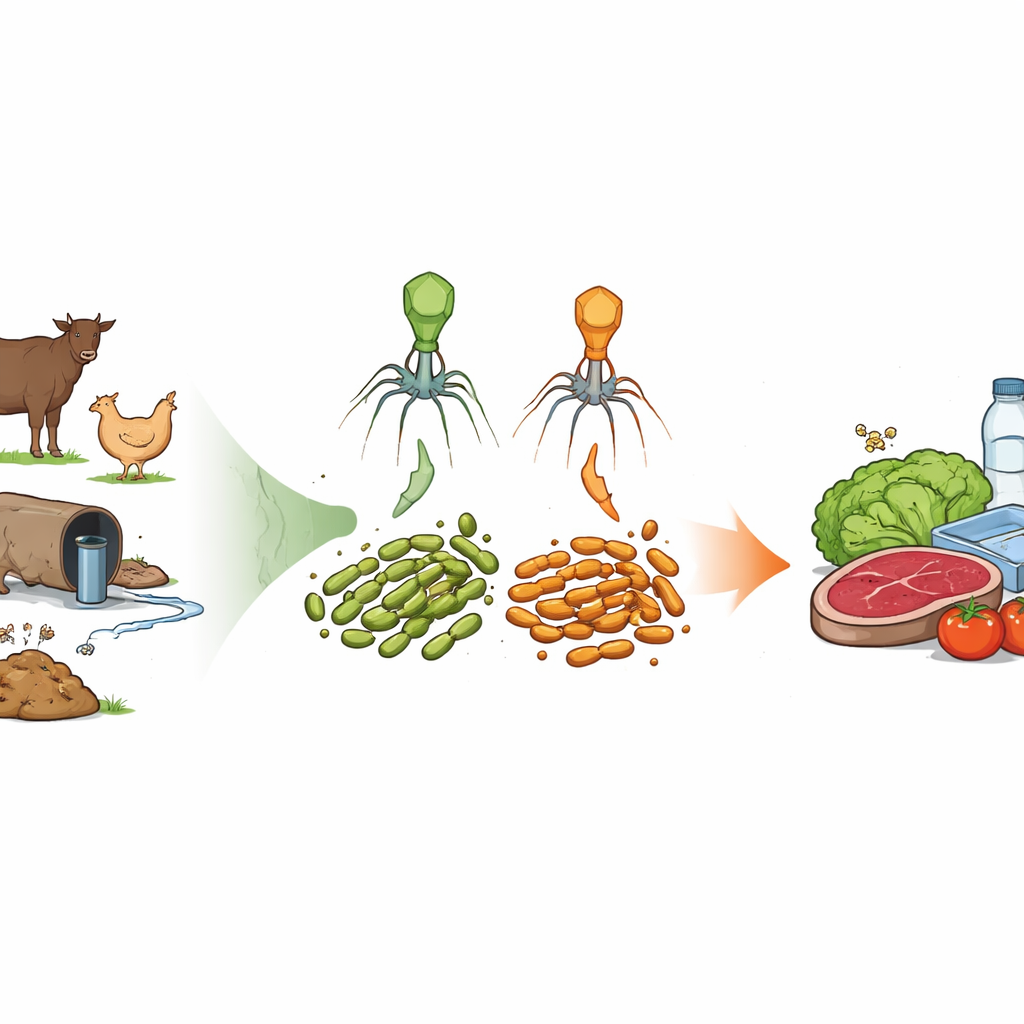
Every year, millions of people fall ill after eating food contaminated with harmful bacteria such as Salmonella and certain strains of Escherichia coli. With antibiotics losing their power against these germs, scientists are searching for new, precise ways to keep our food safe. This study explores two naturally occurring viruses that prey only on bacteria and asks a practical question: could these microscopic hunters become reliable allies in protecting our food supply from farm to fork?
Hunting Helpers from Sewage and Barnyards
The research team collected samples from two everyday but very different places in the United Arab Emirates: municipal sewage and camel barns. From these complex mixtures, they isolated sixteen bacterial viruses, known as bacteriophages, that attack Salmonella or E. coli. Two standout candidates were chosen for deeper study. One, called SW01, came from sewage and attacks Salmonella. The other, CF01, came from camel feces and can infect both E. coli and some Salmonella. Under the electron microscope, both viruses showed the same basic shape: a geometric “head” packed with DNA and a long contractile “tail” used to inject that DNA into bacterial cells, a classic design for aggressive, cell-killing phages.
Different Specialties: Sharpshooter vs. Generalist
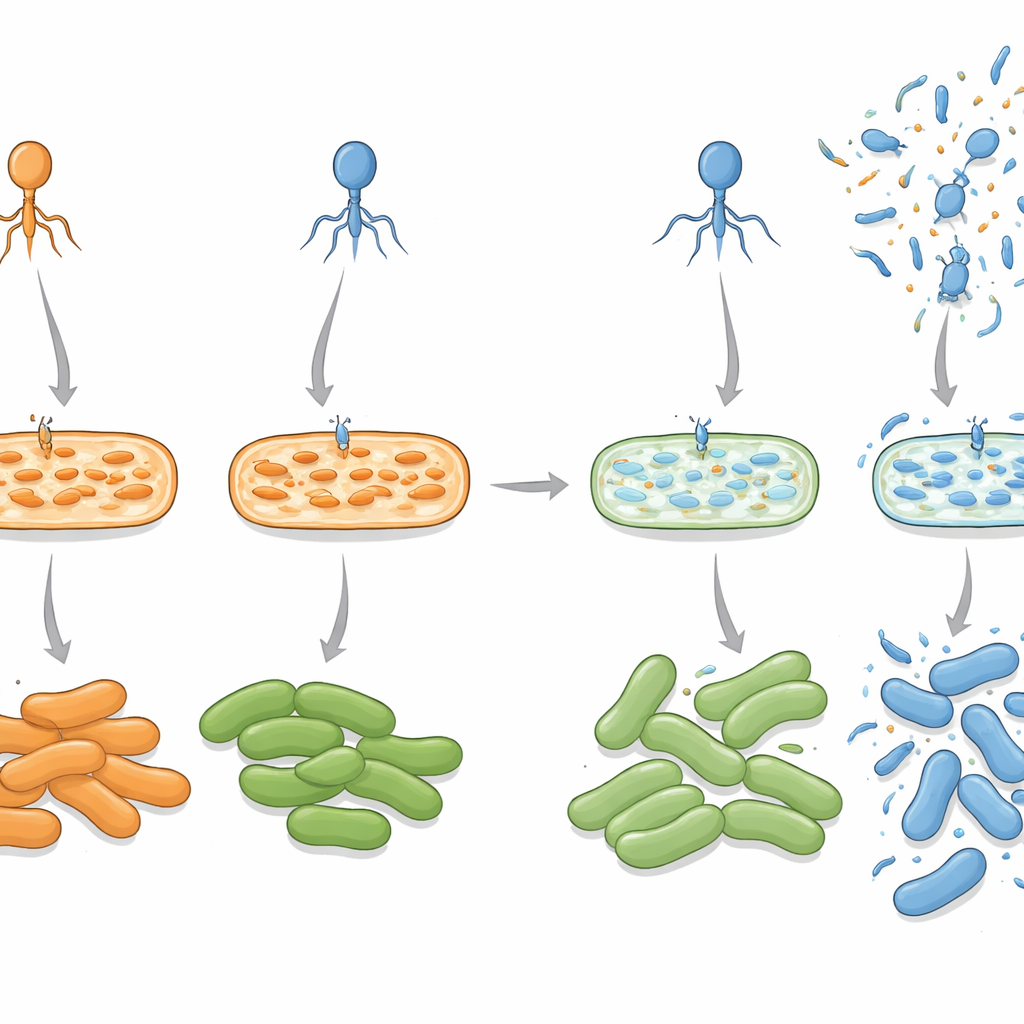
Although CF01 and SW01 look similar, they behave quite differently. Tests across a panel of bacterial strains showed that SW01 is a sharpshooter: it only attacks a particular Salmonella type and ignores E. coli and other species. CF01 is more of a generalist. It efficiently infects several E. coli strains and also attacks multiple Salmonella varieties, though usually less vigorously than it does E. coli. The researchers measured how well each virus forms visible “clearings” in bacterial lawns—patches where bacteria have been wiped out. These measurements revealed that CF01 has a broader reach but varies in strength from host to host, while SW01 remains tightly focused but very potent where it works.
Speed, Numbers, and the Art of the Kill
To understand how these phages might perform in real-world food systems, the team tracked their battle against bacteria over time. SW01 turned out to be a rapid and prolific killer. It infects Salmonella, lies quiet for only 10–20 minutes, then releases on the order of ten thousand new viruses from each infected cell, quickly building to very high numbers even when starting from a low dose. CF01 works more slowly and modestly: it waits about 20–30 minutes before new viruses appear and releases only a few hundred per infected cell, reaching lower peak counts. However, CF01 latches onto its hosts especially quickly, a trait that can help it grab bacteria before they can multiply or hide in protective slime layers called biofilms.
What Their Genomes Reveal About Safety and Strength
Modern DNA sequencing allowed the researchers to read the full genetic blueprints of both phages. SW01 carries a compact genome, while CF01 has a much larger and more complex one, packed with additional structural and support genes. Importantly for food use, neither genome contains known genes for antibiotic resistance, toxins, or the molecular switches that would allow the virus to quietly hide inside bacteria instead of killing them. Both are strictly lytic: once they infect, they commit to destroying their host. Comparisons with related viruses show that each phage belongs to a different branch of the same broader family, meaning they are similar enough to be understood but distinct enough that bacteria are less likely to resist both in the same way.
Building Better Phage Cocktails for Safer Food
Taken together, the findings suggest that these two phages excel in different roles. SW01 is ideal for fast, aggressive clean-up of Salmonella, especially when only a small amount of virus can be applied. CF01, with its broader host range and quick grip on both E. coli and Salmonella, can help cover a wider spectrum of risky bacteria. The authors argue that combining such complementary phages into carefully designed “cocktails” could offer a powerful, targeted, and genomically safe tool to reduce foodborne germs on meat, produce, and other foods. In a world where antibiotic options are shrinking, harnessing viruses that naturally keep bacteria in check may become a key part of future food safety strategies.
Citation: Shaaban, M.T., Sallam, O., Manikandan, S.K. et al. Comparative morphological, genomic, and functional characterization of two newly isolated lytic caudoviricetes phages targeting Escherichia coli and Salmonella. Sci Rep 16, 10340 (2026). https://doi.org/10.1038/s41598-026-39186-z
Keywords: bacteriophages, foodborne pathogens, Salmonella, Escherichia coli, phage biocontrol