Clear Sky Science · en
Investigation of hydrogen influence on compression ignition engine fuelled with pyrolysis blends using experimental and RSM methods
Turning Trash and a Simple Gas into Cleaner Power
Modern diesel engines are workhorses of transport and industry, but their exhaust is a stubborn source of air pollution and climate‑warming gases. This study explores an inventive idea: running a standard diesel engine on a mix of regular diesel, oil made from waste plastics, and hydrogen gas. By carefully testing these combinations, the researchers show how we might squeeze more useful power out of each drop of fuel while cutting harmful emissions at the same time.
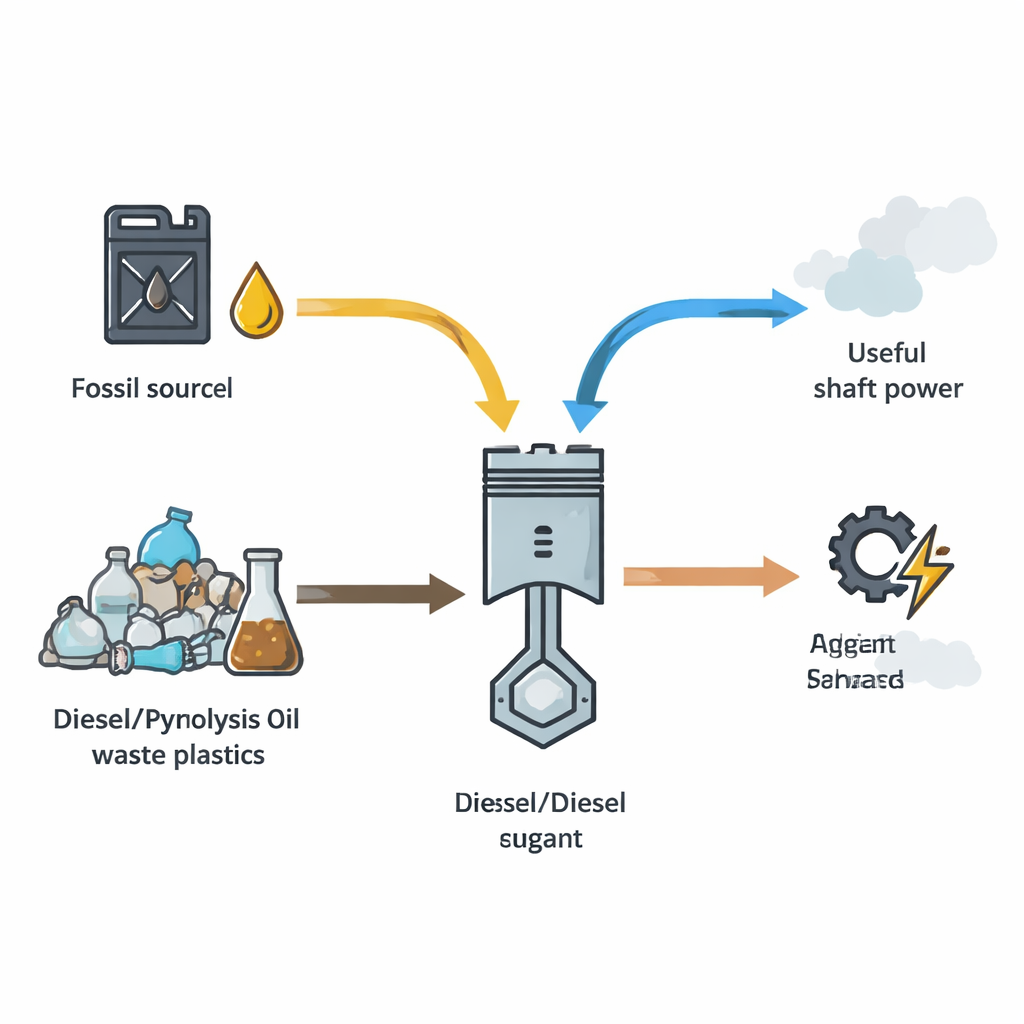
Why Mix Hydrogen with Diesel and Plastic Oil?
Hydrogen burns very quickly and cleanly: it contains no carbon, so it does not directly produce carbon dioxide or soot. Pyrolysis oil, in contrast, is a liquid fuel obtained by heating waste plastics until they break down into smaller molecules. Turning trash into fuel could reduce both landfill and the demand for crude oil, but this oil on its own can be thick, smelly, and hard on engines. The authors combine small amounts of plastic‑derived oil with standard diesel and then add a steady stream of hydrogen gas. Their goal is to use diesel’s reliability as a “pilot” fuel to ignite the mixture, hydrogen’s fast flame to clean up the burn, and the plastic‑based oil as a partial, low‑cost replacement for fossil diesel.
How the Engine Tests Were Run
The team used a single‑cylinder diesel engine similar to those found in generators and small machinery. They ran it at a constant speed while changing how hard it was loaded, from no load up to full power. Four fuel cases were compared: pure diesel; a 50–50 energy share of diesel and hydrogen; diesel with 10% plastic pyrolysis oil; and the same 10% plastic oil blend plus a fixed flow of hydrogen. Sensitive pressure sensors and data systems recorded how the pressure rose inside the cylinder and how heat was released during combustion. At the same time, exhaust analyzers measured key pollutants such as carbon monoxide, unburned hydrocarbons, carbon dioxide, and nitrogen oxides.
More Power from Less Fuel
Two main fuel setups stood out. When 10% of the diesel was replaced by pyrolysis oil, the engine reached a brake thermal efficiency of about 34%, roughly one‑fifth better than with plain diesel. In simple terms, more of the fuel’s chemical energy was turned into useful shaft power instead of being wasted as heat. Fuel consumption at full load dropped from about 0.35 to 0.22 kilograms per kilowatt‑hour. Adding hydrogen to this plastic‑oil blend slightly lowered efficiency but raised the peak pressure inside the cylinder and kept the heat release very sharp and controlled. This indicates a faster, more complete burn, driven by hydrogen’s quick ignition and easy mixing with air.
Cleaning Up the Exhaust
Pollution readings showed clear advantages for the mixed fuels. The blend of diesel, 10% plastic oil, and hydrogen produced the lowest levels of carbon monoxide, unburned hydrocarbons, and carbon dioxide among all tested cases. Compared with pure diesel, carbon monoxide fell by about one‑third, and hydrocarbon emissions dropped by more than ten percent, a sign that less fuel was slipping through unburned. Carbon dioxide was also lower, partly because less fossil carbon was burned per unit of power. Nitrogen oxides, a major smog‑forming pollutant, behaved differently: the lowest values came from the 50–50 diesel–hydrogen case, which reduced these emissions by roughly 14% compared with pure diesel. Statistical modeling confirmed that the measured trends were consistent and that the mathematical fits closely tracked the experimental data.

What This Means for Everyday Engines
For a non‑specialist, the takeaway is straightforward: carefully adding hydrogen and a modest amount of plastic‑derived oil to diesel can make a conventional engine both more frugal and cleaner. Hydrogen speeds up and tidies the burn, so the engine extracts more work from each unit of fuel, while the plastic‑based oil replaces part of the fossil diesel with recycled material. At the same time, several key exhaust pollutants go down, and nitrogen oxides can be controlled with the right hydrogen share. Although real‑world use would still need solutions for hydrogen storage, safety, and long‑term engine durability, this study shows that mixing a simple gas and waste‑derived liquid into today’s engines could be a practical step toward greener, more circular energy.
Citation: Kumar, K.S., Surakasi, R., Kareemullah, M. et al. Investigation of hydrogen influence on compression ignition engine fuelled with pyrolysis blends using experimental and RSM methods. Sci Rep 16, 10304 (2026). https://doi.org/10.1038/s41598-026-39172-5
Keywords: hydrogen dual-fuel engines, waste plastic pyrolysis oil, diesel engine emissions, alternative fuels, green transportation