Clear Sky Science · en
GC-MS profiling, biological activities and molecular docking of total sterol extracts from Pontederia crassipes (Lake Tana, Ethiopia)
From Nuisance Weed to Helpful Resource
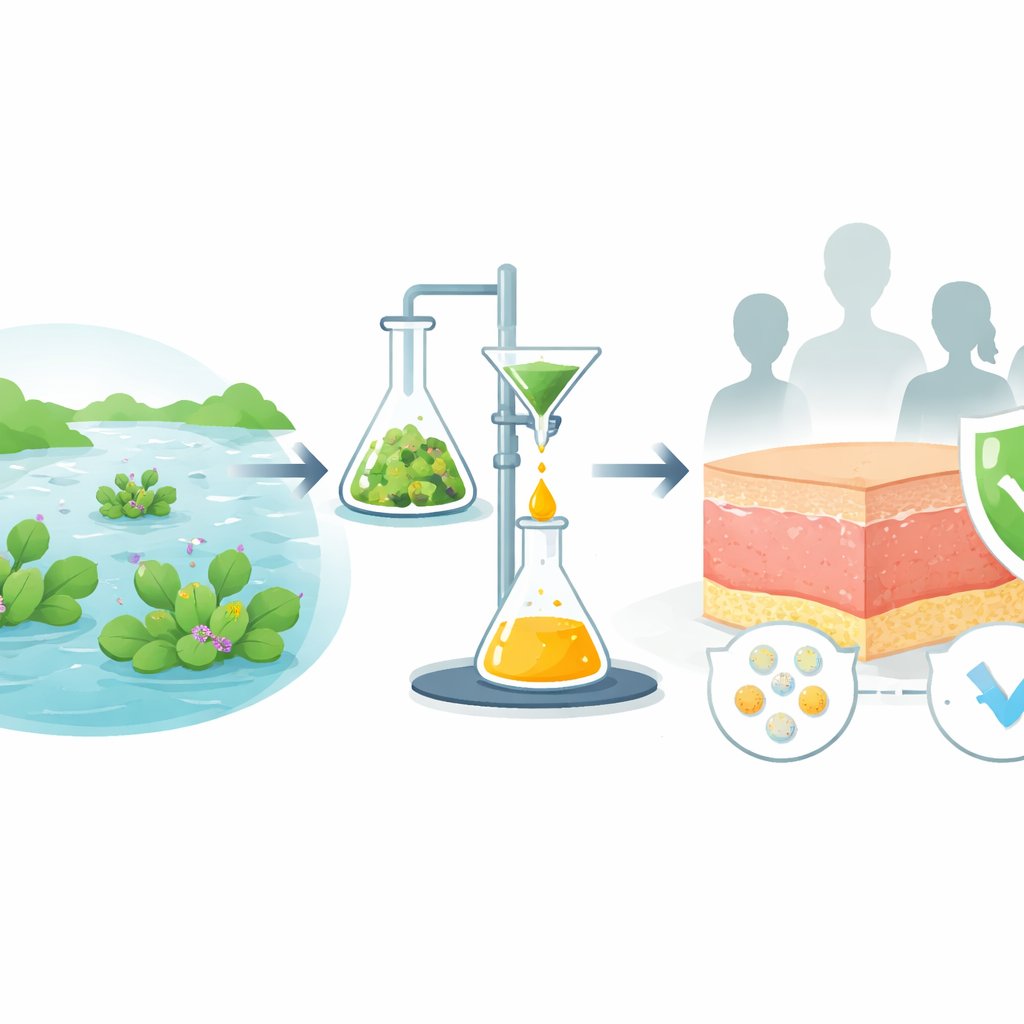
Water hyacinth is often seen as a menace: it clogs lakes and rivers, chokes out native species, and disrupts local economies. This study asks a very different question—could this invasive plant actually be turned into something useful for human health and skin care? By carefully pulling out a group of natural fat-like molecules called sterols from the plant, the researchers explored whether this unwanted weed might instead become a source of gentle antioxidants, anti-aging agents, and supportive compounds for diabetes management, all while also fighting harmful bacteria.
The Plant That Took Over a Lake
The team focused on Pontederia crassipes, better known as water hyacinth, collected from Lake Tana in Ethiopia, the main reservoir feeding the Blue Nile. Around the world, this floating plant forms thick green carpets that threaten biodiversity and water use. Yet earlier work has shown that it is rich in biologically active substances. In this study, scientists concentrated on sterols—plant relatives of cholesterol that are already known to help lower blood cholesterol and support general health. They used an alcohol-based process to separate sterols from the dried aerial parts of the plant and then profiled the resulting mixture using gas chromatography–mass spectrometry, a technique that teases apart and identifies complex chemical blends.
Natural Compounds That Protect Cells
The chemical analysis revealed that the extract was dominated by two sterols, stigmasterol and β-sitosterol, along with related molecules and vitamin E acetate. The researchers then tested how this sterol-rich mixture handled different forms of “oxidative stress,” the kind of chemical damage driven by highly reactive molecules that contribute to aging, heart disease, and diabetes. In several standard lab tests, the extract was able to neutralize free radicals and bind iron, which can fuel damaging reactions. Although its activity was weaker than that of pure reference antioxidants, it was still meaningful, especially given that this is a crude mixture rather than a purified drug. Importantly, when the extract was applied to human skin cells grown in dishes, it did not show toxic effects at the tested doses, suggesting that it could be safe for topical products.
Skin Aging, Blood Sugar, and Bacteria
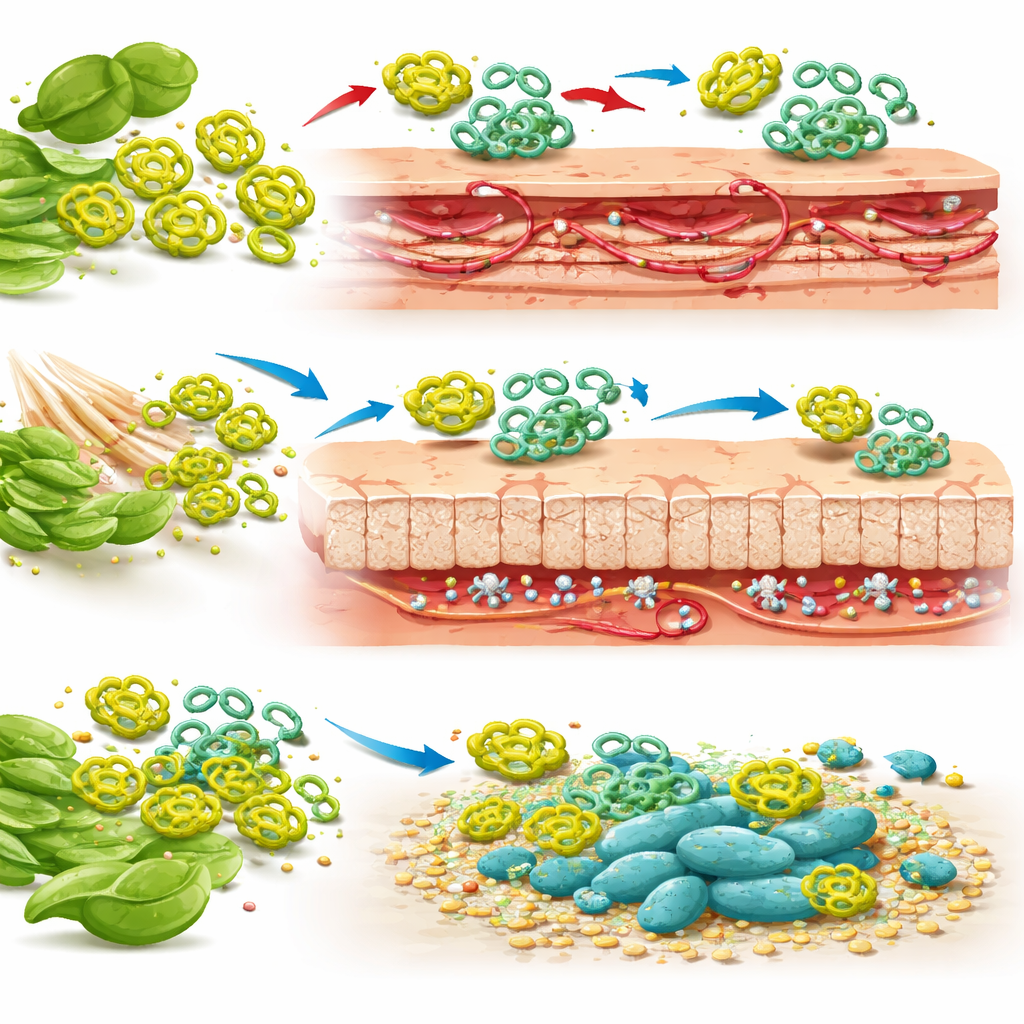
Because aging skin and type 2 diabetes share a strong link with oxidative stress, the team asked whether the extract could also gently slow key biological steps tied to these conditions. In test-tube experiments, the sterol mixture moderately inhibited enzymes that break down collagen and elastin—the structural proteins that keep skin firm and elastic—as well as an enzyme involved in skin pigmentation. It also modestly blocked enzymes that chop complex carbohydrates into simple sugars, a process that drives spikes in blood sugar after meals. At the same time, the extract showed an ability to rein in the growth and behavior of Pseudomonas aeruginosa, a troublesome bacterium that can cause hard-to-treat infections. While relatively high concentrations were needed to stop its growth, lower, non-killing levels still reduced the formation of sticky biofilms and hindered the bacteria’s ability to move across surfaces, both of which are important for infection and resistance.
Peeking Inside at the Molecular Level
To understand how these plant sterols might be working, the researchers used computer simulations known as molecular docking. These models virtually “fit” stigmasterol and β-sitosterol into the three-dimensional shapes of several target proteins, including skin-related enzymes, sugar-processing enzymes, an inflammation-linked enzyme, and a communication receptor used by Pseudomonas bacteria. The sterols were predicted to bind snugly into pockets of these proteins, especially those involved in breaking down skin structure, digesting carbohydrates, and controlling bacterial group behavior. In many cases, their simulated binding strength was close to or better than that of known reference compounds, supporting the idea that the observed lab effects arise from direct interactions with these targets.
Turning a Problem Plant into a Possibility
Taken together, the findings suggest that sterol-rich extracts from water hyacinth could be repurposed from an environmental problem into a valuable ingredient. While the extract’s effects are moderate rather than dramatic, it combines several desirable features: antioxidant activity, gentle support for skin firmness and tone, a soft braking effect on sugar digestion, and the ability to weaken bacterial biofilms—all without clear toxicity to normal skin cells. For everyday products such as skin creams or nutraceutical supplements, this balance of safety and multi-target benefits may be more important than sheer strength. The work points toward a future where managing invasive plants like water hyacinth could also provide raw material for health-promoting formulations, provided that follow-up studies in animals and humans confirm these promising early results.
Citation: Ben Bakrim, W., Ezzariai, A., mahdi, I. et al. GC-MS profiling, biological activities and molecular docking of total sterol extracts from Pontederia crassipes (Lake Tana, Ethiopia). Sci Rep 16, 14516 (2026). https://doi.org/10.1038/s41598-026-39143-w
Keywords: water hyacinth, plant sterols, skin aging, antioxidant extract, Pseudomonas biofilm