Clear Sky Science · en
Microwave assisted synthesis and antimicrobial evaluation of novel Thiazolidinedione pyrrole hybrids with antiviral potential and comprehensive computational modeling studies
New Weapons Against Hard-to-Treat Germs
Antibiotic resistance and emerging viral threats such as SARS-CoV-2 are making once-manageable infections harder to treat. This study explores a new family of lab-made molecules designed to fight bacteria, fungi and possibly viruses, while also using faster and more environmentally friendly chemistry. The researchers combined quick microwave heating with modern computer simulations to create and test these potential medicines from the atomic scale up to real microbes on a Petri dish.
Cooking Up Molecules With Microwaves
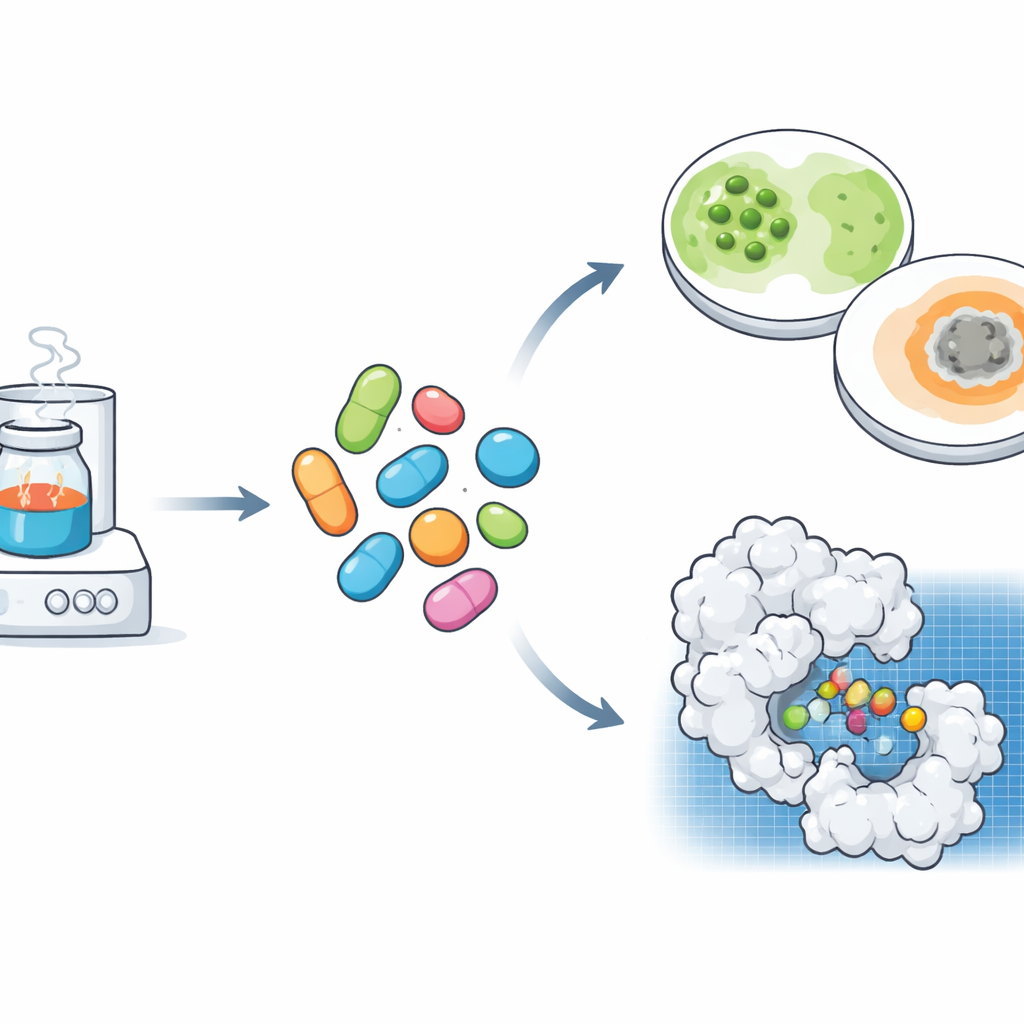
Instead of slowly heating reaction flasks on hot plates, the team used microwave energy to assemble a set of seven related molecules in just 8 to 14 minutes, with high yields. These molecules are hybrids built by joining two small ring structures that chemists already know can show medical activity. One ring is a thiazolidinedione unit, often found in drug candidates; the other is a pyrrole “dione” unit that can latch onto biological targets. By linking them through a simple bond-forming step, and decorating one end with different chemical groups, the scientists rapidly created a small library of new compounds for biological testing.
Measuring How Well They Stop Germs
The new molecules were tested against a panel of disease-causing microbes: two common Gram-negative bacteria (Escherichia coli and Pseudomonas aeruginosa), two Gram-positive bacteria (Staphylococcus aureus and Bacillus subtilis), and two fungi (Candida albicans and Aspergillus niger). In a standard “zone of inhibition” test, the compounds are placed in wells in an agar plate spread with microbes, and the size of the microbe-free circle reveals how strongly growth is halted. All seven molecules showed noticeable antibacterial and antifungal effects, but one member of the series, called 3g, consistently produced the largest clear zones, approaching the performance of established drugs such as ciprofloxacin and fluconazole. This pattern suggests that small changes in chemical structure can significantly boost germ-fighting power.
Peering Inside With Computational Microscopes
To understand why some molecules worked better than others, the team turned to a suite of computer-based tools. Using quantum chemistry calculations, they examined how electrons are arranged in each molecule and how easily charge can shift within it—features that influence how the molecule reacts and binds to proteins. They then performed docking studies, which virtually “fit” the molecules into the pocket of a key bacterial enzyme involved in energy management, and ran long molecular dynamics simulations to see whether each compound stayed snugly bound or drifted away over time. Molecule 3g again stood out: it formed stable complexes with the enzyme, maintained steady contact over the full simulation, and showed favorable patterns of motion and hydrogen bonding, all pointing to strong and persistent binding.
Hints of Antiviral and Anti–SARS-CoV-2 Activity
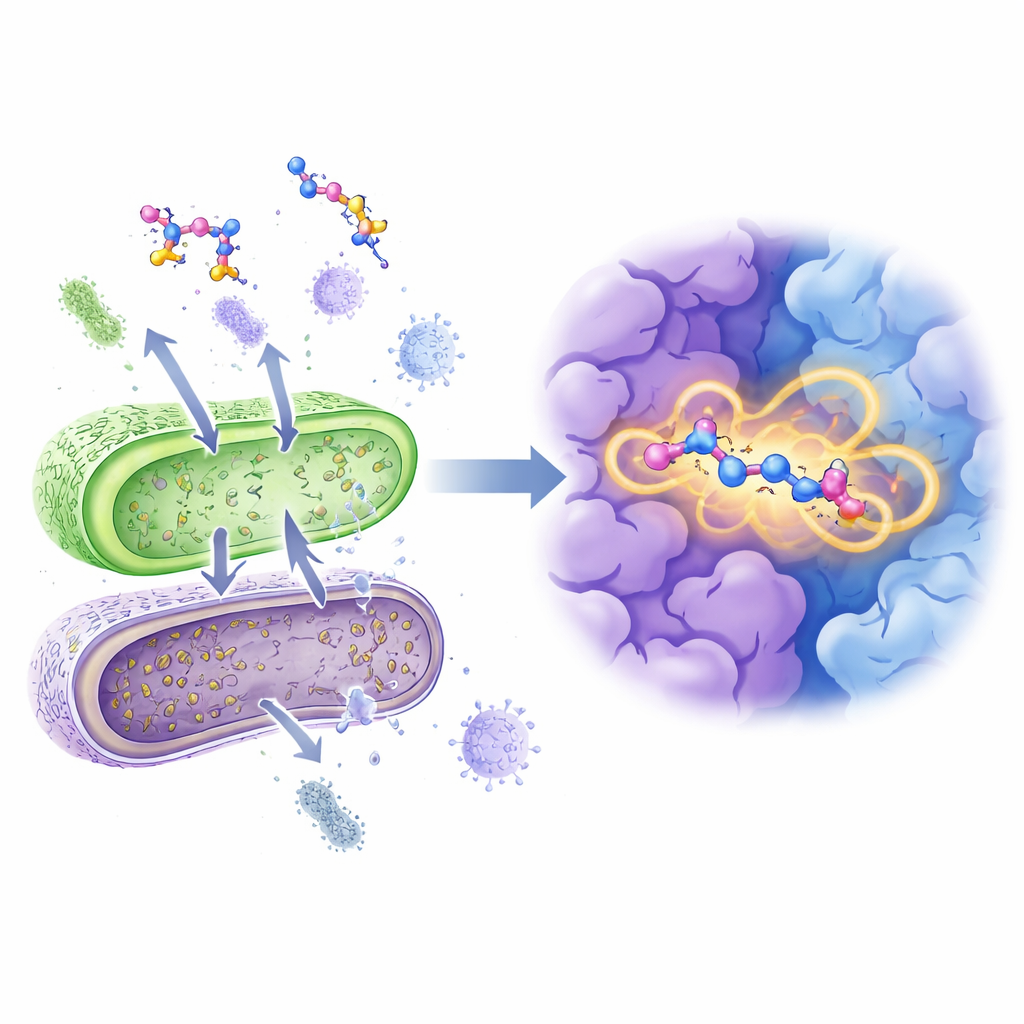
Beyond bacteria and fungi, the researchers asked whether these hybrids might also act against viruses, including the coronavirus that causes COVID-19. They used a combined analysis known as POM (Petra, Osiris, Molinspiration) to map the “pharmacophore” features of the molecules—the key charged regions and shapes that often drive biological activity. This mapping suggested that the same oxygen-rich and electron-poor sites that help the compounds engage bacterial targets are also well positioned to interact with viral proteins, particularly in SARS-CoV-2. Molecules bearing strongly electron-withdrawing groups, such as nitro and chloro substituents, appeared especially promising in this antiviral model, again highlighting 3f and 3g as lead candidates.
Balancing Power, Safety, and Drug-Like Traits
Potential medicines must not only be potent but also safe and well behaved in the body. The team therefore used additional prediction tools to estimate toxicity, solubility, and other properties tied to how a drug moves through the body. Most of the new molecules showed acceptable “drug-likeness” scores and low predicted risks for severe side effects such as tumor formation or genetic damage. Their sizes, shapes, and surface properties fell within ranges often associated with good oral drugs, suggesting that, with further refinement, they could be optimized for real-world use rather than remaining only as lab curiosities.
What This Work Means for Future Treatments
In simple terms, this research shows that it is possible to quickly “cook up” new germ-fighting molecules using microwave chemistry, and then zero in on the most promising ones by combining lab tests with powerful computer models. Among the seven hybrids made, two in particular—especially compound 3g—emerged as strong broad-spectrum candidates that can slow both bacteria and fungi and have a predicted ability to latch onto crucial viral proteins. While far more testing is needed before any of these molecules could become medicines, the study outlines a fast, efficient route to discovering multi-purpose anti-infective agents at a time when new treatments are badly needed.
Citation: Patil, R.C., Abdel-Megid, M., Khiratkar, N.M. et al. Microwave assisted synthesis and antimicrobial evaluation of novel Thiazolidinedione pyrrole hybrids with antiviral potential and comprehensive computational modeling studies. Sci Rep 16, 11633 (2026). https://doi.org/10.1038/s41598-026-39103-4
Keywords: antimicrobial compounds, microwave-assisted synthesis, drug design, molecular docking, antiviral potential