Clear Sky Science · en
Associations of cannabis use, other substances, and lifestyle choices on anxiety in medical cannabis patients across 45 days
Why this matters for everyday anxiety
Anxiety has become a constant companion for many people, and standard treatments like antidepressants or tranquilizers do not work well for everyone. At the same time, more patients are turning to medical cannabis, hoping it will ease their daily worries and tension. This study followed hundreds of real-world patients over a month and a half to see, day by day, how cannabis, other drugs, and simple lifestyle choices such as exercise or meditation stacked up in easing their anxiety. Its findings offer a rare, close-up look at what seems to help most in everyday life, outside of tightly controlled clinical trials.
Following patients in real life
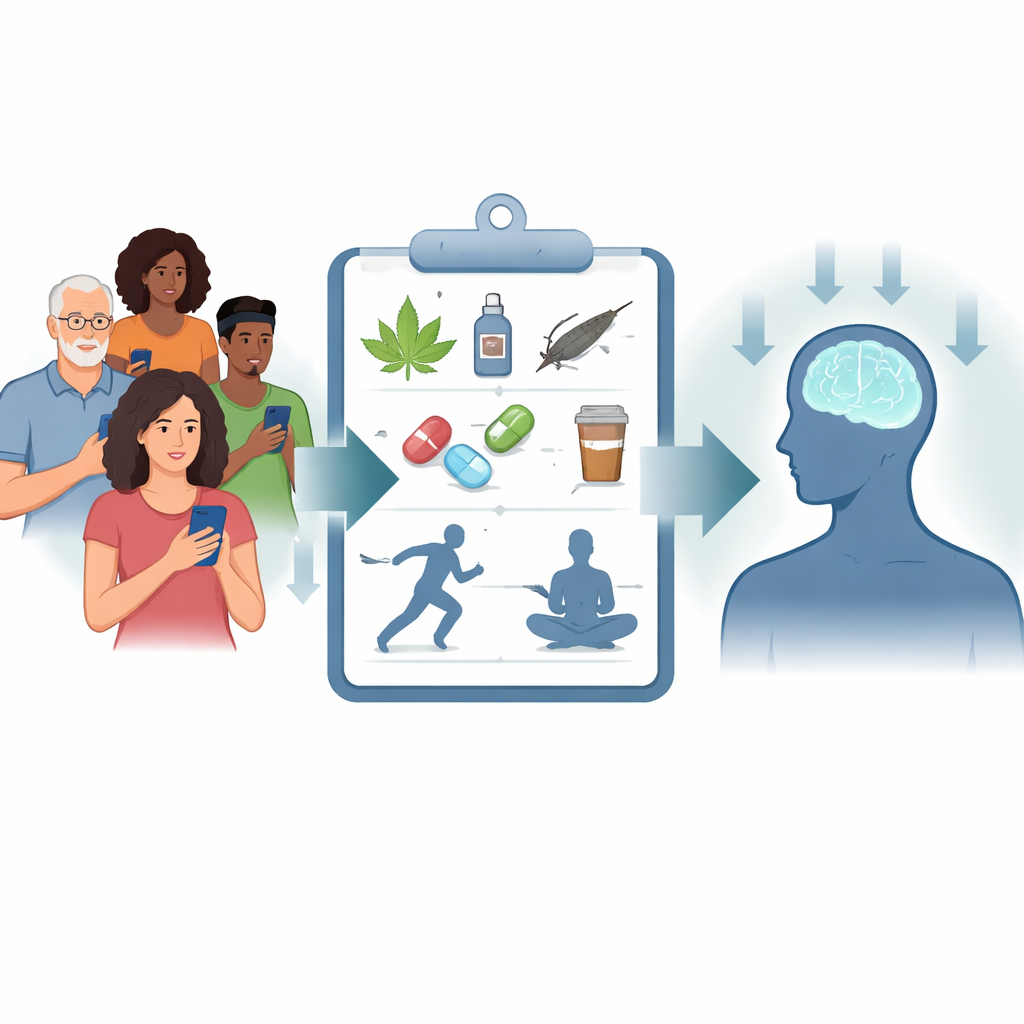
The researchers tracked 416 adults in Florida who had been certified by physicians for medical cannabis specifically to treat anxiety. Over 45 days, participants received daily messages on their phones asking about their anxiety before and after using cannabis, any other medicines (such as antidepressants or sleep aids), alcohol, and non-drug activities like exercise, meditation, diet changes, or psychotherapy. They also recorded how they took cannabis, such as smoking, vaping, or using edibles. This design let the team watch anxiety levels rise and fall in near real time, rather than relying on fuzzy memories weeks or months later.
Comparing cannabis, medicines, and healthy habits
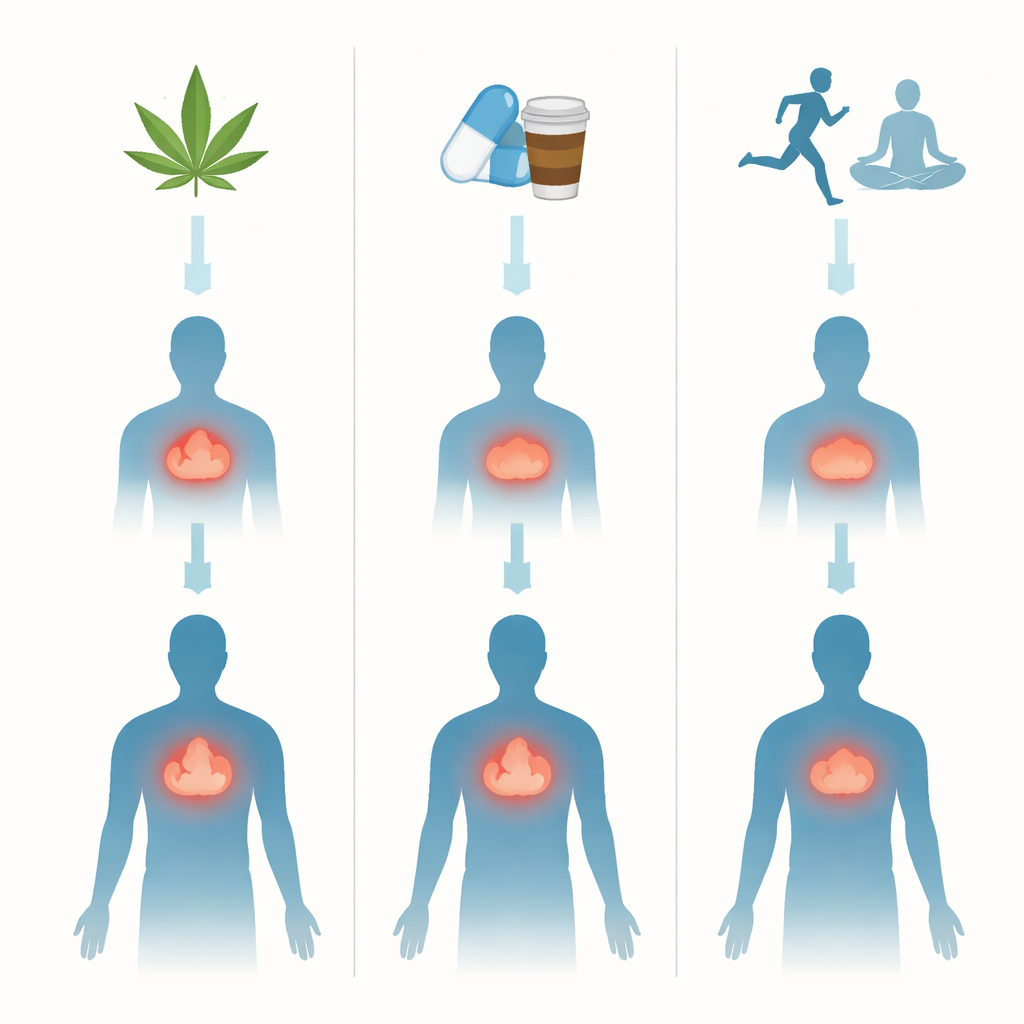
To make sense of more than 11,000 days of reports, the team grouped each day according to what the person actually used. Some days involved only medical cannabis, others combined cannabis with medications or activities, and some days had no cannabis at all—only other drugs, only activities, or a mix of the two. Using a statistical approach suited for repeated daily measurements, the researchers calculated how much anxiety dropped from before to after these choices on each type of day. They found that anxiety eased, on average, in every group: cannabis days, medication days, activity days, and combinations all tended to leave people feeling less anxious than they had earlier that same day.
Medical cannabis stands out
Although many approaches helped, medical cannabis produced the largest drops in anxiety overall. Days when people used only cannabis showed especially strong relief compared with days that involved only prescription or over-the-counter drugs or only activities like exercise and meditation. When cannabis was present alongside other substances or activities, anxiety relief stayed high, and there were no clear differences among the various cannabis-plus combinations. In contrast, on days with no cannabis, relief was noticeably smaller, though combining medications with activities did better than using either alone. Interestingly, features such as age, sex, how long a person had lived with anxiety, how long they had been using cannabis, and whether they smoked or ate it did not meaningfully change these patterns.
New and experienced users over time
The study also compared people who were new to medical cannabis with those who had been using it before the study began. Overall, both groups reported similar levels of anxiety relief. However, when the researchers looked more closely at changes across the 45 days, a subtle pattern emerged: experienced users showed a very small decline in relief over time, while novices showed a small increase. Both effects were modest, and there were relatively few new users, so the authors caution against overinterpreting this trend. Still, it hints that cannabis may feel especially helpful in the early stages of use, with possible slight tapering of benefit as the body and brain adapt.
Cautions, limits, and what this means for you
The authors emphasize that their work does not prove cannabis is a cure-all for anxiety. The study was observational, not a randomized trial, and all participants were already under the care of medical cannabis doctors, which may mean they expected cannabis to help. Expectations alone can powerfully shape how stressed or relaxed people feel, and the study did not directly measure these beliefs or control cannabis dose and chemical makeup. Other research has also shown that high-dose THC can sometimes worsen anxiety or trigger paranoia, especially in vulnerable people. Still, within these limits, this 45-day snapshot suggests that for many patients using medical products under supervision, cannabis can offer meaningful day-to-day anxiety relief, often stronger than that from common medications or lifestyle steps alone. At the same time, exercise, meditation, and other healthy habits still contributed to feeling better and may be valuable additions or alternatives, especially for those who cannot or choose not to use cannabis.
Citation: Pipitone, R.N., Banai, B., Walters, J. et al. Associations of cannabis use, other substances, and lifestyle choices on anxiety in medical cannabis patients across 45 days. Sci Rep 16, 11124 (2026). https://doi.org/10.1038/s41598-026-39086-2
Keywords: medical cannabis, anxiety relief, real-world study, lifestyle activities, THC effects