Clear Sky Science · en
Xpert MTB/RIF assay as an initial diagnostic test in pulmonary tuberculosis: a multicenter prospective randomized pragmatic trial
Why Faster TB Tests Matter
Tuberculosis (TB) is still one of the world’s deadliest infectious diseases, and every missed or delayed diagnosis can mean more severe illness and continued spread. New “rapid” tests that look for TB’s genetic material promise to give answers in hours instead of weeks. This study from Taiwan asked a key real‑world question: if hospitals start using one such rapid test, Xpert MTB/RIF, much more widely as the very first test for people with possible lung TB, does it actually save lives or speed treatment in everyday practice?
Modern Test in a Real Hospital Setting
The researchers worked in five hospitals across Taiwan and followed more than 6,800 adults who gave sputum samples because doctors suspected lung TB. In Taiwan, standard care already includes sputum smear microscopy and culture, which can reliably detect TB but may take time. The Xpert test, a type of nucleic acid amplification test, can detect TB bacteria and resistance to a key drug within a few hours, but it is more expensive and not always reimbursed. Until now, doctors ordered it mainly for patients they already thought were quite likely to have TB.
Three Groups of Patients
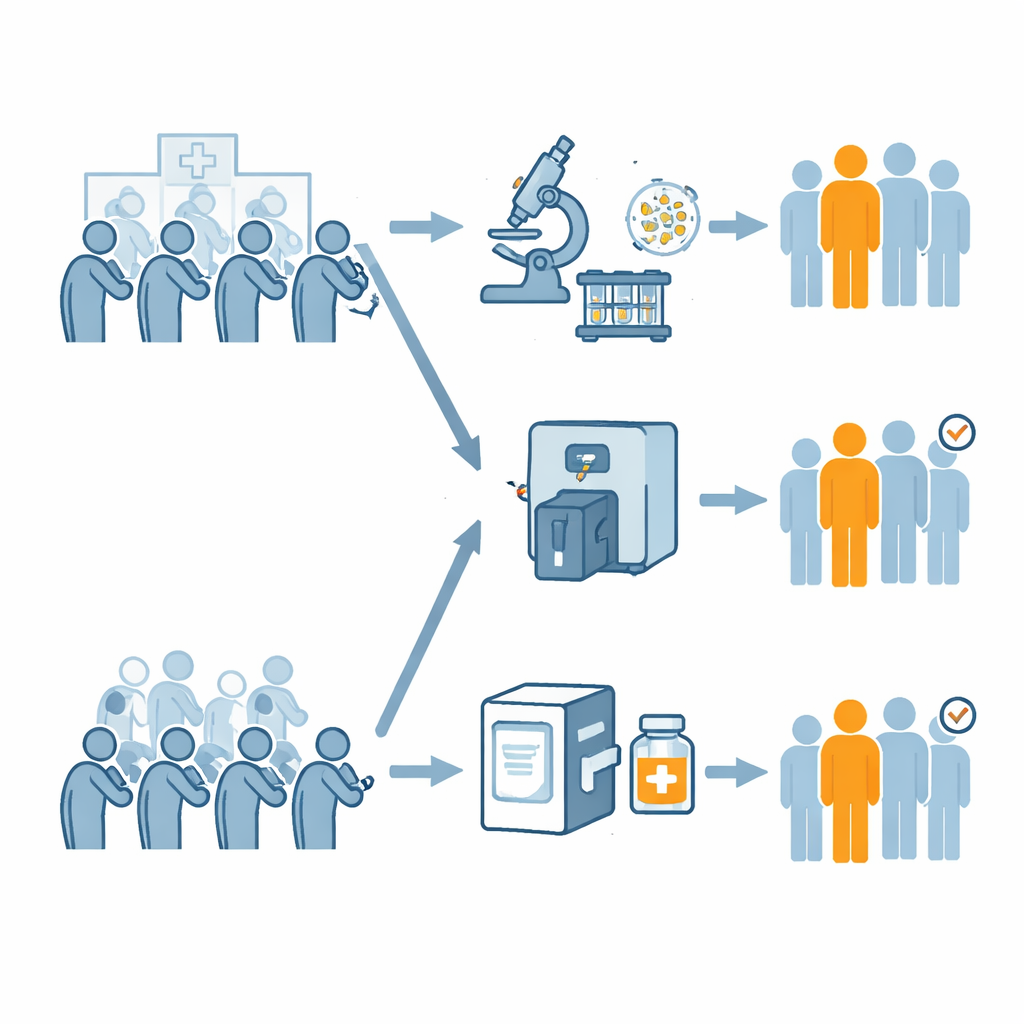
To see whether broader use of Xpert would help, patients were divided into three groups. One group consisted of people whose doctors had already chosen to order a rapid test based on clinical judgment. The remaining patients, for whom doctors had not ordered Xpert, were randomly assigned either to get an immediate Xpert test in addition to usual sputum tests, or to continue with usual care alone. This design mimicked real life while still allowing a fair comparison between expanded rapid testing and standard practice.
What Happened to Diagnosis and Treatment
Among all patients, only about 5% ultimately had active pulmonary TB, reflecting a relatively low likelihood of disease in this hospital population. When the team compared the randomized groups—those given extra Xpert testing versus those getting usual care—they found no meaningful differences. The share of patients diagnosed with TB was similar, the percentage who started treatment based on strong bacteriological evidence did not change, and the median time from giving a sputum sample to beginning TB treatment remained about a week in both groups. Likewise, the proportion of patients who died before starting TB therapy and the success rates of treatment among those who did receive it were statistically indistinguishable.
Limits and Pitfalls of the Rapid Test
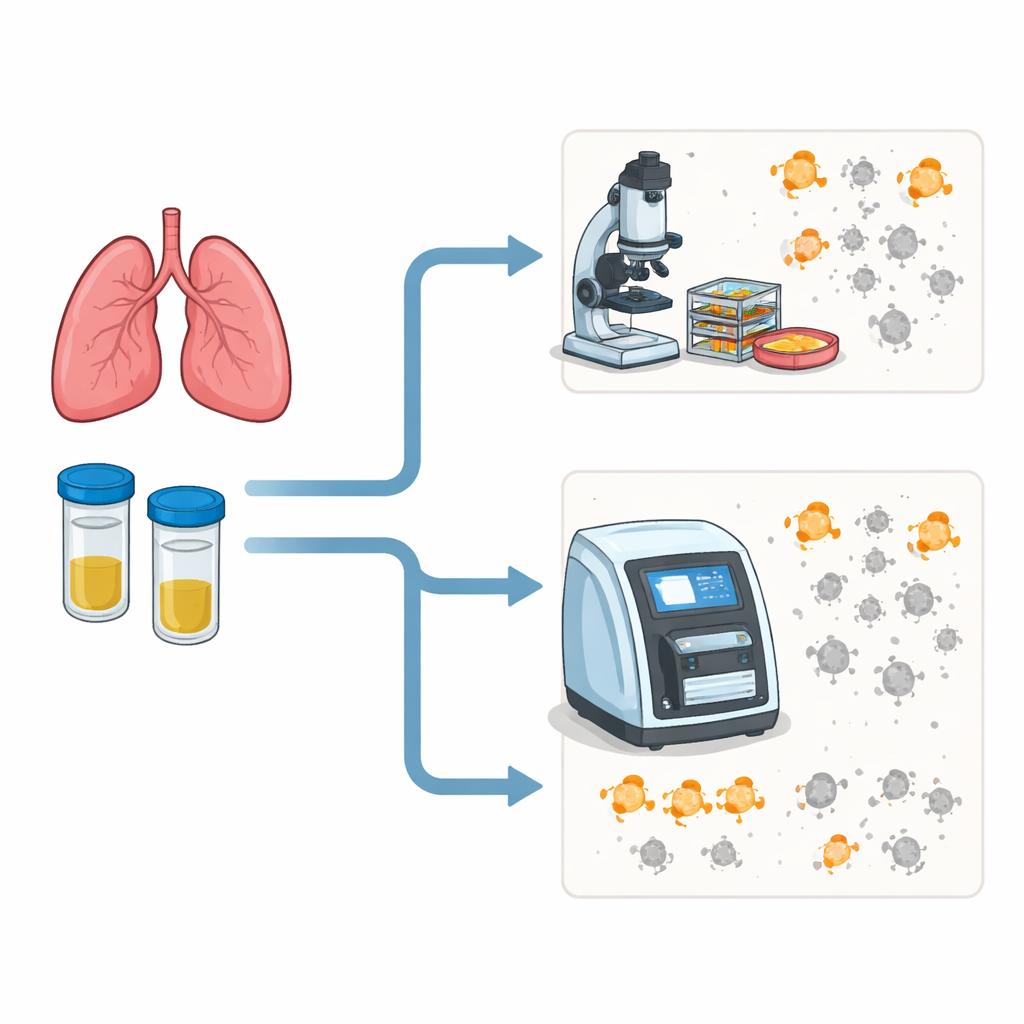
The study also probed how well Xpert actually performed. It worked very well in patients whose sputum already showed bacteria on smear, but its sensitivity dropped in smear‑negative cases—the very patients for whom a rapid molecular test is most hoped to help. Some positive Xpert results occurred in people whose cultures stayed negative, particularly in those who had been treated for TB in the past, suggesting that the test may sometimes detect leftover genetic material rather than active infection. In a small fraction of cases, nontuberculous mycobacteria—relatives of the TB germ that do not cause classic TB—were also incorrectly signaled as TB by the rapid test. These patterns raise concerns about unnecessary treatment when the test is used broadly in people with a low chance of having TB.
What This Means for Patients and Policy
For patients who are already strongly suspected of having TB, Xpert can help doctors confirm the disease more quickly and start treatment sooner. But this large, pragmatic trial shows that simply expanding Xpert as the first test for everyone with possible TB in a low‑prevalence setting did not improve how many TB cases were found, how fast they were treated, or how well they did on therapy. In other words, a powerful rapid test is not automatically a game‑changer when used indiscriminately. The findings suggest that in health systems similar to Taiwan’s, Xpert is best reserved for patients with higher likelihood of TB or specific clinical questions, while broader improvements in clinical care and follow‑up may do more to reduce deaths and delays than expanding rapid testing alone.
Citation: Huang, WC., Huang, YW., Lin, CB. et al. Xpert MTB/RIF assay as an initial diagnostic test in pulmonary tuberculosis: a multicenter prospective randomized pragmatic trial. Sci Rep 16, 10075 (2026). https://doi.org/10.1038/s41598-026-39022-4
Keywords: tuberculosis diagnosis, rapid molecular testing, Xpert MTB/RIF, Taiwan public health, nucleic acid amplification tests