Why a simple picture game could protect children’s sight
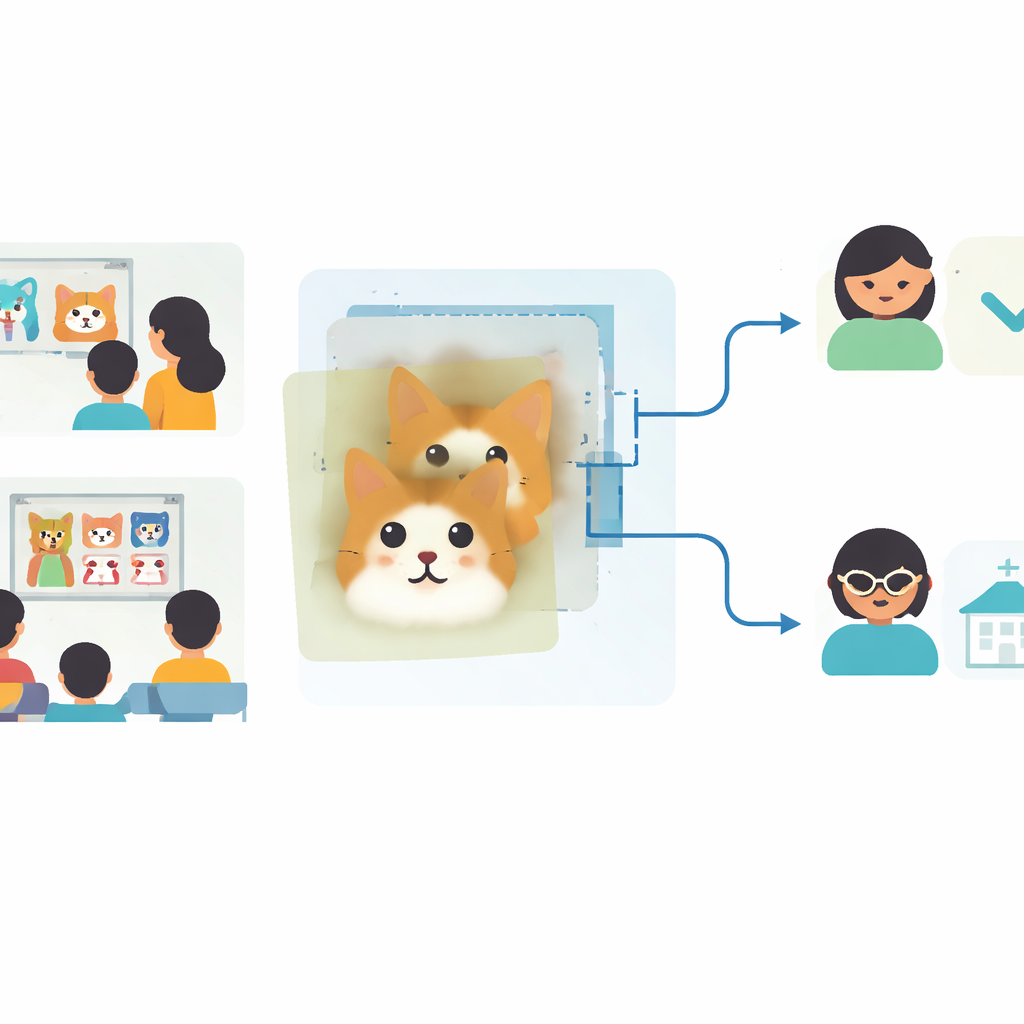
Shortsightedness, or myopia, is rising fast worldwide, especially among children. If it starts early and goes unchecked, it can lead to serious eye problems later in life. The study behind this article describes a new, very simple screening test that looks like a game with animal pictures. It is designed so that parents, teachers, or pediatricians—with no special eye-care training—could spot which children might need an eye exam, using only a handful of printed images or a screen.
An everyday problem for growing eyes
Myopia usually begins in childhood and often worsens as the eye grows. Children who become myopic at a young age are more likely to reach high levels of myopia, which raises the risk of conditions such as retinal detachment and macular degeneration later in life. Recent global estimates suggest that more than a third of children and teenagers are now affected, and the proportion is still increasing. Because the damage from advanced myopia cannot be undone, catching it early is crucial: timely glasses, lifestyle changes, or other treatments can slow down how quickly myopia progresses.
Turning an optical illusion into a quick eye check Figure 1.
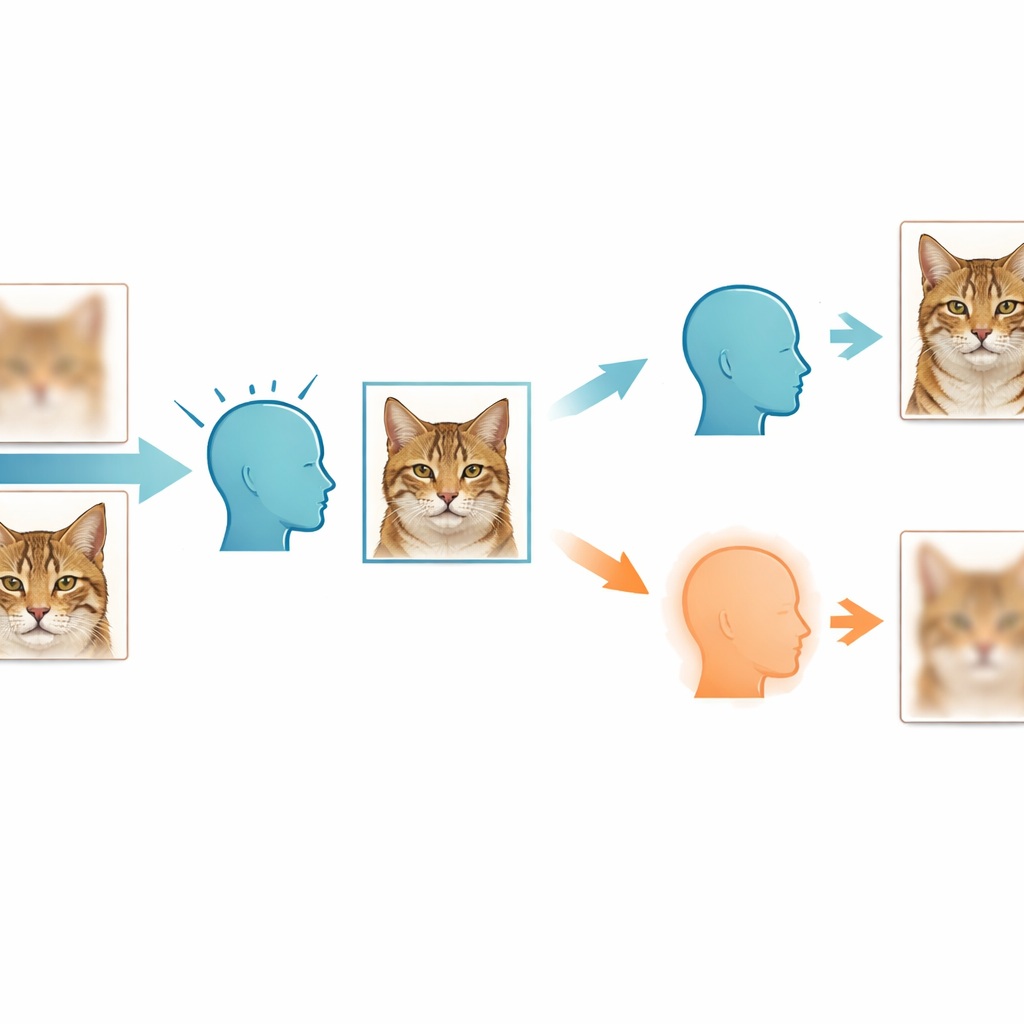
The researchers turned a clever visual illusion into a practical tool. They used “hybrid images” that combine two different animal faces—for example, a sheep and a dog or a cat and a wolf. One animal is blurred so that only its broad shapes remain, while the other keeps only its fine details, like fur and sharp edges. When these two versions are merged, what you see depends on how clearly you can resolve details. At one viewing distance and for people with sharp vision, the detailed animal pops out; for eyes that cannot see fine detail as well, the blurred animal dominates. Importantly, once the viewing distance and image size are fixed, observers typically see just one of the two animals and cannot voluntarily “switch,” making the illusion stable and reliable for testing.
Building the best animal pictures
Designing such hybrid images is more complex than simply blurring and sharpening. The team carefully adjusted how much of the low-detail and high-detail information from each animal was kept, using mathematical filters that act on the images’ spatial frequencies. They first generated many versions of sheep–dog and wolf–cat hybrids that differed in how sharply they separated low and high detail. To find which versions worked best as a screening tool, they tested 24 young adults whose vision was deliberately blurred to known degrees using lenses. For each hybrid, they measured how often people reported seeing the “high-detail” animal or the “blurred” one at each level of visual sharpness. From these responses they built psychometric curves and chose five images whose behavior matched a practical cutoff between normal sight and likely myopia.
Trying the test in real viewing conditions Figure 2.
Next, the researchers ran a larger study with 81 young adults, testing a total of 262 eyes, with and without their usual glasses or contact lenses. Each eye was shown the five chosen hybrid images one at a time, for a few seconds, at a fixed distance. For each picture, participants simply named which animal they saw. Separately, the team measured standard visual acuity for each eye using a digital eye chart. They then checked how well the animal answers matched whether an eye’s acuity was above or below a chosen threshold that signals probable myopia. Treating a “blurred-animal” answer as a positive test, single images already showed high sensitivity (correctly flagging myopic eyes in about 86–95% of cases) and high specificity (correctly identifying non-myopic eyes in about 94–97% of cases). Combining all five images and counting how many times a person reported the blurred animal further improved performance. With a rule that two or more “blurred-animal” answers meant a likely myope, the test achieved very high sensitivity while keeping specificity high as well.
From lab illusion to playful home and school tool
The study shows that just a handful of carefully prepared animal illusions can distinguish between eyes with good and reduced distance vision with accuracy comparable to more formal tests. Although this proof of concept used young adults, the method was designed with children in mind: they do not need to know letters or numbers, only animals, and the task feels like a game rather than a medical exam. The authors envision simple printed charts for schools and clinics, and digital versions for home use, provided that image size and viewing distance are properly set. In the future, versions using sound responses or other playful interactions could help even very young or non-verbal children. While this test does not replace a full eye examination, it could act as an easy first line of defense, prompting families to seek professional care long before myopia silently worsens.
Citation: Tommasi, F., Cosseddu, F., Giorgetti, A. et al. Screening test for early detection of myopia based on hybrid images.
Sci Rep16, 10047 (2026). https://doi.org/10.1038/s41598-026-39002-8