Clear Sky Science · en
AI based prediction of severe exacerbation in Asian bronchiectasis patients using the KMBARC registry
Why this matters for everyday health
For people living with long-term lung problems, sudden flare-ups that send them to the emergency room can be frightening and life-threatening. Doctors try to spot who is at highest risk, but existing tools were mostly built from European patient data and may not fit Asian patients well. This study asks a simple but important question: can modern artificial intelligence, trained on Korean patients with bronchiectasis, do a better job of warning us who is likely to have a severe flare-up in the coming year?
A closer look at a stubborn lung disease
Bronchiectasis is a chronic condition in which airways in the lungs become widened and damaged, leading to daily cough, thick phlegm, and frequent chest infections. When symptoms suddenly worsen—more breathlessness, more sputum, sometimes blood—patients may need emergency care or hospital admission. These severe attacks are linked with higher chances of complications and death, and they put a heavy burden on hospitals. Predicting such events in advance could allow doctors to adjust medicines, monitor patients more closely, and possibly prevent some emergencies.
From simple scorecards to smarter prediction
Until now, doctors have often relied on scoring systems called BSI and FACED to judge how serious bronchiectasis is and to estimate long-term risk. These tools add up points based on age, lung test results, the spread of lung damage on scans, and certain infections. They work reasonably well but treat each item in a straight-line way: each point always counts the same, and the scores do not fully reflect how different factors may combine to amplify risk. They were also built from European cohorts, where previous tuberculosis is less common than in many Asian countries, raising concerns that important regional factors might be missed.
Building an AI model from Korean patient data
To tackle this, the researchers used data from 492 adults with bronchiectasis enrolled in a Korean nationwide registry, all followed for one year. During that time, 56 patients (about 11 percent) suffered a severe flare-up needing emergency or hospital care. For each patient, the team collected dozens of features at baseline, including age, body weight, smoking, other lung diseases, sputum color and volume, infections such as Pseudomonas aeruginosa, blood tests, lung function, prior flare-up history, and composite scores like BSI and FACED. They then trained three types of computer models—extreme gradient boosting, logistic regression, and a neural-network method called a multilayer perceptron (MLP)—to predict who would experience a severe event.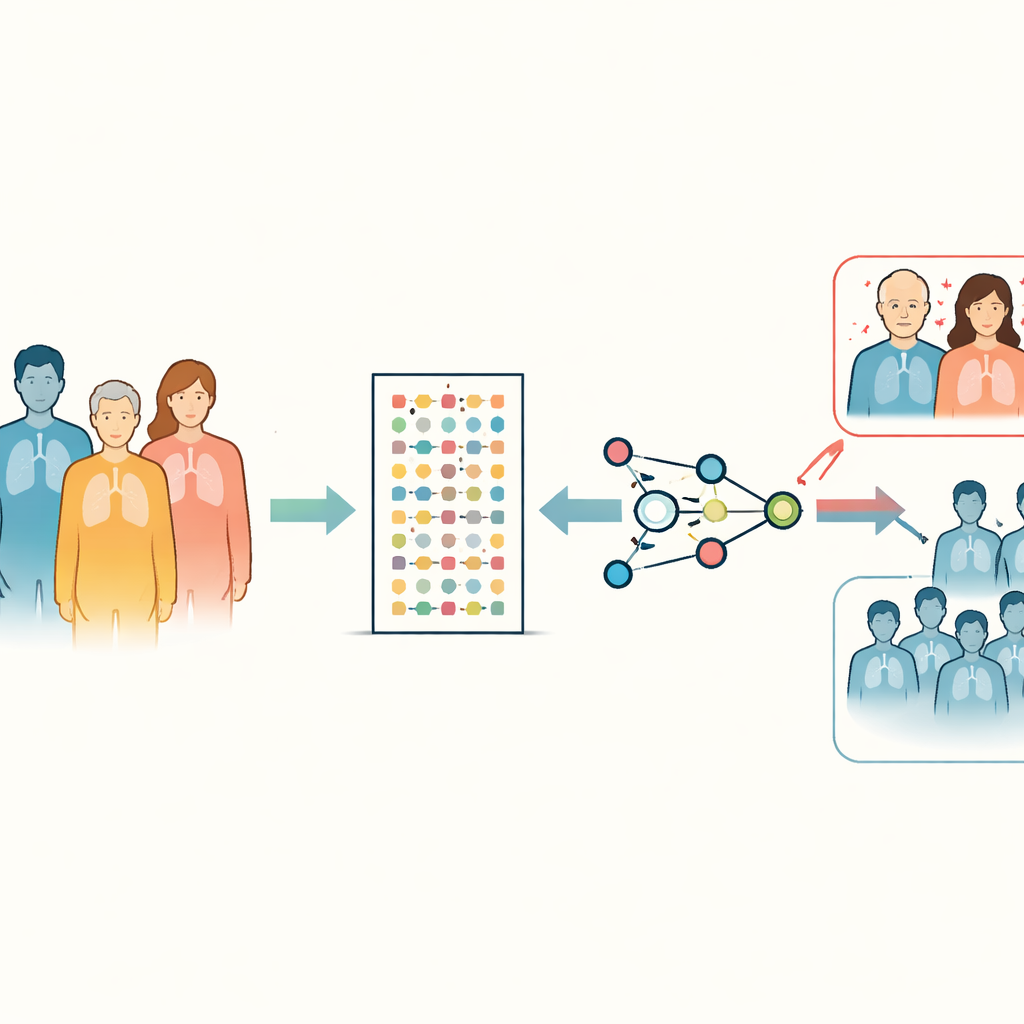
How well did artificial intelligence perform?
The models were tested using careful cross-validation, with data split into training, validation, and independent test sets while keeping the proportion of severe cases similar in each subset. Because most patients did not have a severe attack, the team focused on measures that cope well with such imbalance, especially the area under the receiver operating characteristic curve (AUROC) and the F1-score, which balance sensitivity and precision. Among all approaches, the MLP model performed best, correctly identifying 95 percent of patients who later had a severe flare and 95 percent of those who did not. Its AUROC of 0.98 slightly outperformed both traditional scores and the other AI models, suggesting it was very good at separating high-risk from low-risk patients.
What the model “learned” about risk
To avoid a “black box” result, the authors applied a method called SHAP, which ranks how much each input feature pushes the prediction toward higher or lower risk. The analysis showed that the overall BSI score remained a strong driver, but sputum characteristics (how much and how discolored the phlegm was), a history of previous severe flare-ups, and past lung infections such as tuberculosis and pneumonia also played major roles. Importantly, the model captured combinations: for example, patients with prior tuberculosis and very purulent sputum showed a much higher predicted risk than either factor alone would suggest. These nonlinear patterns are exactly what simple point-based scores struggle to represent.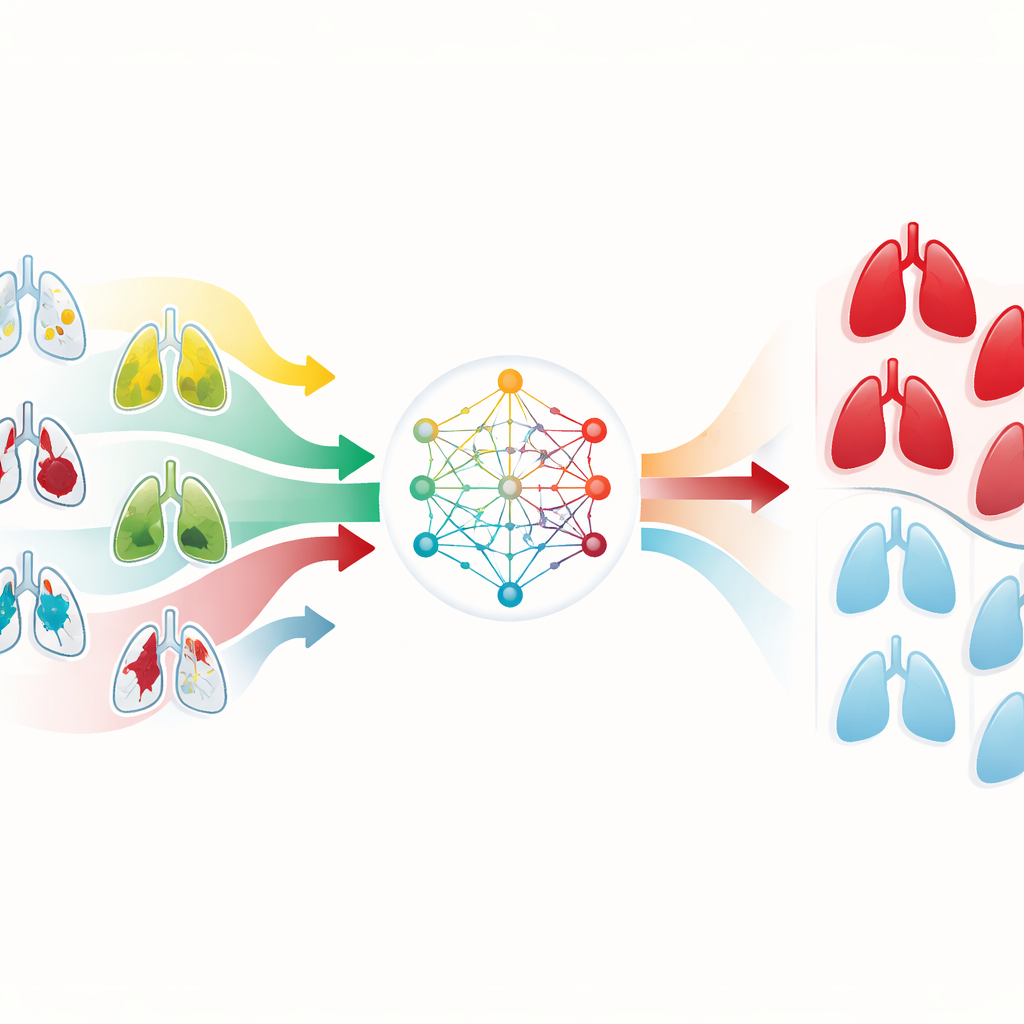
What this means for patients and doctors
The study suggests that, at least in this Korean cohort, an AI tool tailored to local patients can sharpen doctors’ ability to foresee dangerous bronchiectasis flare-ups compared with widely used scoring systems. For a person with bronchiectasis, this could one day translate into more personalized care—closer follow-up, preventive antibiotics, or other treatments targeted to those whom the model flags as high risk. However, the authors stress that their work is an early step. The patients mostly came from large referral hospitals, and the model has not yet been tested in other countries or everyday clinics. Before such AI can guide real-world decisions, it will need external validation and ongoing refinement. Still, the findings offer a promising glimpse of how combining detailed clinical data with modern algorithms could make life-threatening lung attacks more predictable—and potentially more preventable.
Citation: Yang, B., Kim, SH., Kim, GH. et al. AI based prediction of severe exacerbation in Asian bronchiectasis patients using the KMBARC registry. Sci Rep 16, 11017 (2026). https://doi.org/10.1038/s41598-026-38968-9
Keywords: bronchiectasis, artificial intelligence, acute exacerbation, risk prediction, Korean registry