Clear Sky Science · en
Eco-friendly spectrophotometric approach for the determination of anti-diabetic drugs in fixed-dose formulation together with metformin’s toxic impurity: comprehensive method assessment
Why this matters for people with diabetes and the environment
Millions of people with type 2 diabetes rely on tablets that combine two medicines, metformin and saxagliptin, to control blood sugar. Alongside the benefits, there is a worry: metformin can carry traces of melamine, a toxic industrial chemical linked to kidney damage. This study introduces simple, low‑cost laboratory tests that can check both drugs and this harmful impurity at the same time, while also cutting down on chemical waste and energy use—an important step toward safer medicines and a cleaner environment.
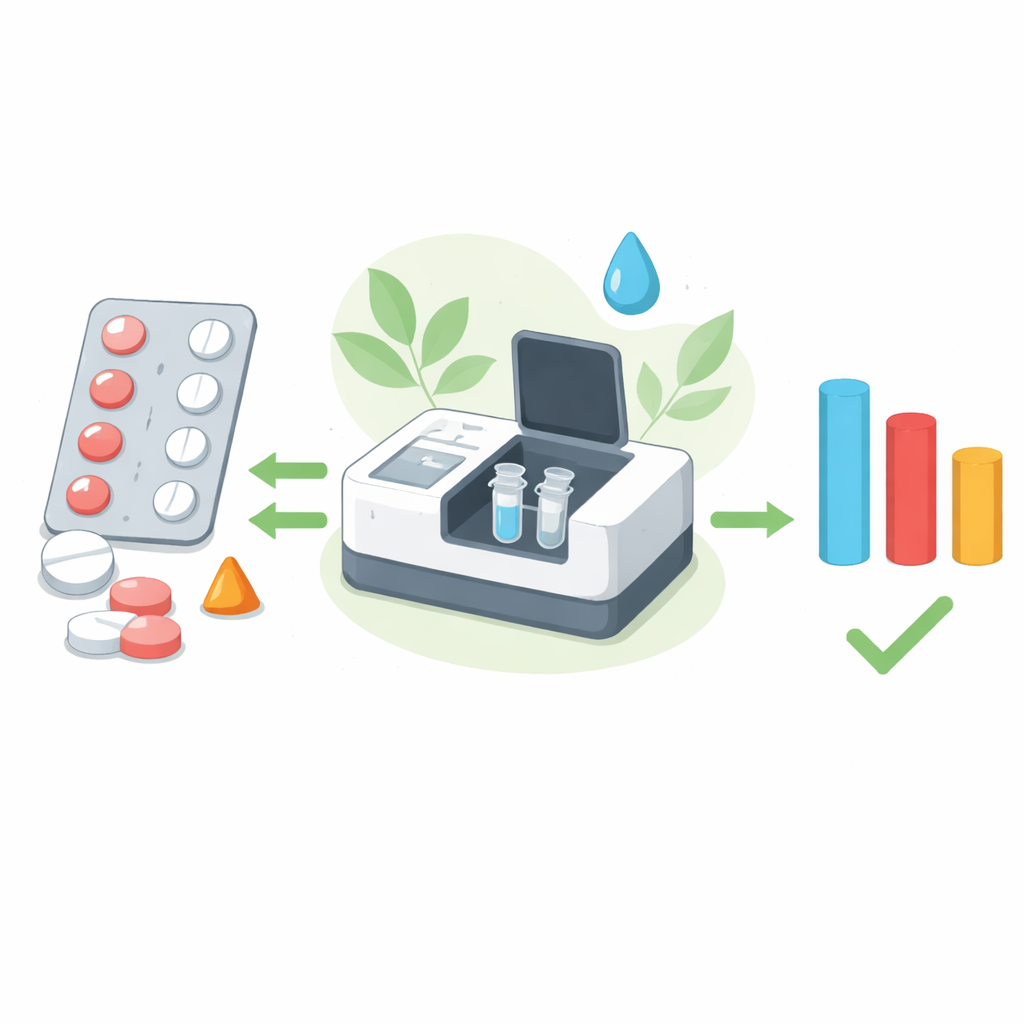
Checking what is really inside a diabetes pill
The tablets studied here contain a fixed combination of metformin, a long‑established first‑line diabetes drug, and saxagliptin, a newer agent from the DPP‑4 inhibitor family. On paper, each pill has a tiny amount of saxagliptin compared with a very large amount of metformin—about a 1 to 200 ratio. On top of that, metformin may be contaminated with melamine at levels measured in parts per million, yet even these traces can be harmful with long‑term exposure. Regulators therefore demand that manufacturers prove: the two active drugs are present in the right amounts, and melamine stays below strict safety limits. Doing all this accurately, quickly and affordably is a real analytical challenge.
The problem with traditional high‑tech testing
Current “gold standard” tests often use chromatographic instruments such as high‑performance liquid chromatography (HPLC) or ultra‑performance liquid chromatography (UPLC). These machines can separate and measure each component very precisely, including melamine, but they are expensive to buy and run, require skilled operators, and consume considerable amounts of organic solvents that must later be treated as hazardous waste. Simpler light‑based methods (UV–visible spectrophotometry) are cheaper and more accessible, but when applied in a conventional way they struggle to distinguish the overlapping light‑absorption patterns of saxagliptin, metformin, and melamine. As a result, many existing procedures either ignore melamine or measure it alone, instead of checking all three substances together in a realistic tablet sample.
Turning overlapping signals into clear answers
The researchers tackled this by designing two mathematical tricks that work on the raw light‑absorption curves. In both cases, a standard UV‑visible spectrophotometer—a routine instrument found in many laboratories—is used with water as the main liquid medium, avoiding large volumes of organic solvents. In the first approach, called a ratio‑difference method, the spectrum of one compound is divided by that of another, and then the difference in signal height between two carefully chosen wavelengths is measured. This operation cancels much of the overlap and leaves a response that depends mainly on the compound of interest. The second approach takes these ratio spectra a step further by computing their first derivative, sharpening subtle features and allowing saxagliptin and metformin to be separated even more cleanly.
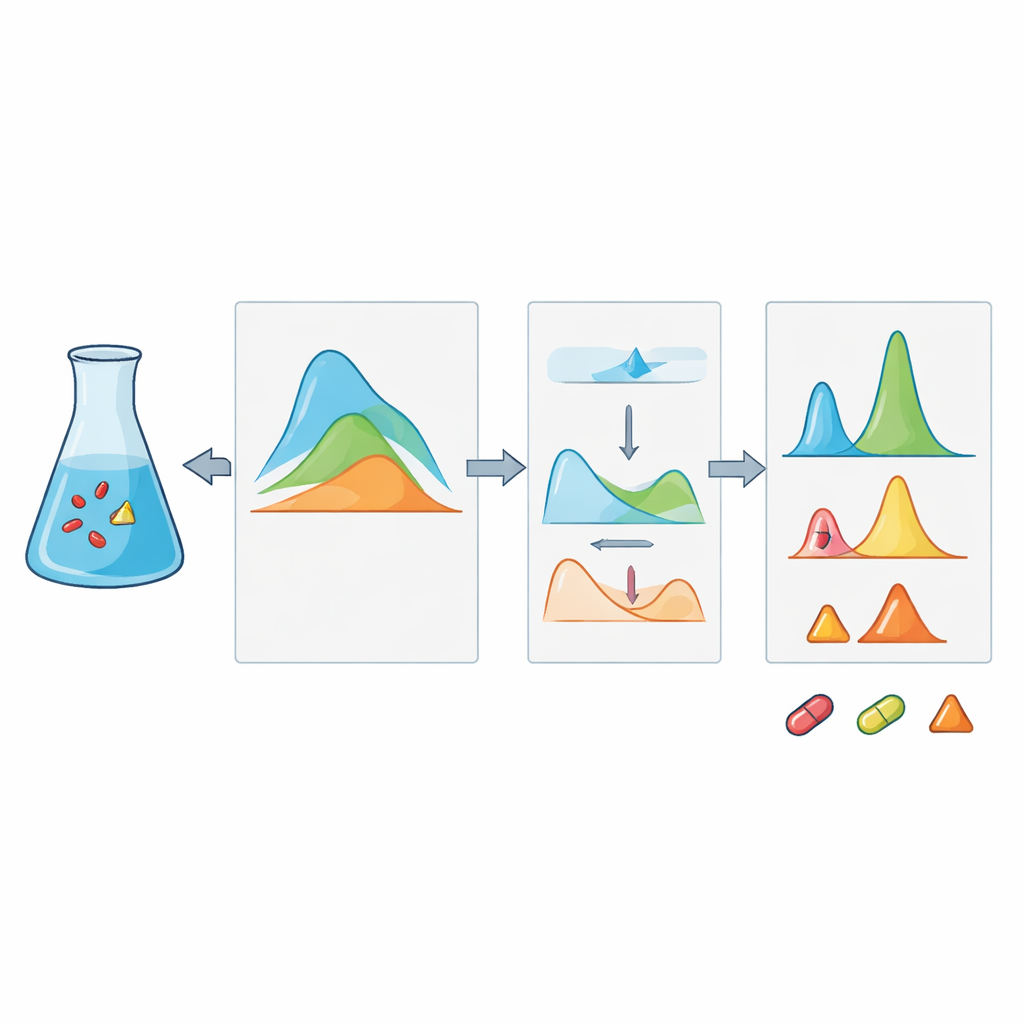
Proving that the new tests work and are truly “green”
To show that these methods are not just clever on paper, the team checked them against international quality guidelines. They prepared solutions covering wide concentration ranges and found very straight‑line relationships between signal and amount for all three substances. In mock mixtures and in crushed commercial tablets, recoveries hovered around 100%, and repeated measurements showed very small variability. The detection limits were low enough to track melamine at levels far below its maximum allowed proportion in metformin. When the results were compared statistically with those from a recognized HPLC method, there was no meaningful difference—despite the new tests using far less equipment and solvent. The authors then evaluated environmental impact using several modern “green” and “white” chemistry scoring tools, which consider not just analytical quality but also waste, safety, energy use, cost, and practicality. The spectrophotometric methods scored very highly across these indices, reflecting minimal hazardous waste, water as the main solvent, low energy demand, and suitability for routine use in resource‑limited settings.
What this means for safer and greener medicine testing
In everyday terms, this work shows that a relatively simple light‑based setup can reliably check the strength of two key diabetes medicines and, at the same time, ensure that a dangerous impurity remains at safe trace levels—all while using mainly water and producing very little waste. Laboratories that cannot afford complex chromatography systems could still perform high‑quality quality‑control tests, especially in countries where diabetes is common and resources are limited. By combining safety, accuracy, and environmental responsibility, these methods offer a practical path toward medicine testing that protects both patients and the planet.
Citation: Mohamed, D.G., Abdelrahman, M.M., Ahmed, A.B. et al. Eco-friendly spectrophotometric approach for the determination of anti-diabetic drugs in fixed-dose formulation together with metformin’s toxic impurity: comprehensive method assessment. Sci Rep 16, 9687 (2026). https://doi.org/10.1038/s41598-026-38952-3
Keywords: diabetes medication, metformin, saxagliptin, melamine impurity, green analytical chemistry