Clear Sky Science · en
Development of VP1 based indirect ELISAs for BK and JC polyomaviruses with seroprevalence assessment and cross reactivity evaluation
Why these quiet viruses matter
Most of us carry silent viral hitchhikers in our bodies without ever knowing it. Two of these, called BK and JC polyomaviruses, usually stay in check but can cause serious kidney or brain disease when the immune system is weakened, such as after an organ transplant or during certain treatments. Doctors need simple blood tests to tell who has been exposed and whether the immune system has mounted a response. This study set out to build such tests and to make sure they are both sensitive and very specific.
Turning insect cells into protein factories
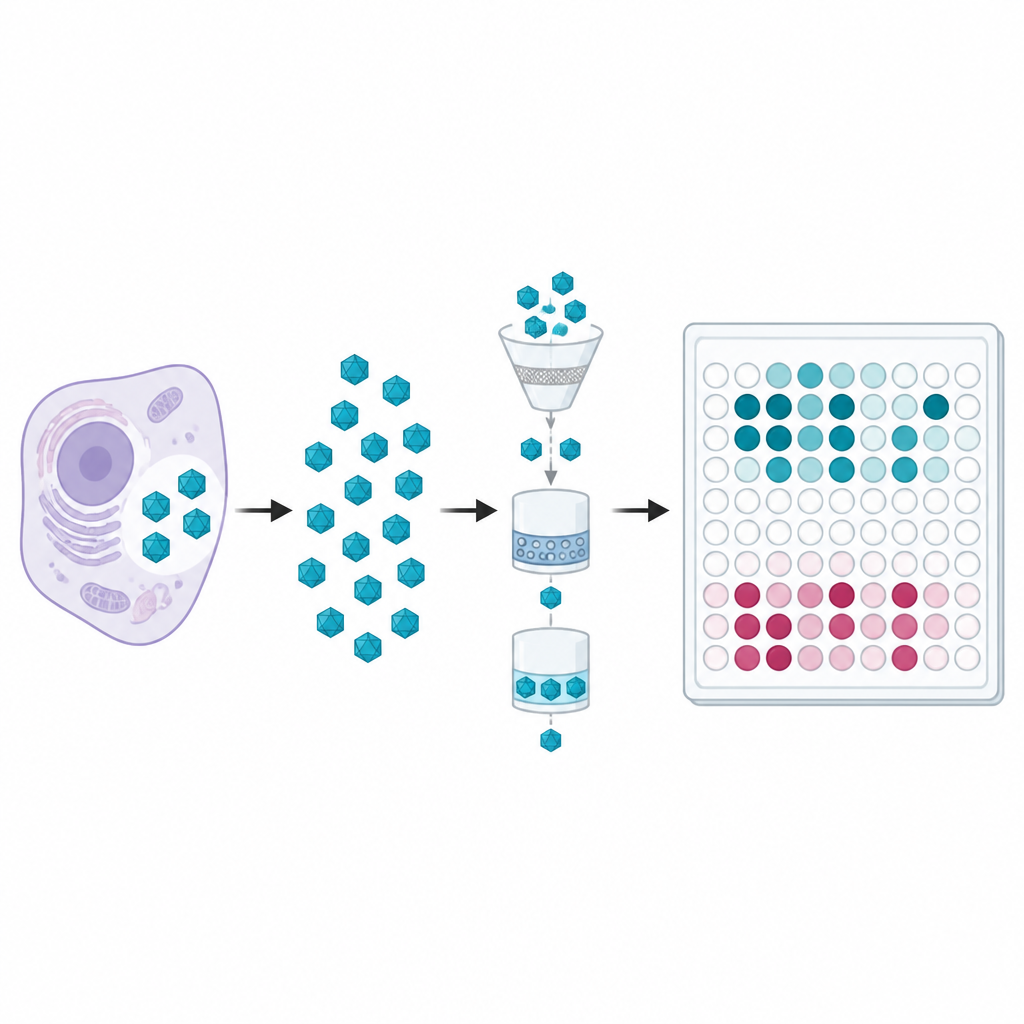
To create a dependable blood test, the researchers first needed large amounts of a viral building block that the immune system recognizes. They focused on VP1, the main shell protein that forms the outer coat of both BK and JC viruses. Instead of growing whole viruses, which would be risky, they used insect cells as safe protein factories. Two different production methods were tried. In both, the genetic instructions for VP1 were delivered into insect cells, which then churned out the protein. Careful comparisons showed that a system based on a modified insect virus produced more VP1, and in a form that looked cleaner and more stable, than a simpler plasmid based method.
Purifying and checking the viral pieces
After production, the VP1 protein had to be isolated from the crowded mix of other cell components. The team used a combination of gentle cell-breaking reagents and a metal based purification step that grabs VP1 by a small built in handle. They confirmed the protein’s size and quality using laboratory gels and antibody based tests, which showed clear, strong bands at the expected positions. These checks indicated that the VP1 from the insect virus system was not only more abundant but also kept the three dimensional shape needed for human antibodies to recognize it in a realistic way.
Building a targeted blood test
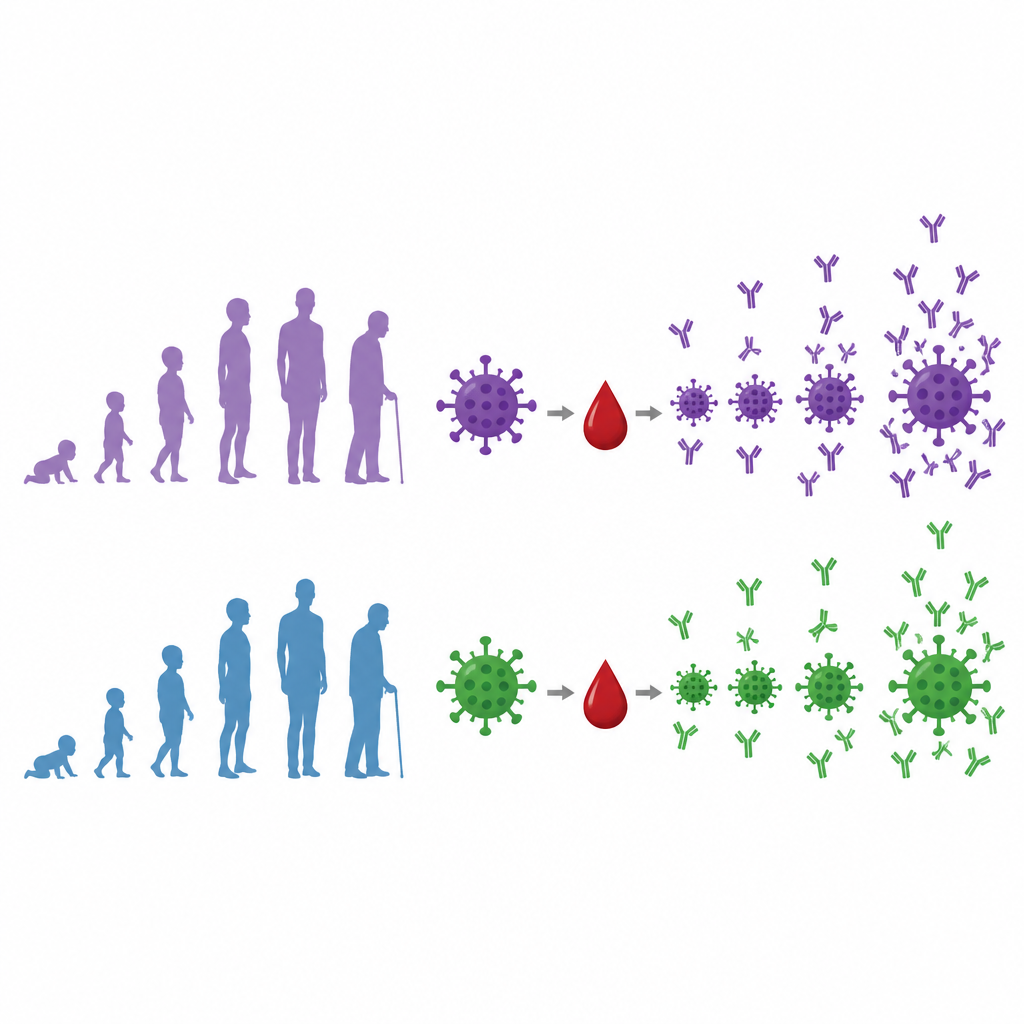
With high quality VP1 in hand, the researchers developed indirect ELISA tests, a common type of laboratory assay where viral protein is fixed to a plate, patient serum is added, and human antibodies, if present, are revealed by a color change. They carefully optimized the buffer conditions, blocking solutions, and cut off values that separate negative from positive results. Applying these tests to 67 stored human blood samples, covering ages from newborns to older adults, they found that about three quarters had antibodies to BK virus, while about one third had antibodies to JC virus. BK antibodies were already common in younger adults and stayed high across age groups, whereas JC antibodies became more frequent with increasing age.
Keeping close cousin viruses apart
A key concern was whether antibodies against one virus might accidentally trigger a signal in the test for the other, since the two VP1 proteins share much of their sequence. To probe this, the team carried out competition experiments. They mixed antibody positive sera with extra purified VP1 from either the matching virus or the other one before running the test. When the matching VP1 was added, the test signal dropped sharply, showing that the added protein soaked up the relevant antibodies. When the non matching VP1 was added, the signal barely changed. This pattern held in both directions, indicating that BK and JC responses were distinct and that each ELISA could tell them apart with little cross talk.
What this means for patients and clinics
For everyday readers, the takeaway is that this work delivers a carefully checked pair of blood tests that can say, with good confidence, whether someone has met BK or JC virus in the past. Because the tests use efficiently produced VP1 protein from insect cells, they are well suited to being scaled up for larger studies or regular screening in clinics. For people facing organ transplant or other conditions that weaken immunity, such tests can help doctors understand who may be at higher risk from these quiet viruses and monitor how their immune response changes over time.
Citation: Alipour, A.H., Fallah, F.H. & Kiasari, B.A. Development of VP1 based indirect ELISAs for BK and JC polyomaviruses with seroprevalence assessment and cross reactivity evaluation. Sci Rep 16, 16574 (2026). https://doi.org/10.1038/s41598-026-38907-8
Keywords: BK virus, JC virus, polyomavirus serology, ELISA test, transplant infection risk