Clear Sky Science · en
Drug disposition study on a levofloxacin dry powder formulation using the isolated perfused lung in rats
Why Breathing Medicine Matters
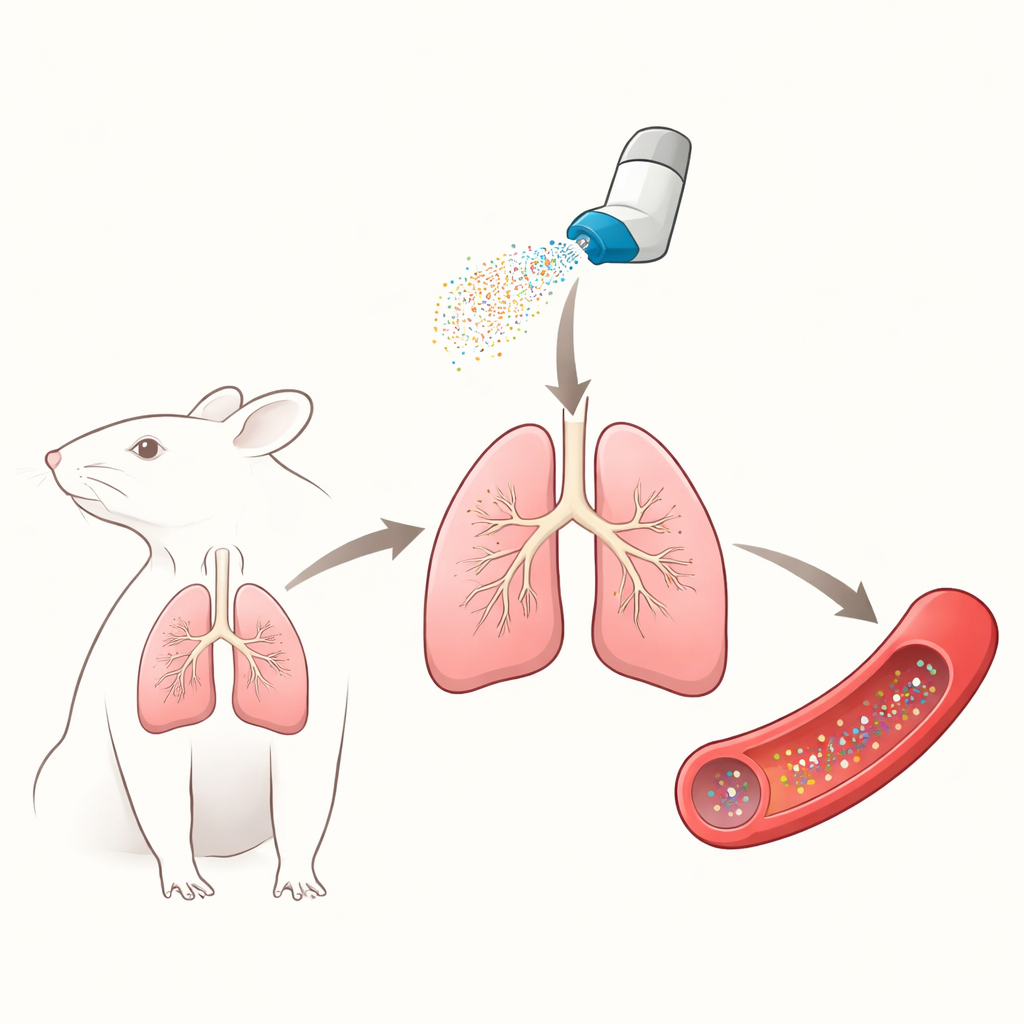
For people with stubborn lung infections, especially those with conditions like cystic fibrosis, getting enough antibiotic to the right place can be a constant struggle. Swallowed pills and injections send drugs all over the body, which can cause side effects long before the medicine reaches high levels in the lungs. This study explores a different idea: delivering the antibiotic levofloxacin as a dry powder directly into the airways and tracking how it moves through the lungs and into the bloodstream using an isolated rat lung kept alive outside the body.
From Needle to Breath
Doctors have long relied on injections or oral tablets to fight serious infections, but the lungs offer a unique shortcut. Their vast surface area and thin membranes make them an ideal doorway for drugs. At the same time, local delivery to the airways can create very high drug levels exactly where bacteria live, while limiting exposure to the rest of the body. Levofloxacin, a modern antibiotic that works well against the hard-to-treat bacterium Pseudomonas aeruginosa, spreads widely through tissues when given by the usual routes. That property is useful, but it also means more drug reaches healthy organs. Turning levofloxacin into an inhaled dry powder could combine the drug’s potency with the precision of targeted delivery.
A Lung on the Lab Bench
To test this idea without the complexity of a whole living animal, the researchers used an isolated, artificially perfused and mechanically ventilated rat lung. After humane anesthesia and careful surgery, the lung was connected to a pump that circulated a warm, blood-like solution through its blood vessels and to a ventilator that moved humidified air in and out of the airways. This setup kept the lung tissue structurally intact and functioning, while allowing the team to collect samples from the outflowing fluid and from the lung itself. They could then compare two ways of giving levofloxacin: as a bolus dose into the lung’s blood supply, and as a spray-dried powder blown into the windpipe to mimic inhalation.
Powder in the Air, Drug in the Lung
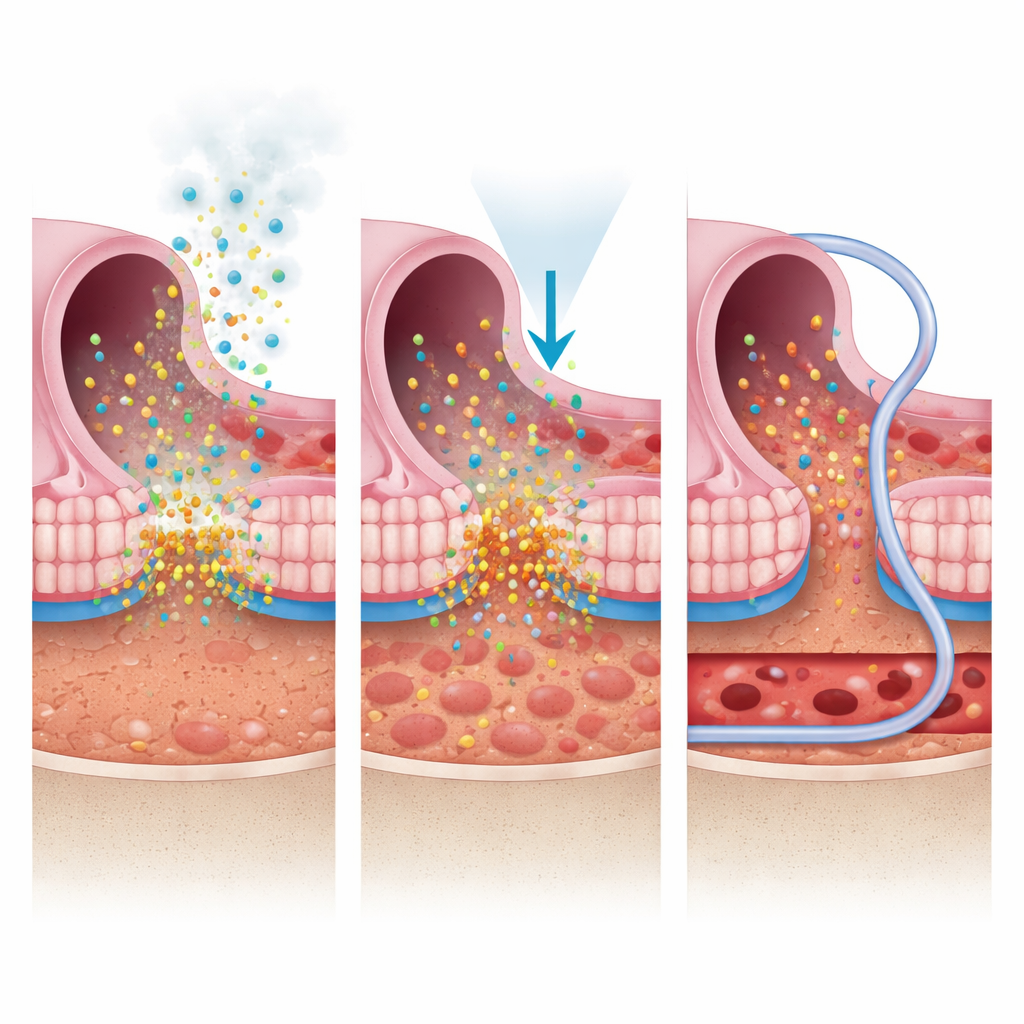
The levofloxacin powder was produced by spray drying with added sodium chloride and leucine, ingredients chosen to help the particles disperse easily and settle deep in the airways. Most particles were between about one and three micrometers across, a size that favors deposition in the smaller air passages rather than being exhaled or getting stuck in the throat. When this powder was delivered into the isolated lung, levofloxacin appeared in the perfusion fluid within minutes, showing that the drug crossed the air–blood barrier quickly. Levels in the outflow peaked at around seven minutes and then declined slowly, indicating a steady release from lung tissue into the circulating medium over the course of an hour.
Comparing Breath and Injection
When the same antibiotic was injected as a solution into the lung’s blood vessels, its behavior was very different. Concentrations in the perfusion fluid spiked sharply and dropped below detectable levels within about ten minutes, a pattern typical of fast distribution and elimination. After adjusting for the different doses used, the area under the concentration–time curve in the perfusate was much larger for the injected solution than for the inhaled powder, reflecting greater overall exposure of the perfusate to drug. Yet, at the end of the one-hour experiment, the lungs that had received the powder contained more than four times as much levofloxacin per gram of tissue as those that had received the injection, demonstrating strong local retention after inhalation.
What This Means for Patients
Put in simple terms, the isolated lung experiments show that breathing in levofloxacin as a fine powder can load the lung tissue with high and long-lasting amounts of antibiotic, while only a modest fraction escapes into the circulation. In contrast, injecting the drug mainly floods the fluid phase briefly and leaves much less behind in the lung itself. Although these tests were done in rat lungs outside the body, they support the idea that carefully engineered inhaled powders could help treat stubborn lung infections more efficiently, by bathing the airways in high drug levels and potentially reducing whole-body side effects.
Citation: Dibaei, M., Gholami, M., Lavasani, H. et al. Drug disposition study on a levofloxacin dry powder formulation using the isolated perfused lung in rats. Sci Rep 16, 12931 (2026). https://doi.org/10.1038/s41598-026-38890-0
Keywords: inhaled antibiotics, levofloxacin dry powder, pulmonary drug delivery, isolated perfused lung, cystic fibrosis lung infection