Clear Sky Science · en
A hybrid recommendation framework utilizing domain-adaptive RoBERTa embeddings for enhanced personalization in e-commerce
Smarter Shopping Suggestions
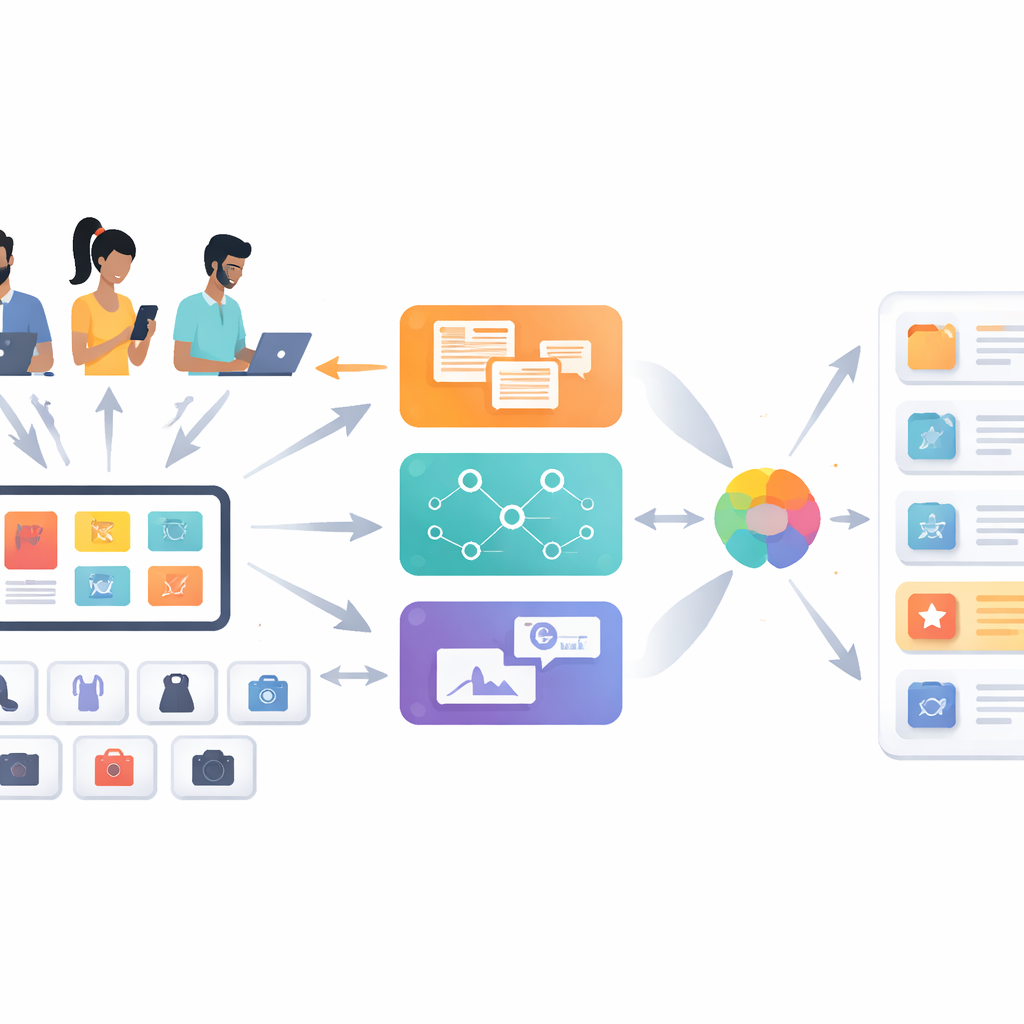
Anyone who shops online has seen product suggestions that feel oddly spot on—or, just as often, completely off the mark. This paper explores a new way to build recommendation systems so they better understand both what products are really about and what people genuinely like, even when there is little data to start from. The goal is to make those “You might also like” lists more accurate, more diverse, and more trustworthy for everyday shoppers.
Why Online Picks Often Miss the Mark
Traditional recommendation systems rely on two main tricks. One compares you to people who behaved like you in the past, suggesting items they enjoyed. The other looks at product features—such as category, brand, or simple keywords—and matches them to your known preferences. These approaches break down when data are sparse, when new users or products appear (the “cold-start” problem), or when your tastes change over time. Many advanced “hybrid” systems try to combine several signals, but they often become complex, slow, and hard to interpret, especially when juggling millions of users and items.
Bringing Language Understanding into Recommendations
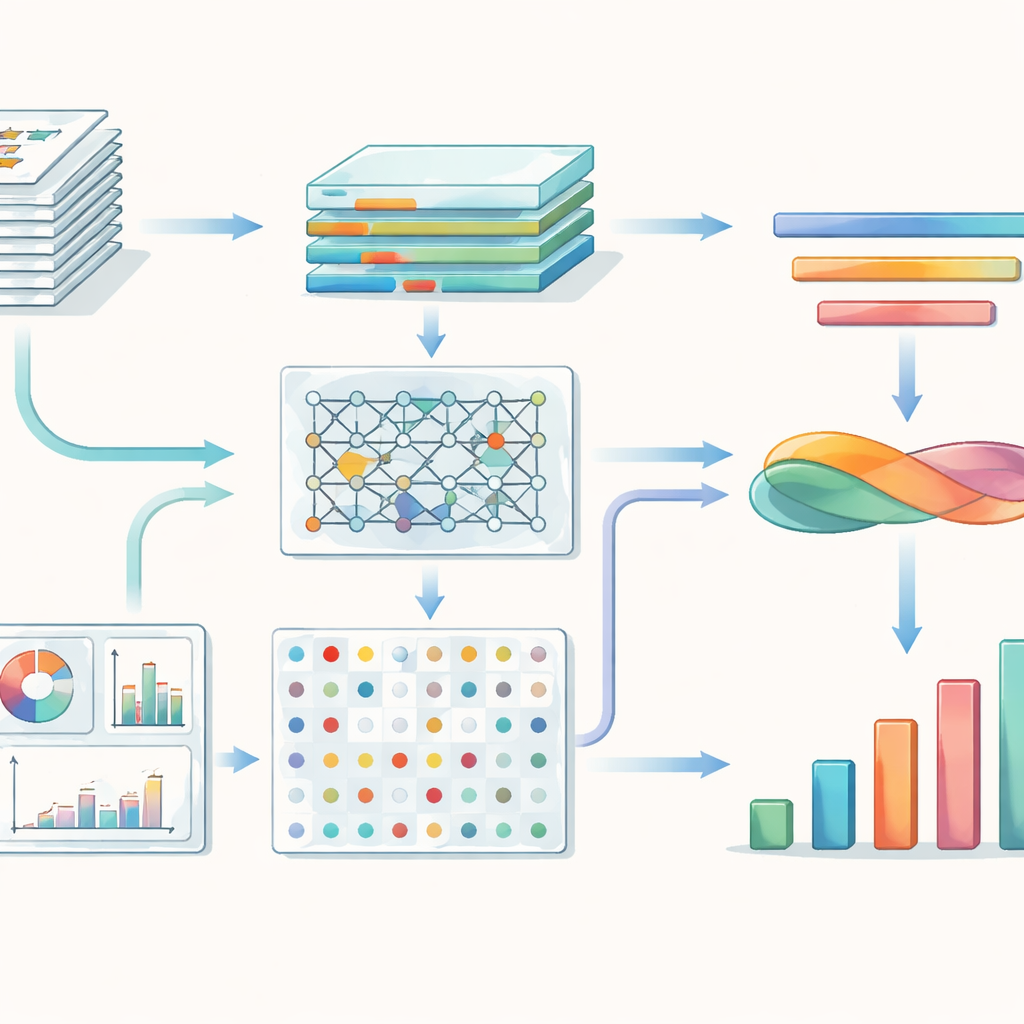
The authors propose a framework called HyReC that leans heavily on how people talk about products. It uses a powerful language model, RoBERTa, which has been further trained on e-commerce text to become “fluent” in reviews and product descriptions from the baby-products domain. This model turns raw text—titles, descriptions, and top reviews—into dense numerical fingerprints that capture meaning and sentiment, such as whether people praise durability, complain about leaks, or mention ease of use. These content fingerprints help HyReC recognize that two products are alike even if they have different brand names or slightly different wording.
Blending Behavior, Habits, and Opinions
Text alone is not enough, so HyReC also learns from how users actually behave. A deep neural network analyzes patterns of which users rated which items, discovering hidden connections—for example, that people who like certain strollers also tend to like particular car seats. On top of that, the system computes simple, interpretable statistics like each user’s average rating, how picky or generous they are, how frequently they interact, and how skewed their ratings are toward very high or very low scores. Similar statistics are calculated for products. These behavioral summaries help the system reason about users with few ratings or items that have just appeared, easing cold-start problems.
Letting the Model Decide What Matters Most
The key innovation in HyReC is how it fuses these different signals. Instead of simply stacking all the numbers together, it uses an “attention” mechanism that learns to weigh content, collaborative patterns, and behavioral statistics differently for each user–product pair. For one shopper, the text in reviews might carry most of the weight; for another, past rating patterns might dominate. The model then feeds this blended representation into a ranking layer designed specifically to sort candidate items so that the most relevant ones rise to the top. Training is done with optimization techniques tuned for ranking tasks, which helps the system perform well on real-world “Top-K” recommendation lists rather than just on raw rating predictions.
Proving the Approach on Real Shopping Data
To test HyReC, the authors use an Amazon Baby products dataset containing over 56,000 reviews across thousands of users and items. They compare their model against several modern baselines, including deep learning and graph-based approaches. HyReC produces dramatically lower prediction errors and near-perfect agreement with actual user ratings, and it achieves very high recall and F1-scores when evaluated as a ranking system. Further experiments show that removing any one component—text embeddings, collaborative signals, behavioral statistics, attention, or the ranking layer—noticeably harms performance, underscoring that each piece plays a distinct and important role.
What This Means for Everyday Users
In plain terms, this work shows that recommendation systems can become both smarter and more transparent by combining what people say, what they do, and how they tend to behave over time, instead of relying on any single source of information. For shoppers, this could mean more relevant suggestions, better discovery of new or niche products, and fewer frustrating misses when browsing. For companies, it offers a scalable way to handle sparse data and shifting tastes without turning their systems into black boxes. The authors suggest that future extensions could bring in even richer signals—such as images or long-term feedback loops—to push online personalization closer to how a thoughtful human salesperson would guide your choices.
Citation: Rajpoot, C.S., Tiwari, V. & Vishwakarma, S.K. A hybrid recommendation framework utilizing domain-adaptive RoBERTa embeddings for enhanced personalization in e-commerce. Sci Rep 16, 14541 (2026). https://doi.org/10.1038/s41598-026-38853-5
Keywords: recommender systems, e-commerce personalization, hybrid recommendation, deep learning, user behavior