Clear Sky Science · en
Synergistic antidiabetic efficacy of dorzolamide and metformin: HPTLC quantification and biological evaluation
Why this matters for people with diabetes
Many people with type 2 diabetes rely on the drug metformin to keep their blood sugar in check, but high doses over many years can bring unwanted side effects, including low vitamin B12. This study explores whether pairing metformin with another medicine, dorzolamide, could improve blood sugar control so that lower metformin doses might be enough, while also offering extra protection for the liver and pancreas.
A glaucoma drug with a hidden talent
Dorzolamide is best known as an eye drop used to lower pressure in glaucoma. It blocks an enzyme that helps move salts and fluids in the eye. The same enzyme also plays a role in how the liver makes new glucose and handles fats. Earlier work with related drugs hinted that blocking this enzyme could help lower blood sugar. The authors asked whether dorzolamide, used systemically rather than just in the eye, might help treat diabetes when combined with metformin, which mainly reduces glucose released by the liver.
Testing the drug duo in diabetic rabbits
To probe this idea, the researchers used rabbits in which diabetes had been triggered by a chemical called alloxan, which damages insulin-producing cells in the pancreas and raises blood sugar. The animals were divided into five groups: healthy controls, untreated diabetics, diabetics treated with metformin alone, diabetics treated with dorzolamide alone, and diabetics given both drugs together at the same dose as the single treatments. Blood sugar was tracked every day for a month, and a long term sugar marker, HbA1c, was measured at the end. The team also examined the animals’ livers and pancreases under the microscope to look for tissue damage or protection.
Stronger blood sugar control when drugs work together
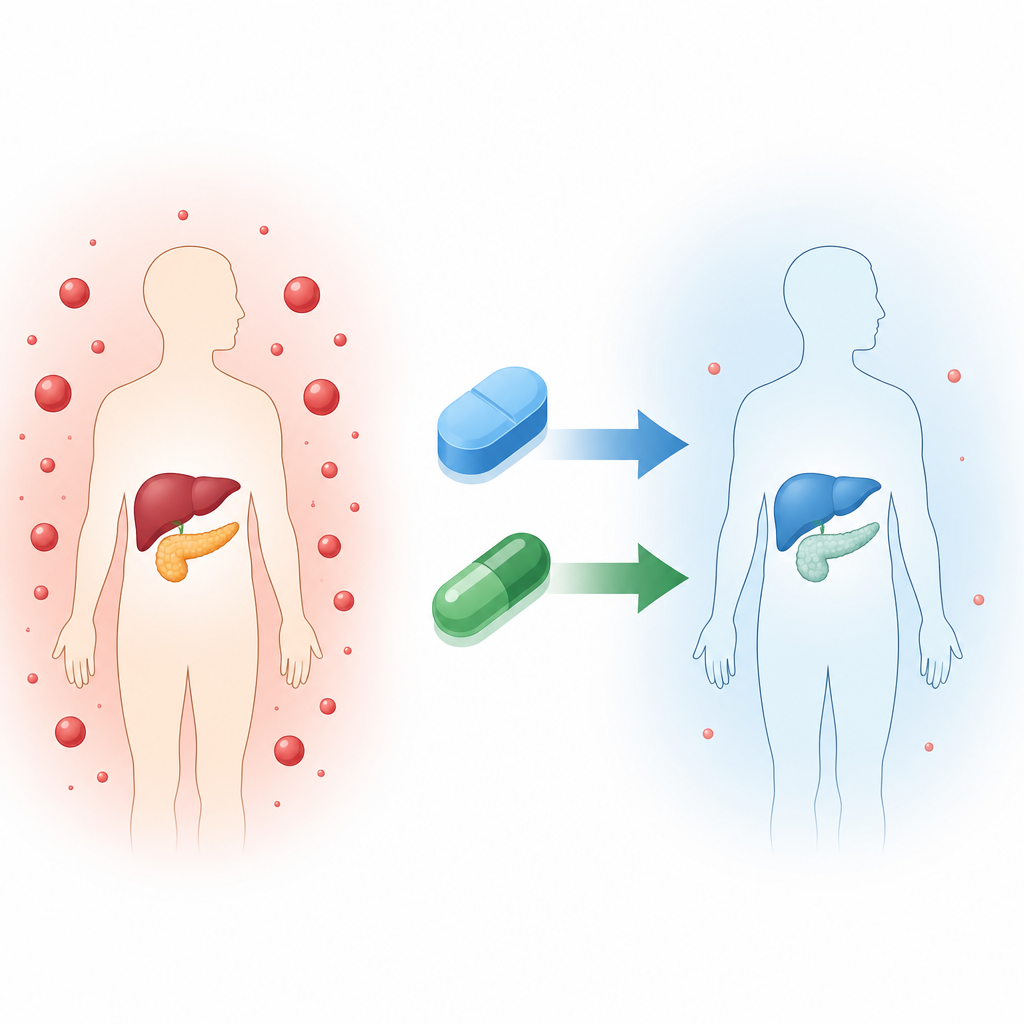
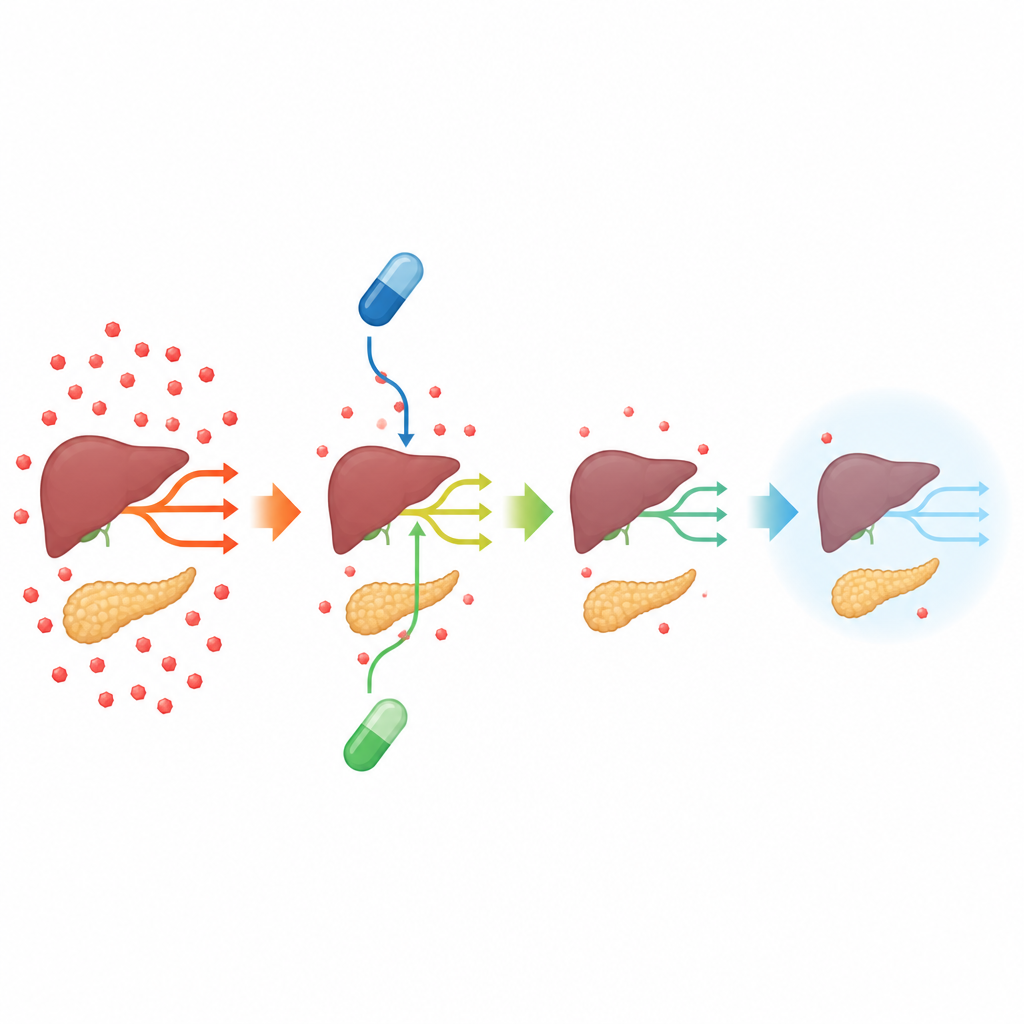
Both metformin and dorzolamide on their own lowered blood sugar compared with untreated diabetic rabbits, cutting levels by about one third. When the two drugs were given together, however, the effect was clearly greater: average blood sugar dropped by nearly half, a statistically strong change. HbA1c, which reflects blood sugar over weeks, followed the same pattern, returning close to values seen in healthy rabbits for all treated groups. Body weight tended to fall in diabetic animals, especially those on metformin or the drug combination, but dorzolamide alone did not significantly affect weight. Blood and urine acidity stayed within normal ranges, with only small shifts in the dorzolamide groups, suggesting that the enzyme block did not seriously disturb the body’s acid base balance.
Protecting the liver and pancreas
The microscope studies told an important part of the story. In untreated diabetic rabbits, liver cells showed swollen, vacuolated cytoplasm and more fibrous scar like tissue, signs of injury linked to excess sugar and disturbed metabolism. Their pancreatic islets, the clusters of hormone producing cells, were shrunken and partly destroyed. In contrast, rabbits treated with metformin, dorzolamide, or especially the combination had livers that looked much closer to normal, with less scarring and fewer swollen cells. Their pancreatic islets also kept more of their size and structure, with the drug pair giving the best preservation of islet area. These patterns suggest that the improved blood sugar control translated into real protection for key metabolic organs.
A new way to track both drugs in the body
Alongside the biological tests, the team built a laboratory method to measure dorzolamide and metformin together in urine using a technique called high performance thin layer chromatography. They optimized the solvent mix so the two drugs traveled different distances on a coated plate, then used ultraviolet light to read how much of each was present. The method worked over a wide range of concentrations and could detect very small amounts, in both human and rabbit urine. Because it is relatively simple, low cost, and allows many samples to be run at once, this approach could be useful for routine monitoring of the drug pair in future studies.
What this could mean for future treatment
For a layperson, the main message is that combining dorzolamide with metformin lowered blood sugar more than either drug alone and appeared to shield the liver and pancreas from diabetes related damage in rabbits. If similar effects occur in people, doctors might someday be able to use this pair to achieve good sugar control with smaller metformin doses, potentially easing problems like vitamin B12 deficiency. The authors stress that this is an early, preclinical study, but it lays groundwork for clinical trials that could test whether a fixed dose combination of these two existing drugs offers a safer, more complete way to manage type 2 diabetes.
Citation: Abdel-Hafez, N.G., Abd-Elhafeez, H.H., Abd-Eldayem, A.M. et al. Synergistic antidiabetic efficacy of dorzolamide and metformin: HPTLC quantification and biological evaluation. Sci Rep 16, 15060 (2026). https://doi.org/10.1038/s41598-026-38843-7
Keywords: type 2 diabetes, metformin, dorzolamide, carbonic anhydrase, HPTLC