Clear Sky Science · en
Genomic dissection of iron toxicity tolerance in rice identifies key loci, candidate genes, and associated haplotypes
Why Iron-Loaded Soils Threaten Our Daily Rice
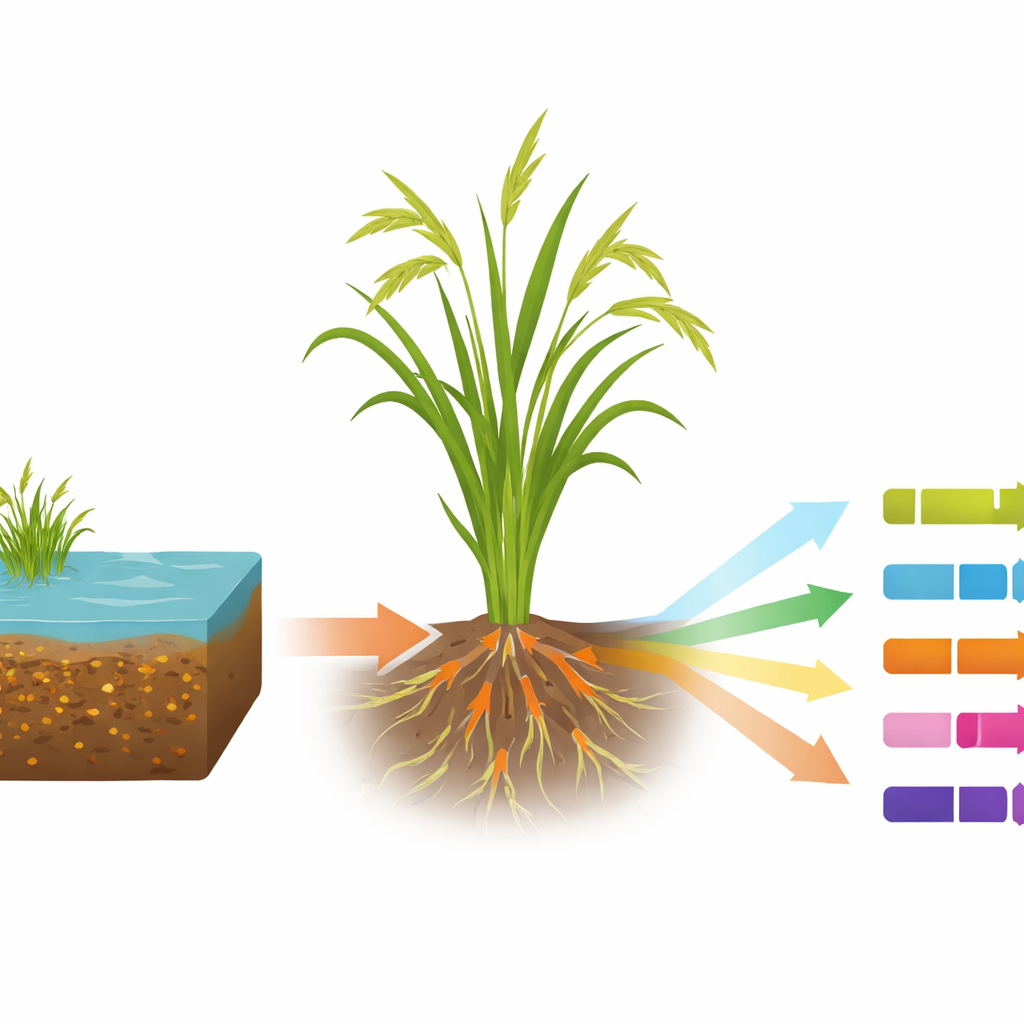
For billions of people, especially across Asia and Africa, rice is the main source of daily calories. Yet in many lowland fields, the very water and soil that nourish rice can quietly poison it. In acidic, waterlogged paddies, iron dissolves into a highly reactive form that damages roots and leaves, stunts growth, and can wipe out harvests. This study asks a simple but crucial question: which parts of the rice genome help plants stay healthy in these iron-heavy soils, and how can breeders use that knowledge to secure future food supplies?
Too Much of a Good Thing
Iron is essential for plants, but in excess it becomes toxic. In flooded, acidic soils, iron shifts into a form that rice roots absorb too easily. Inside the plant, this surplus iron fuels the production of aggressive oxygen-based molecules that punch holes in membranes, damage proteins, and disrupt photosynthesis. Farmers see the results as “leaf bronzing,” poor root growth, and shrinking yields that can drop by a third or more. Rice does have natural defenses: it can form iron-rich crusts on roots, stash iron in less sensitive tissues, or lock it away in storage proteins. But varieties differ widely in how well they deploy these tricks. Understanding the genetic wiring behind that difference is the first step toward breeding hardier crops.
Pulling Signals from a Noisy Genetic Landscape
Over the past two decades, many teams have scanned rice DNA to find stretches linked to iron tolerance. These studies pinpointed hundreds of genomic regions, but their results were often inconsistent from one experiment to another because of differing environments, plant materials, and methods. The authors tackled this problem with a "meta" approach: they overlaid results from 20 independent studies, including both traditional mapping experiments and large-scale genome-wide association scans. Using specialized software, they merged 354 individual signals into 85 shared regions, then narrowed these to 63 stable “meta-QTLs” that each explained a meaningful portion of how rice copes with iron overload, while cutting the typical uncertainty in location by more than half.
From DNA Regions to Working Parts
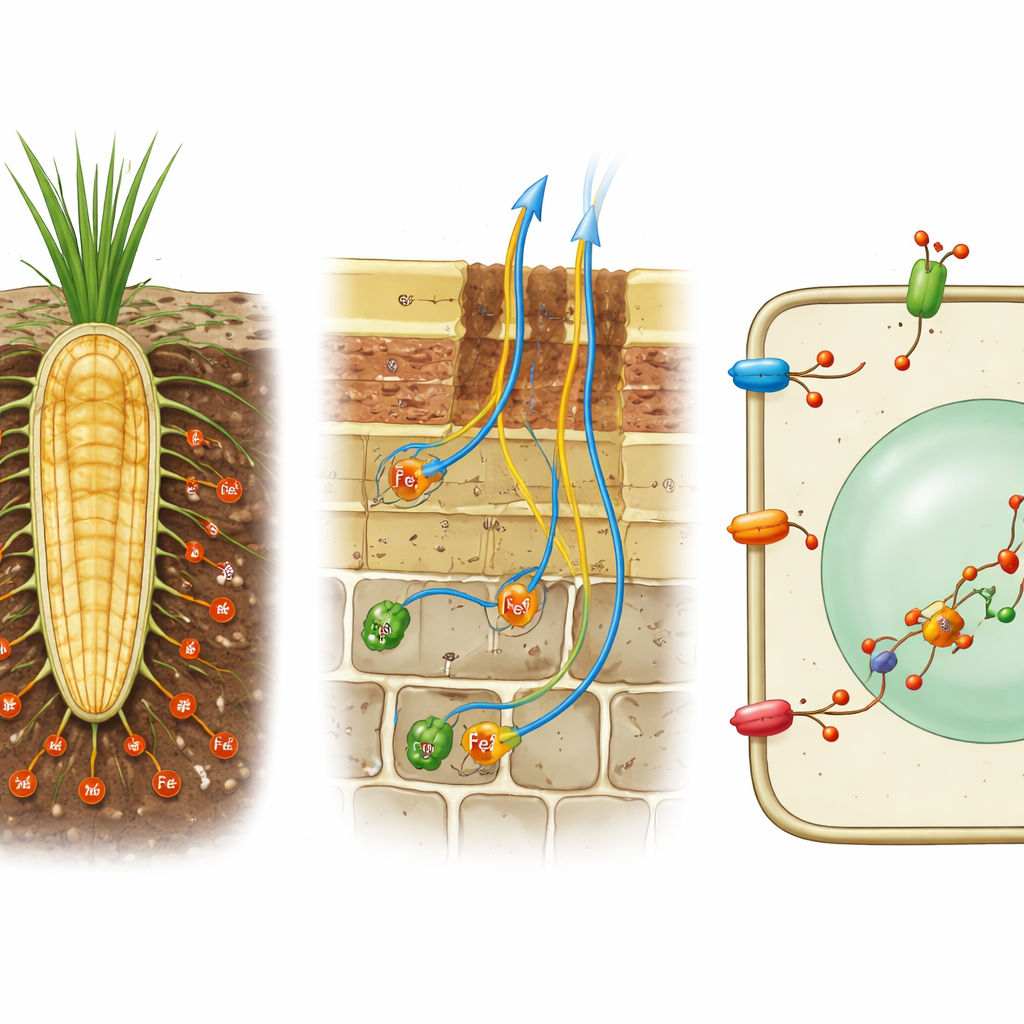
Finding a useful region on a chromosome is only the beginning; within those segments lie thousands of genes. The researchers next pulled out over 4,000 genes located inside the 63 key intervals and cross-checked them against five independent datasets that tracked which genes turn on or off when rice faces iron stress. This filter yielded 284 high-confidence candidates that repeatedly change their activity under iron overload. Many of these genes encode transport “gates” in cell membranes that move metals or nutrients, pumps that shuttle iron into safe storage compartments, or enzymes that help neutralize harmful oxygen species. Others act as control switches—transcription factors and hormone-related genes—that coordinate broader stress responses in roots and shoots.
Linking Gene Variants to Tougher Plants
To see which of these candidate genes actually matter for plant performance, the team examined natural DNA variation in 551 diverse rice varieties whose growth had been measured under iron stress. They focused on small DNA changes within the short-listed genes and looked for consistent associations with traits such as shoot height, root length, and fresh weight when iron is high. This targeted scan uncovered 27 significant gene–trait links, 13 of them specific to iron stress. Within these, a handful stood out: some affected growth of shoots, others root length or biomass. The authors then grouped varieties based on combinations of these DNA variants—so-called haplotypes—and compared how those groups fared under stress. One rare haplotype produced the best growth across multiple traits, while a more common one delivered solid, moderate tolerance, making both attractive building blocks for future breeding programs.
What This Means for Future Rice Fields
By stacking together evidence from many mapping studies, gene activity profiles, protein interaction networks, and natural DNA variation, this work distills a long list of scattered genetic clues into a focused set of genomic “hotspots,” candidate genes, and favorable haplotypes that help rice survive iron-toxic soils. For plant breeders, these findings offer practical signposts: DNA markers within high-confidence regions can guide the selection and combination of tolerant haplotypes, while especially promising genes can be tested directly or edited with modern tools. For the wider public, the message is reassuring: scientists are learning not just that some rice plants handle hostile soils better than others, but exactly why—and that knowledge can be turned into sturdier varieties that keep producing reliable harvests as soils change and climate pressures grow.
Citation: Jaiswal, S., Kumar, K., Kumari, A. et al. Genomic dissection of iron toxicity tolerance in rice identifies key loci, candidate genes, and associated haplotypes. Sci Rep 16, 12767 (2026). https://doi.org/10.1038/s41598-026-38841-9
Keywords: rice breeding, iron toxicity, acidic soils, plant stress tolerance, crop genomics