Clear Sky Science · en
Seed inoculation with Rhizobium and integrated nutrient management influences the productivity of groundnut and their residual impact on finger millet
Why this study matters to farmers and eaters
Chemical fertilizers have helped feed the world, but relying on them alone can damage soils, raise costs, and threaten long-term harvests. This study asks a practical question with big implications for small farmers and food security: can mixing organic manures and helpful soil bacteria with chemical fertilizer keep yields high today while enriching the soil for tomorrow’s crop? By tracking groundnut followed by finger millet over two years in eastern India, the researchers show how different nutrient strategies affect both harvests and the health of the soil they grow in.
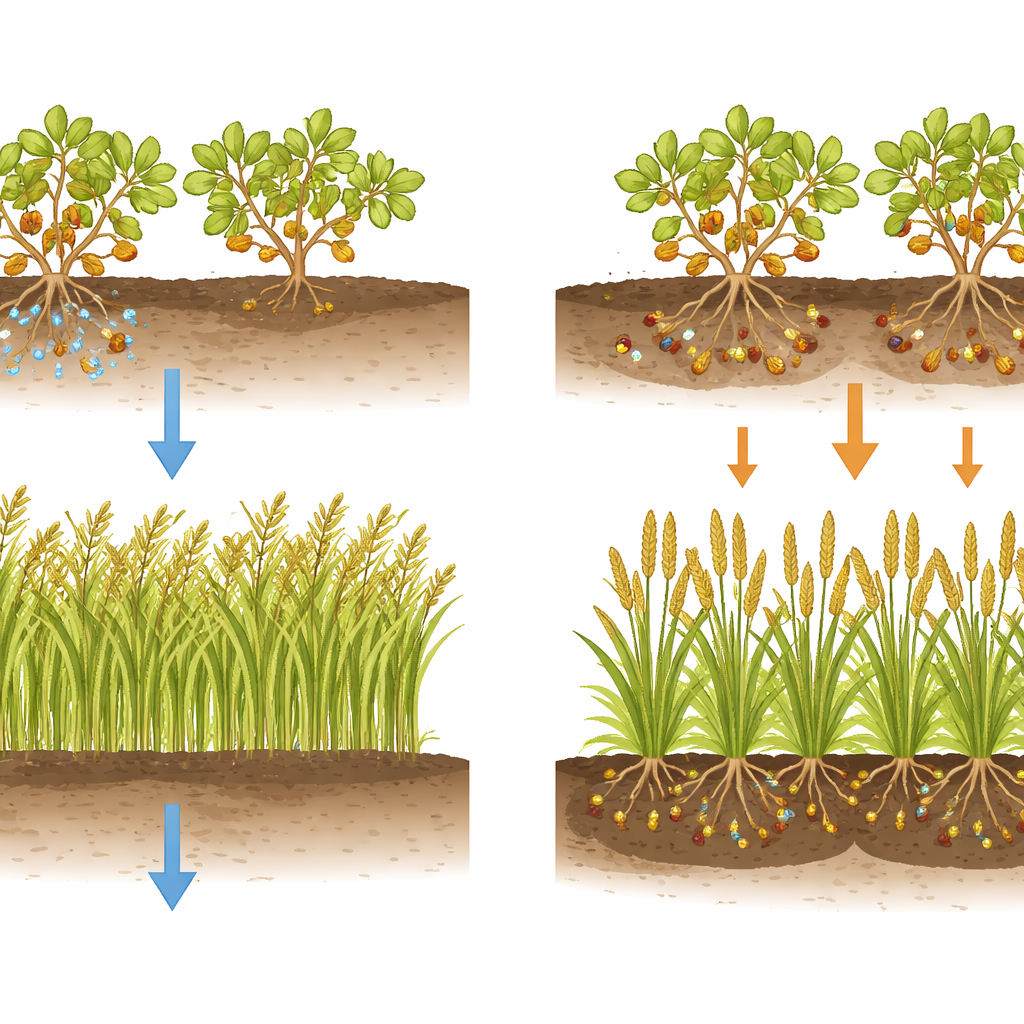
Two crops, one shared soil
The team focused on a common cropping pattern in southern Odisha: rainy-season groundnut followed by dry-season finger millet on the same plots. Groundnut is a legume that can partner with Rhizobium bacteria to draw nitrogen from the air, while finger millet is a hardy grain often grown on poor soils. The researchers tested two ways of coating groundnut seed with Rhizobium—using a solid charcoal-based carrier or a liquid carrier—and combined these with five nutrient plans. These plans ranged from all nitrogen supplied as chemical urea to all nitrogen supplied as farmyard manure (FYM), with several mixes in between. Only the groundnut received added nutrients; the following finger millet had to live off the “leftovers” in the soil.
How fertilizer choices shaped groundnut
For groundnut itself, giving the full recommended nitrogen dose as urea produced the tallest plants, the most biomass, and the highest pod and kernel yields in both study years. As the share of nitrogen coming from FYM increased, groundnut yields generally declined, reflecting the slower release of nutrients from organic matter. Solid Rhizobium on the seed slightly outperformed the liquid form for some traits, including pod and kernel yield and total nitrogen removal, but many growth details were similar between the two. Overall, the groundnut crop responded most strongly to how much readily available nitrogen it received, with chemical fertilizer giving it a quick boost.
What the soil saved for finger millet
The story flipped when the scientists turned to the next crop, finger millet, which was planted without any additional fertilizer. Here, the residual benefits of FYM really showed. Plots where groundnut had received all its nitrogen from FYM produced the tallest finger millet plants, the most tillers, and the highest grain and straw yields. Mixed treatments that combined urea and FYM also performed well, while plots that had relied entirely on urea for the groundnut had the weakest finger millet and the lowest nutrient uptake. Soil tests after harvest supported this picture: FYM-heavy treatments left more available nitrogen, phosphorus, and potassium in the soil than chemical fertilizer alone.
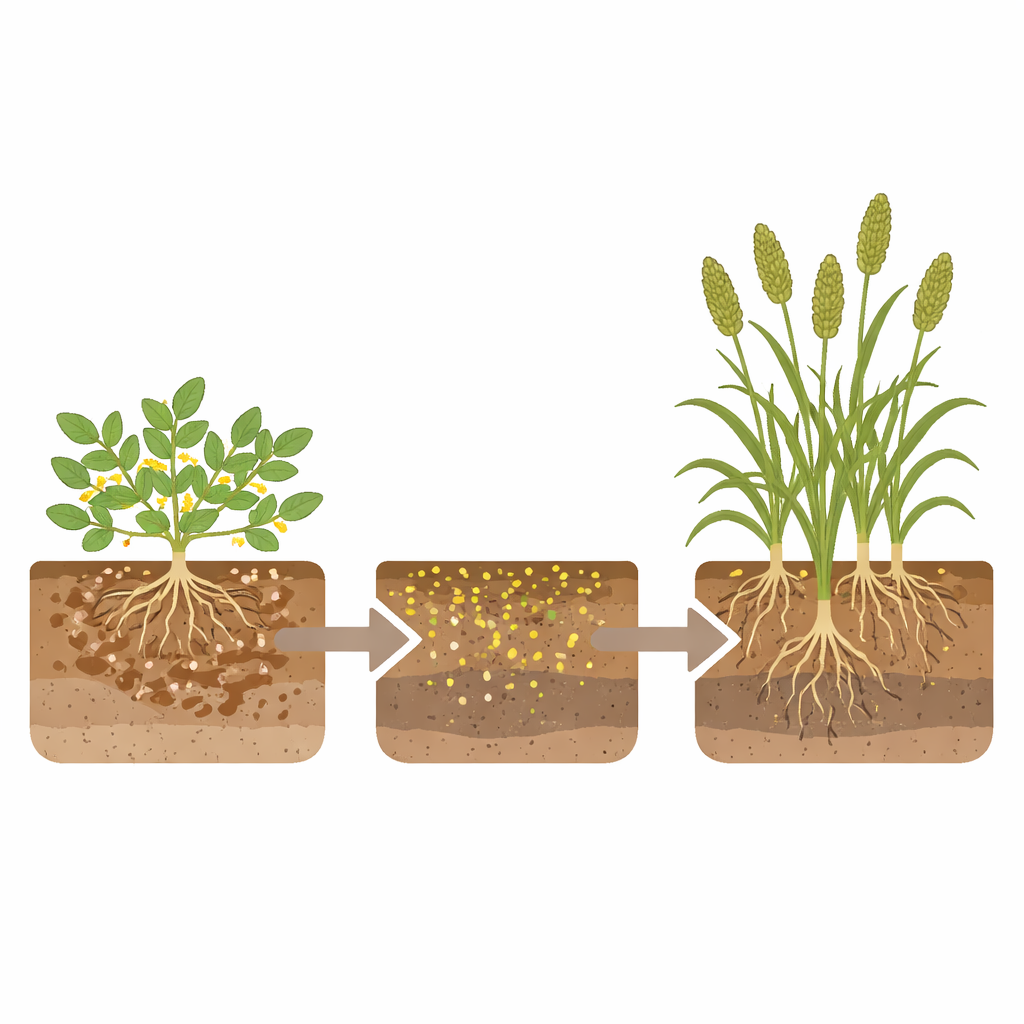
Balancing today’s harvest with tomorrow’s
By measuring how much nitrogen, phosphorus, and potassium were taken up by both crops and how much remained in the soil, the researchers showed that nutrient plans favoring fast-acting urea tend to front-load benefits into the first crop while leaving little behind. In contrast, FYM releases nutrients more slowly, improves soil structure and water holding capacity, and supports microbial life, so more fertility is carried over to the next crop. Solid Rhizobium inoculant offered some small advantages, but because both solid and liquid forms contained similar numbers of bacteria, their overall effects were mostly alike.
What this means for sustainable farming
For farmers managing groundnut–finger millet rotations on limited resources, the findings suggest a clear trade-off and a promising compromise. Pure chemical nitrogen delivers the biggest groundnut harvest but weakens the follow-on millet, whereas pure FYM slightly reduces groundnut yield yet pays back with a much stronger second crop and richer soil. Combining chemical fertilizer with organic manure can narrow that gap, keeping near-maximum yields while building long-term soil health. In simple terms, feeding the soil as well as the plant—through integrated nutrient management and appropriate Rhizobium inoculation—can help sustain both productivity and environmental quality over time.
Citation: Palai, J.B., Malik, G.C., Maitra, S. et al. Seed inoculation with Rhizobium and integrated nutrient management influences the productivity of groundnut and their residual impact on finger millet. Sci Rep 16, 10425 (2026). https://doi.org/10.1038/s41598-026-38775-2
Keywords: integrated nutrient management, groundnut, finger millet, farmyard manure, Rhizobium inoculation