Clear Sky Science · en
Comparative analysis of physiological and psychological effects of viewing and drinking flower tea
A Simple Cup of Tea, A Calmer State of Mind
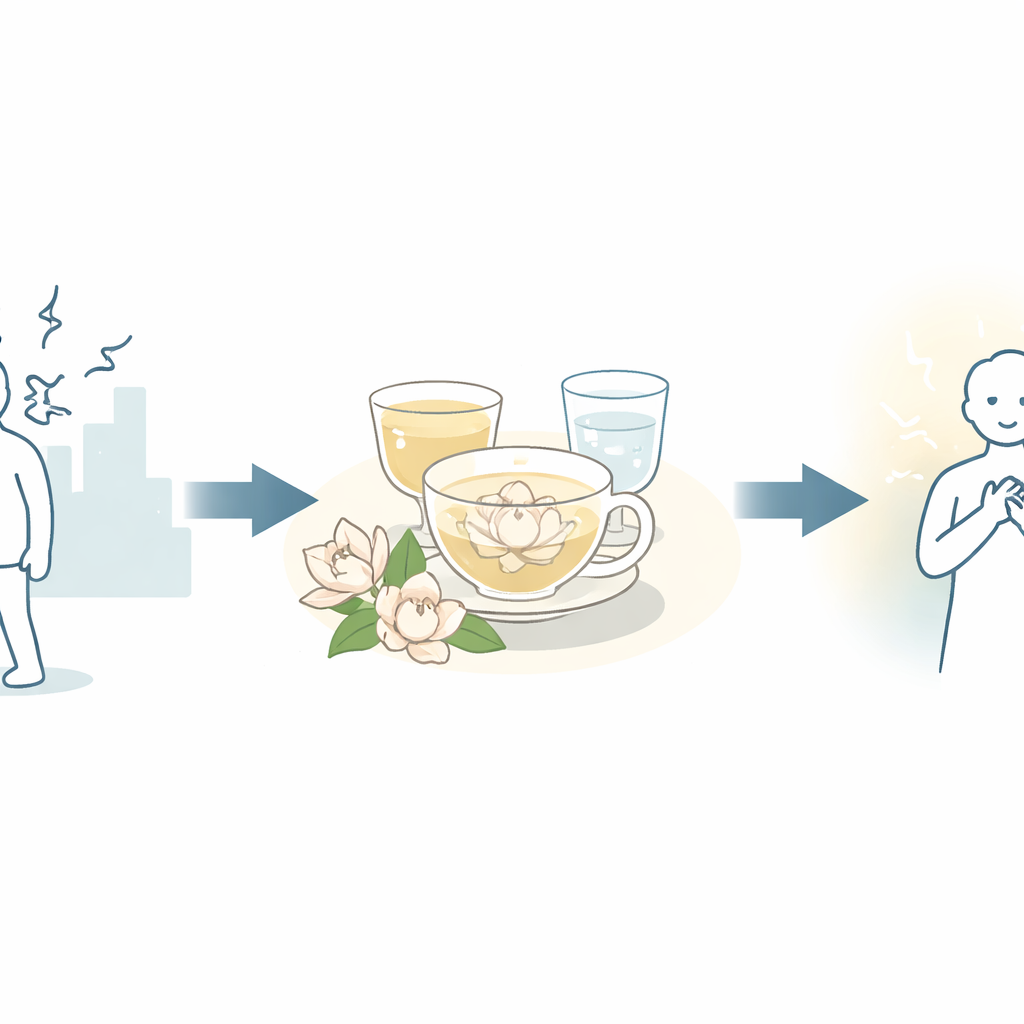
Many people reach for a warm drink to unwind after a long day, but can what you see in the cup matter as much as what you taste? This study explores whether flower tea—especially when the blossoms are visible—can help the body and mind relax. By carefully measuring heart activity and mood while young adults looked at and drank magnolia flower tea, the researchers tested a deceptively simple idea: that the gentle sight of floating petals, combined with aroma and flavor, might offer an easy everyday tool for easing stress.
Why Nature in a Cup Matters
Modern life often keeps us indoors and on edge, far from forests and gardens that are known to calm the nervous system. Earlier research shows that seeing trees, smelling natural scents, or hearing birdsong can lower stress levels, even when experienced through photos, essential oils, or recorded sounds. Flower tea sits at the crossroads of these influences. It combines color, fragrance, and taste in a single small ritual that fits easily into daily routines, from study desks to office breaks. Yet until now, scientists had rarely asked how the visual beauty of the flowers themselves contributes—beyond the chemistry of the tea—to how relaxed we feel.
How the Experiment Was Set Up
To untangle these effects, the researchers recruited 29 university students in their twenties, a group often under pressure from exams, late nights, and irregular habits. Each participant experienced three different drinks in random order: magnolia tea with the whole flower floating in the cup, the same tea served without the visible flower, and plain water. Every session followed the same pattern. First, participants sat quietly with eyes closed for a minute. Then they opened their eyes and simply looked at the cup for a minute. Next, they slowly drank for three minutes, guided by a small hourglass, followed by another minute of eyes-closed rest. Finally, they answered questions about how they felt.
Measuring the Body’s Quiet Shift
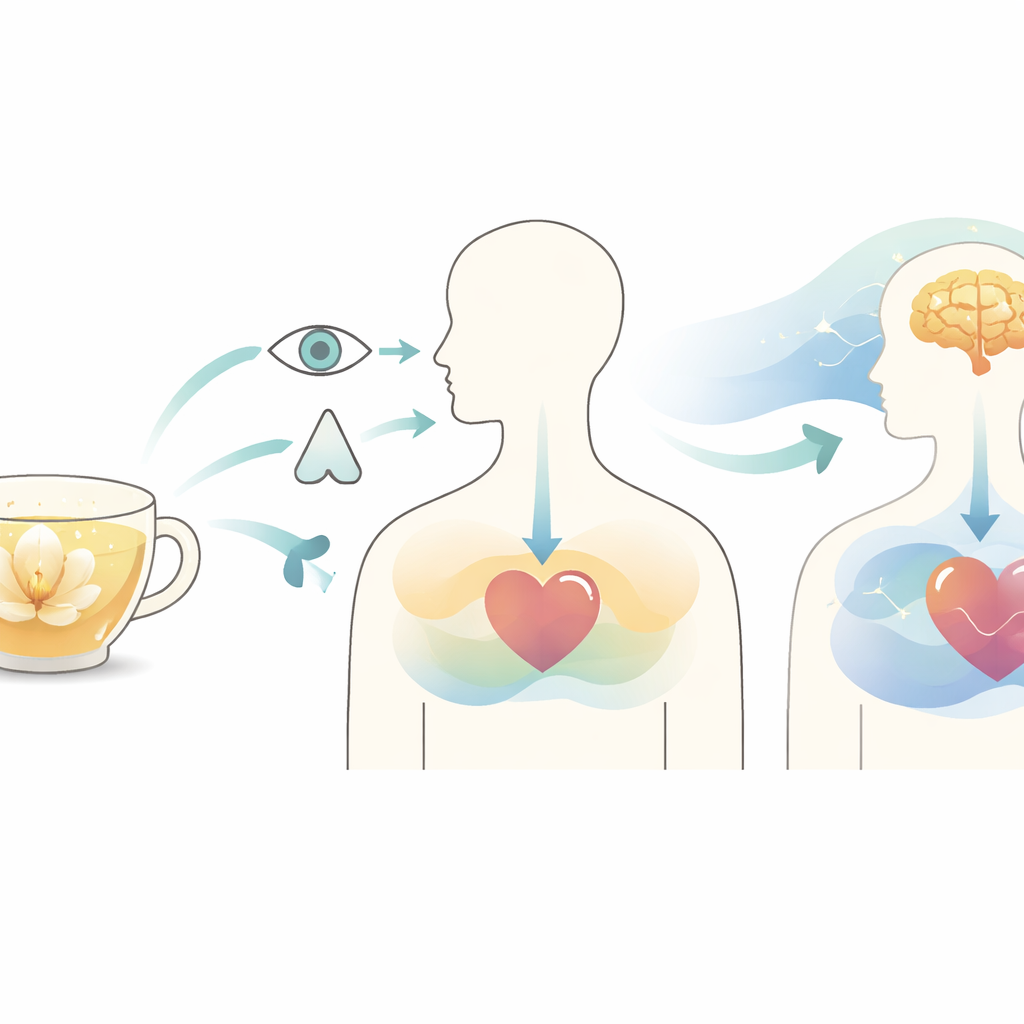
Throughout the viewing, drinking, and resting phases, the team recorded heart rate and heart rate variability—a subtle beat-to-beat pattern that reflects how the automatic nervous system responds to stress or calm. In particular, they focused on a component linked to the parasympathetic branch, often described as the “rest and digest” system. When this activity rises, it usually signals that the body is shifting into a more relaxed state. The researchers found that during the viewing phase, parasympathetic activity rose for all drinks, but it increased significantly more when participants looked at tea with visible flowers than when they looked at the same tea without flowers. This suggests that the simple act of gazing at the blossoms helped the body lean more strongly toward relaxation, beyond the effect of holding a warm drink alone.
How People Said They Felt
The story from the mind was just as striking. After each drink, participants completed mood questionnaires that capture feelings such as tension, sadness, anger, fatigue, and mental confusion, as well as “vigor,” a sense of liveliness and positive energy. Tea with flowers led to higher vigor scores than both tea without flowers and water, and it reduced overall mood disturbance more than water did. When participants rated their impressions using pairs of everyday adjectives—such as bright versus dark, relaxed versus anxious, or interesting versus boring—flower tea consistently came out ahead. It was seen as more beautiful, natural, colorful, refreshing, and relaxing than water, and in many ways more pleasant than tea without the visible blossom.
What This Means for Everyday Calm
Put together, the findings suggest that flower tea offers more than just a pleasant flavor or a comforting warmth. Briefly viewing magnolia blossoms in the cup nudged the body’s calming system into higher gear, and the combined viewing and drinking experience lifted mood and eased emotional strain. While the study involved a small, young group and only one type of flower, it points to a practical takeaway: weaving small moments of nature into ordinary habits—like sipping a cup of tea that looks as soothing as it tastes—may be a simple, low-cost way to support relaxation and emotional well-being in daily life.
Citation: Song, C., Kim, J. & Kim, C. Comparative analysis of physiological and psychological effects of viewing and drinking flower tea. Sci Rep 16, 12712 (2026). https://doi.org/10.1038/s41598-026-38690-6
Keywords: flower tea, stress relief, sensory relaxation, heart rate variability, emotional well-being