Clear Sky Science · en
Soil–water–crop pathways of heavy metal contamination and human health risks in intensive smallholder farms of the Nahavand Plain, Iran
Why this matters for food and water safety
Across much of the world, small farms work hard to grow more food by adding fertilizers and using every drop of water. But along with higher harvests can come an invisible problem: traces of toxic metals that build up in soil and water and may eventually reach our plates and drinking supplies. This study looks closely at how such metals move through soil, water, and crops on intensive smallholder farms in the Nahavand Plain of western Iran, and what that means for the health of local families, especially children. 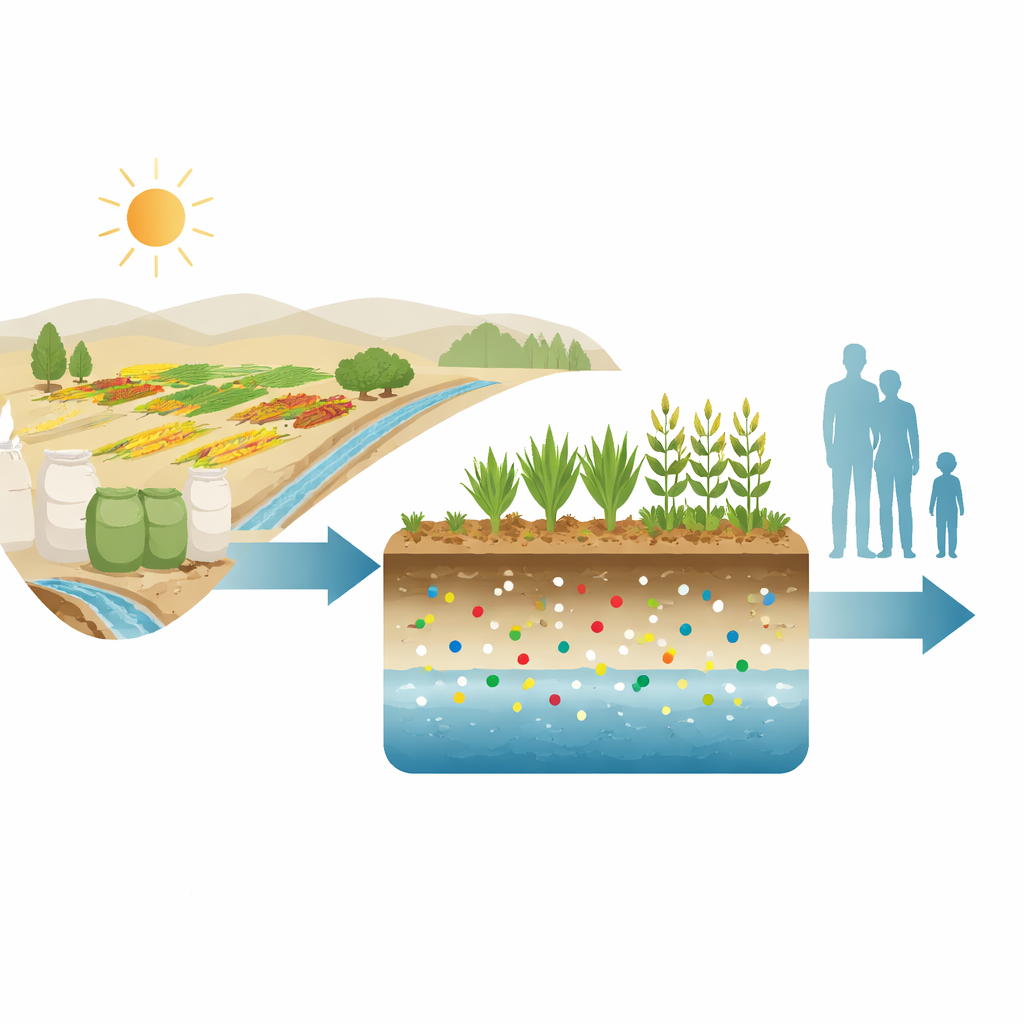
The farms and their harsh environment
The Nahavand Plain is a key food-producing region in an arid part of Iran, where summers are hot and dry and rainfall is limited. Farmers there grow wheat, barley, sugar beet, and coriander on many small plots, each less than one hectare. To keep yields high in this tough climate, they depend heavily on chemical fertilizers, pesticides, and irrigation from rivers, wells, and springs. The researchers sampled 150 farms, collecting topsoil, irrigation water, and whole above-ground plant material from each field. They focused on seven metals of concern—cadmium, lead, mercury, chromium, nickel, copper, and zinc—to see how strongly they had built up and how they were moving through the soil–water–crop system.
Where the metals are building up
The measurements showed that copper and zinc were present at the highest levels in soils and crops across all four farming systems, reflecting years of fertilizer and pesticide use that often carry these metals as impurities. Cadmium and lead, though present at lower amounts, turned out to be the most worrisome because of their toxicity. Sugar beet fields had the strongest build-up overall, with cadmium and lead levels in soil far above typical background values and very high zinc and copper contents in plant tissues. Wheat and barley fields showed medium levels of contamination, while coriander plots generally had the lowest, though they still revealed notable lead accumulation in plant material. Groundwater held much lower metal levels than soils but still contained copper, zinc, cadmium, and chromium at many sites, signaling that shallow aquifers are slowly receiving metal inputs from farm activities and irrigation.
From soil and water to people
To understand what these findings mean for health, the team used standard models that estimate how much metal a person might take in over time by accidentally swallowing soil, touching it with bare skin, breathing in dust, and drinking groundwater. For both adults and children, swallowing small amounts of soil was by far the largest route of exposure, while breathing dust and skin contact played smaller roles. Children consistently faced higher estimated doses than adults because they weigh less and tend to ingest more soil during outdoor play. Non-cancer health indicators for single metals were below common safety cutoffs, but when the combined effect of all metals was considered, the overall risk for children in many sugar beet, wheat, and barley fields rose above levels usually seen as acceptable. For long-term cancer risk, cadmium and lead again dominated, with some sugar beet– and wheat-dominated areas approaching the upper edge of ranges regulators consider tolerable. 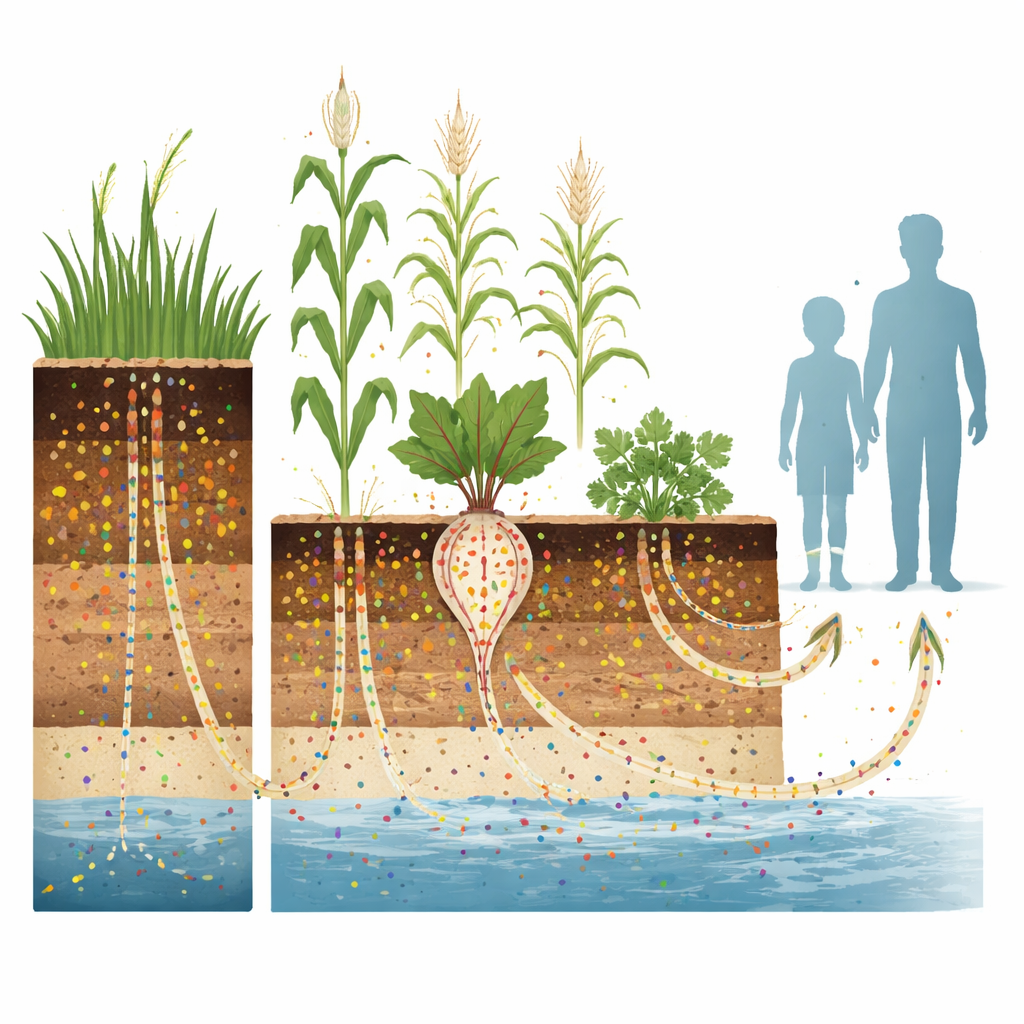
Clues to the sources and hot spots
Patterns in the data help reveal where the metals are coming from and why some fields are worse than others. Cadmium and lead tended to rise and fall together, pointing to shared sources such as phosphate fertilizers. Copper and zinc were strongly tied to organic inputs and micronutrient products often used in intensive sugar beet production. In contrast, chromium and nickel behaved more like natural components of the local soil, likely linked to the underlying rock. The most serious ecological risks clustered in sugar beet fields, where heavy fertilizer use and high irrigation needs drive a steady inflow and movement of metals. A smaller number of farms showed sharp spikes in mercury-related risk, hinting at local contamination sources that deserve follow-up.
What this means for farmers and families
The study does not test food sold in markets or directly judge whether crops are safe to eat. Instead, it maps how metals accumulate in farm soils and waters and estimates the potential long-term exposure of nearby residents. The overall conclusion is that intensive fertilizer use and crop management in these smallholder systems are gradually increasing heavy metal pressure in both soils and groundwater, creating the greatest concern for children and for farms growing sugar beet and, to a lesser extent, wheat and barley. The authors argue that better control of fertilizer quality, regular testing of soil and irrigation water, and more careful nutrient management could curb these trends. Over time, such steps would help protect both the productivity of these fragile arid-land farms and the health of the people who depend on them.
Citation: Sharafi, S., Sharafi, M. & Lorvand, M. Soil–water–crop pathways of heavy metal contamination and human health risks in intensive smallholder farms of the Nahavand Plain, Iran. Sci Rep 16, 9947 (2026). https://doi.org/10.1038/s41598-026-38637-x
Keywords: heavy metals in farming, soil and groundwater pollution, smallholder agriculture, fertilizer impacts, child exposure risk