Clear Sky Science · en
Allergy-associated acute coronary syndrome without anaphylaxis in a prospective observational study
Everyday Allergies and Hidden Heart Risks
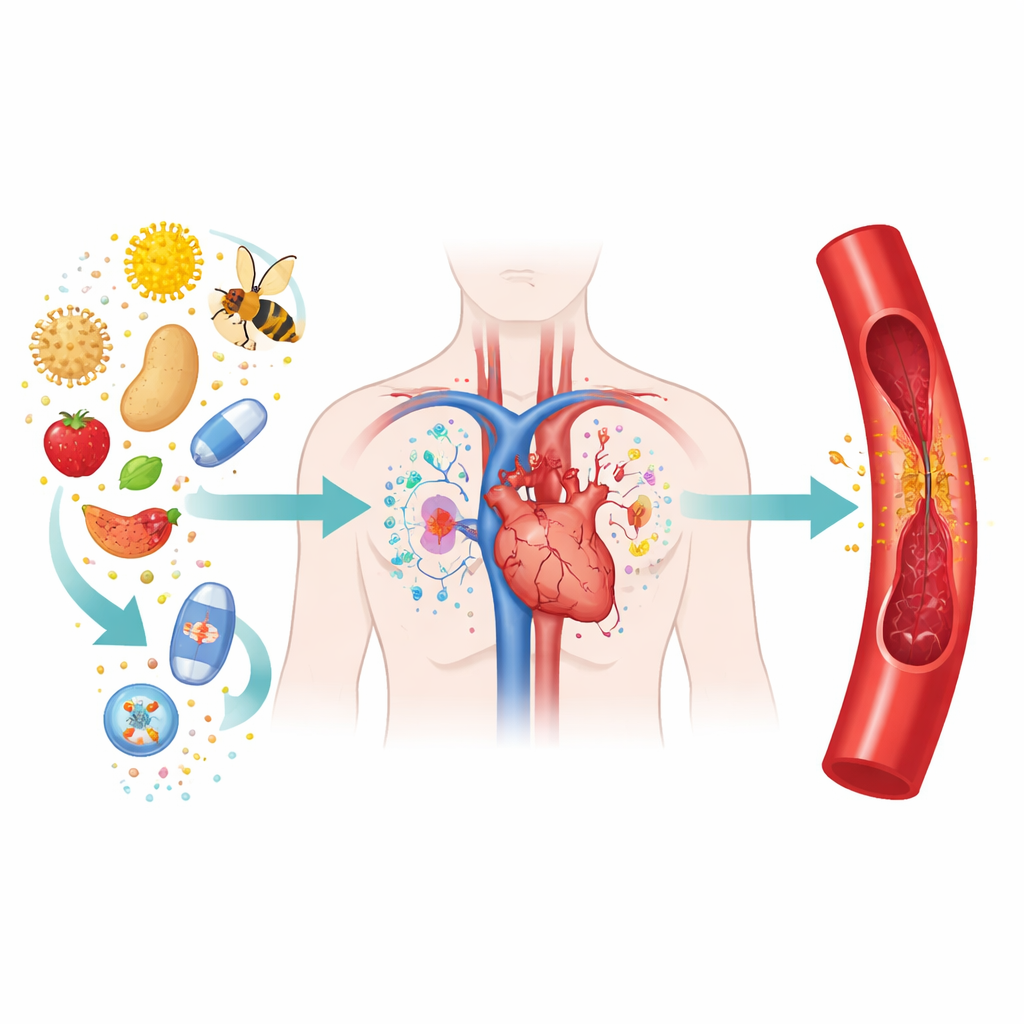
Many people think of allergies as annoying sneezes, rashes, or in rare cases dramatic reactions like anaphylaxis. This study suggests something more subtle and unsettling: even mild or barely noticeable allergic activity may disturb the body’s stress-response system and help trigger heart attacks. By following patients with acute coronary syndrome—a medical term covering heart attacks and related emergencies—the researchers explored how allergy-related immune signals and nerve activity might quietly contribute to these life‑threatening events.
When Allergy Meets a Heart Emergency
The team studied 49 patients treated for acute coronary syndrome at a single hospital. They divided them into two main groups: those with no signs of allergy involvement, and those in whom allergy clearly played a role. Within the allergy group, some had classic anaphylaxis with sudden, dramatic symptoms, but others had only mild or localized allergic signs such as rash or itching. This latter subgroup is particularly important, because in everyday practice these cases might simply be labeled as routine heart attacks, with the allergic component overlooked.
Tracking Immune Footprints in the Blood
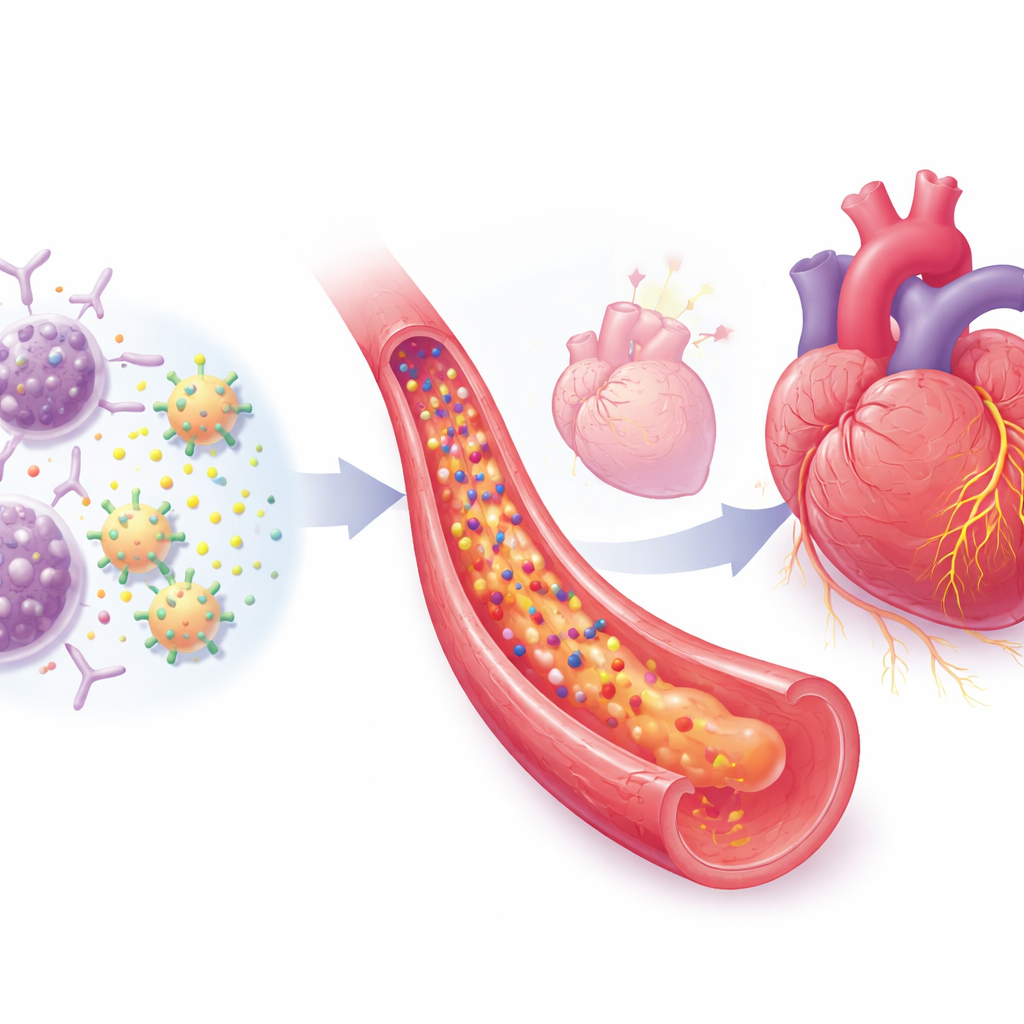
To see whether allergy was truly active in these patients, the researchers measured two key substances in blood samples taken at the time of the heart event: total IgE, an antibody that signals allergic tendencies, and histamine, a fast‑acting chemical released by immune cells. Both markers were significantly higher in people whose heart attacks were linked to allergy, regardless of whether they had dramatic anaphylaxis or only mild symptoms. Although individual levels varied and overlapped with normal ranges, the overall pattern pointed to extra immune activation during these heart events that standard tests would miss.
The Body’s Nerve Balance Under Strain
The study also examined the body’s automatic nerve control—the tug‑of‑war between the calming “rest‑and‑digest” branch and the activating “fight‑or‑flight” branch. Using 24‑hour heart rhythm recordings within a week of treatment, the authors analyzed heart rate variability, a window into this hidden balance. They found that patients with allergy‑associated heart attacks showed stronger dominance of the activating branch, both during the day and at night, compared with patients whose heart attacks were not allergy‑related. The calming branch was suppressed in all patients after a heart attack, but in those with allergic involvement, the activating branch was even more prominent, suggesting that allergy‑driven inflammation may add an extra layer of nervous system stress on the heart.
Clues from a Single Patient’s Irregular Heartbeat
One particularly illustrative case involved a patient with frequent extra heartbeats that did not improve much with standard beta‑blocker treatment. When an antihistamine—commonly used for allergies—was added, the burden of irregular beats dropped and the nightly pattern of heart rate variability began to look more normal. This single example cannot prove cause and effect, but it hints that allergy‑related chemicals like histamine might disturb the heart’s electrical system and that targeting them could sometimes help restore balance.
What This Means for People with Allergies and Heart Disease
The authors conclude that allergy‑associated heart attacks form a spectrum, ranging from classic, dramatic reactions to quieter cases where allergy is easy to miss. Even when symptoms are mild, elevated IgE and histamine levels and a tilt toward an overactive stress response suggest that allergy and the heart are more tightly linked than previously appreciated. For patients, this work underscores the importance of taking both chronic allergies and heart symptoms seriously and sharing full allergy histories with clinicians. For doctors and researchers, it points toward using a combination of immune markers and nerve‑activity measurements to better identify patients whose heart disease may have an allergic component—and to eventually explore more tailored prevention and treatment strategies.
Citation: Amino, M., Takizawa, S., Morita, S. et al. Allergy-associated acute coronary syndrome without anaphylaxis in a prospective observational study. Sci Rep 16, 12491 (2026). https://doi.org/10.1038/s41598-026-38633-1
Keywords: allergy and heart disease, acute coronary syndrome, histamine, autonomic nervous system, Kounis syndrome