Clear Sky Science · en
Chemical composition, antioxidant and antimicrobial activities, and molecular docking of Acacia gerrardii leaf extract
Why this desert tree matters for our health
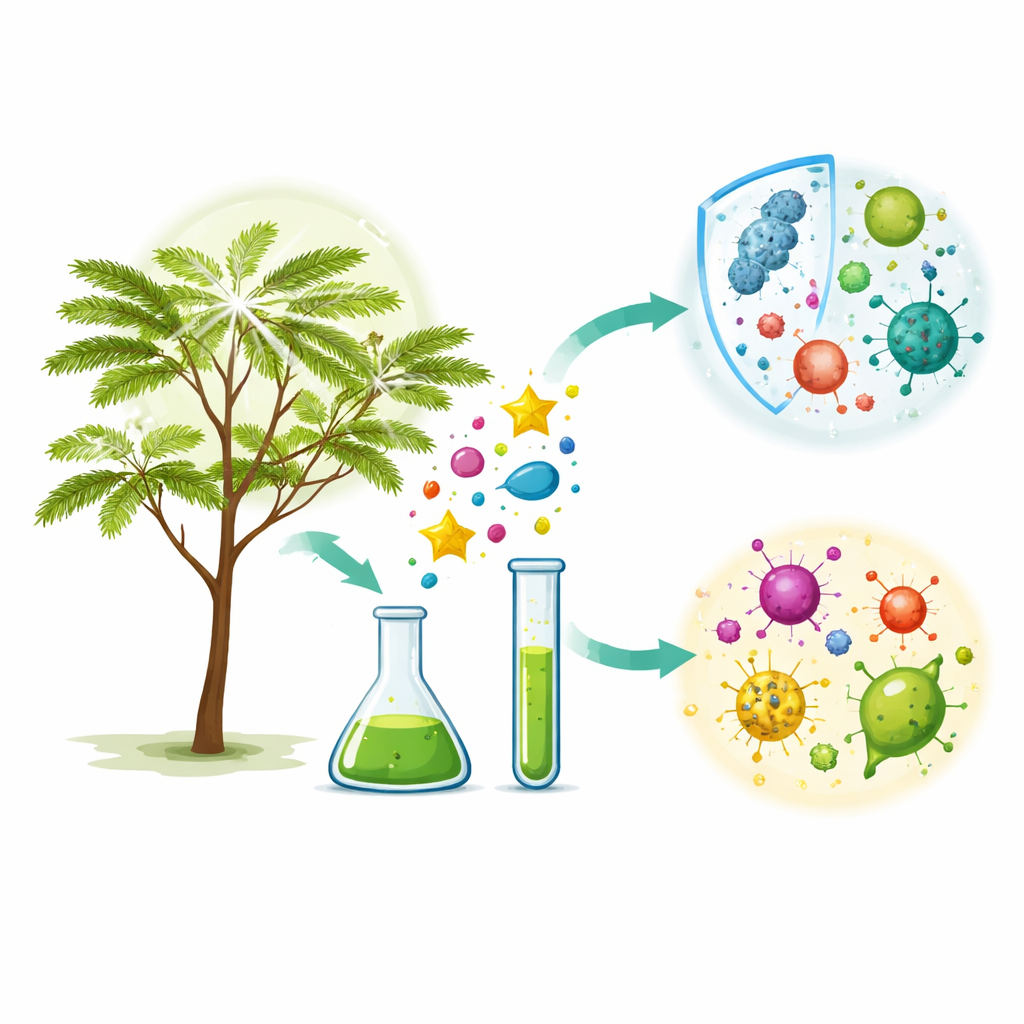
As antibiotic resistance rises and chronic diseases linked to oxidative stress become more common, researchers are searching for new medicines in an old place: the plant kingdom. This study looks at Acacia gerrardii, a hardy tree native to arid regions of Saudi Arabia, to see whether its leaves contain natural substances that could help fight harmful microbes and mop up damaging free radicals in the body.
What the researchers set out to explore
The team focused on a methanol extract made from A. gerrardii leaves. They asked several simple but important questions: What minerals and plant chemicals does it contain? Can it slow or kill disease-causing bacteria and yeasts in the lab? Does it act as an antioxidant, neutralizing free radicals? And, using computer simulations, do its main compounds look like safe, well-behaved drug candidates that can latch onto crucial microbial proteins?
Inside the leaves: metals and plant chemicals
Analysis showed that the leaves store a distinct mix of minerals. Iron was especially abundant, followed by aluminum and trace elements such as selenium, copper, zinc and silver. Even more striking was the richness in plant-based chemicals known for health effects. The extract was packed with phenolic compounds and flavonoids—families of molecules often linked to antioxidant and antimicrobial activity—as well as tannins and proanthocyanidins. Using two advanced separation techniques, GC–MS and high‑resolution LC–MS, the researchers identified dozens of individual substances, including sugars like 4‑O‑methylmannose, fatty acids such as linolenic acid, sterols, flavonoids, and complex saponins. This chemical diversity suggested that the leaf extract could act on microbes and free radicals through multiple pathways.
Putting the extract up against germs
The scientists then tested how well the leaf extract held back various disease‑related microbes. They exposed a panel of bacteria—including Escherichia coli, Staphylococcus aureus (including a methicillin‑resistant strain), Pseudomonas aeruginosa and Klebsiella pneumoniae—as well as four Candida yeasts, to different extract doses. In a disc‑diffusion test, where clear zones around a disc signal growth inhibition, the extract produced larger zones as its concentration increased. The strongest response was against K. pneumoniae, and respectable effects were seen against several other bacteria and all Candida strains. By measuring the lowest concentration that stopped growth or killed the microbes, the team found that the extract generally slowed bacterial multiplication (bacteriostatic) but directly killed Candida yeasts (fungicidal), hinting at slightly different modes of action for bacteria and fungi.
How well the extract fights free radicals
To examine antioxidant power, the team used two widely adopted tests. In the DPPH assay, which tracks how well a substance neutralizes a stable free radical, the A. gerrardii extract reached half‑maximal scavenging at a moderate concentration, showing meaningful though weaker activity than a standard synthetic antioxidant. In a separate FRAP test, which measures the ability to reduce iron and thus reflects overall reducing strength, the extract again showed clear, dose‑dependent action, albeit below that of pure vitamin C. When viewed together with its high load of phenolics, flavonoids, and specific compounds like 4‑O‑methylmannose and linolenic acid, these results support the idea that the leaves contribute genuine antioxidant protection, even if they are not as potent as purified reference molecules.
Using computers to predict drug behavior
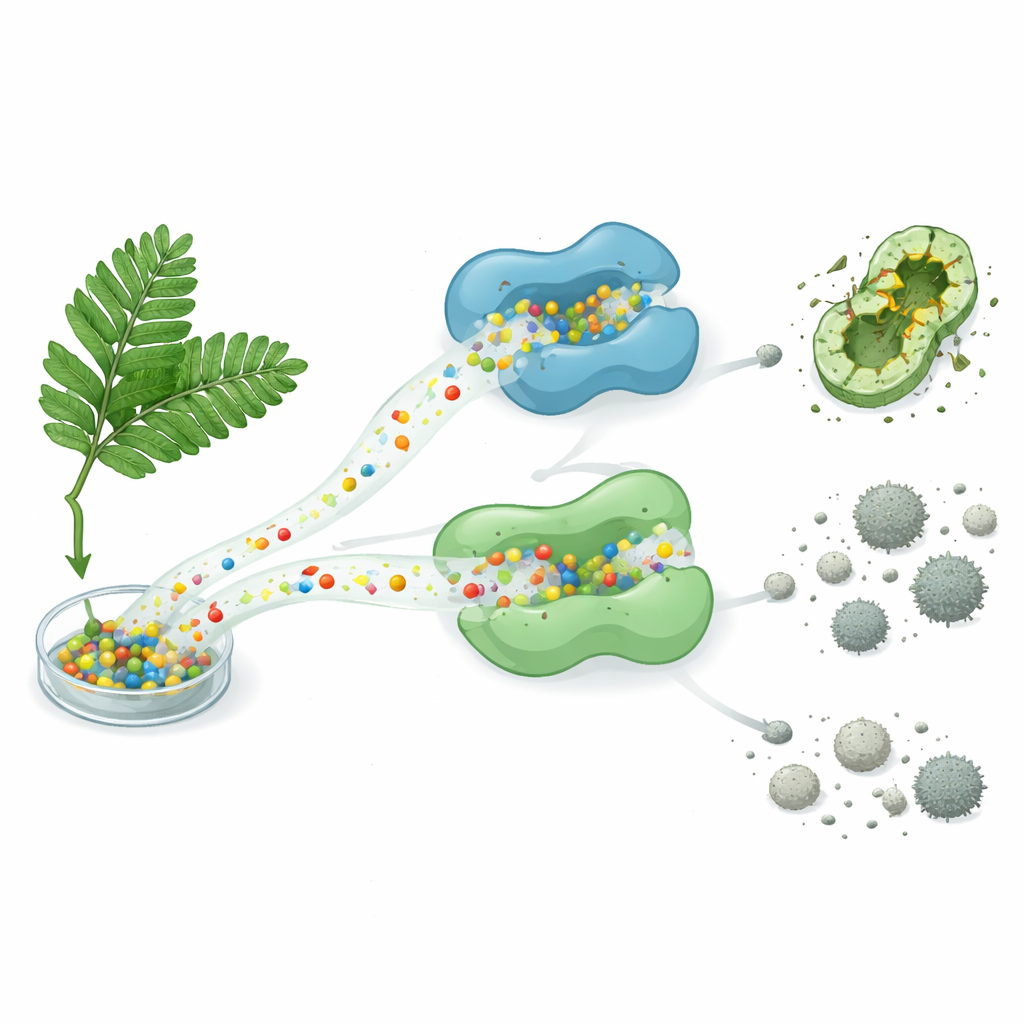
Beyond test tubes, the researchers asked whether individual plant compounds have the right shapes and properties to become actual drugs. They used online tools to estimate how easily each molecule might be absorbed, distributed, broken down and cleared by the body. Most compounds satisfied common “drug‑likeness” rules, showed acceptable oral bioavailability and did not strongly interfere with major liver enzymes, suggesting a lower chance of dangerous buildup or drug–drug interactions. In molecular docking simulations, many A. gerrardii molecules nestled tightly into the active sites of two key microbial enzymes: a protein‑building enzyme from Staphylococcus aureus and a tissue‑invading enzyme from Candida albicans. Several flavonoid‑like compounds formed particularly strong, multi‑point contacts, indicating they could effectively block these microbial targets.
What this means for future medicines
Overall, the study paints Acacia gerrardii leaves as a promising natural pharmacy. Their extract is rich in minerals and complex plant chemicals, shows real—though not extreme—antioxidant capacity, and can inhibit or kill a range of problem microbes in the laboratory, especially Candida species. Computer models suggest that many of the individual molecules fit the profile of safe, orally active drugs and are capable of locking onto important bacterial and fungal proteins. While this work is an early step and does not yet prove effectiveness in animals or humans, it highlights A. gerrardii as a valuable source of candidate compounds for new antimicrobial and antioxidant therapies at a time when such options are urgently needed.
Citation: Elkahoui, S., Eisa Mahmoud Ghoniem, A., Snoussi, M. et al. Chemical composition, antioxidant and antimicrobial activities, and molecular docking of Acacia gerrardii leaf extract. Sci Rep 16, 10393 (2026). https://doi.org/10.1038/s41598-026-38590-9
Keywords: Acacia gerrardii, antimicrobial, antioxidant, phytochemicals, molecular docking