Clear Sky Science · en
Household solid fuel use increases frailty risk in Chinese middle-aged and older adults: a prospective cohort study
Why the air inside our homes matters
As people live longer, many worry about staying strong enough to enjoy their later years. This study looks at a hidden threat to that strength: the smoke from solid fuels like coal and firewood burned inside homes. By following thousands of middle aged and older Chinese adults over several years, the researchers asked a simple but important question: does breathing this indoor smoke day after day make people more likely to become frail, meaning weaker, more tired, and more easily harmed by illness or injury? 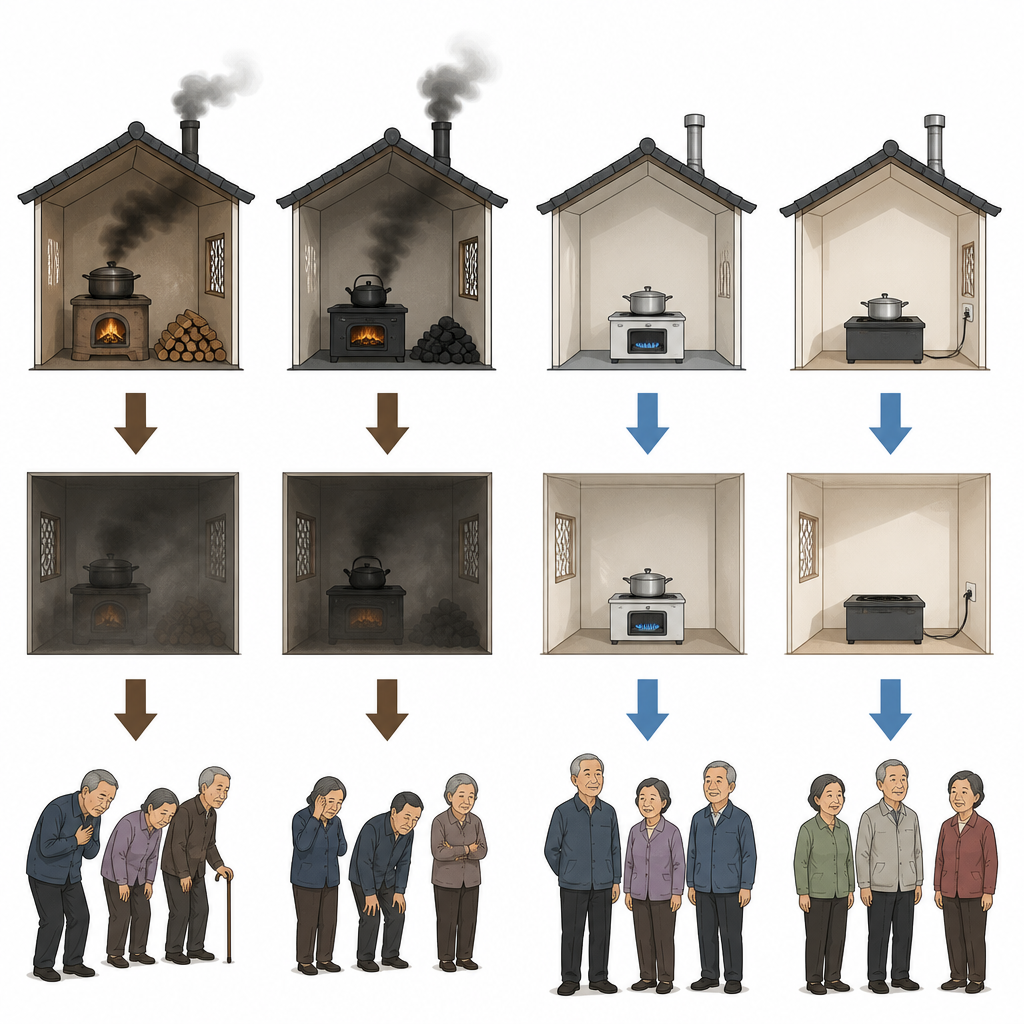
Everyday fuels and hidden smoke
In many parts of China and other low and middle income countries, families still cook meals and heat their homes with coal, crop waste, and wood. These solid fuels are cheap and familiar but give off thick smoke filled with tiny particles and harmful gases. Cleaner options, like gas, electricity, and solar heating, produce far fewer pollutants. The research team used data from the China Health and Retirement Longitudinal Study, which regularly surveys adults over 45 across the country. They recorded what each household mainly used for cooking and heating, grouping those fuels as either solid or clean, and then tracked who later became frail.
Tracking strength over time
Instead of looking at just one or two signs of poor health, the scientists built a “frailty index” from 40 different pieces of information, including chronic diseases, daily activities, mental health, and how people rated their own well being. At the start, more than 13,000 participants were not frail. From 2011 to 2018, the team checked in every few years, updated each person’s fuel use, and watched how their frailty scores changed. They used standard statistical tools designed for long term follow up studies to compare the chances of becoming frail in solid fuel users versus clean fuel users, while taking into account age, sex, income related factors, smoking, drinking, and housing conditions. 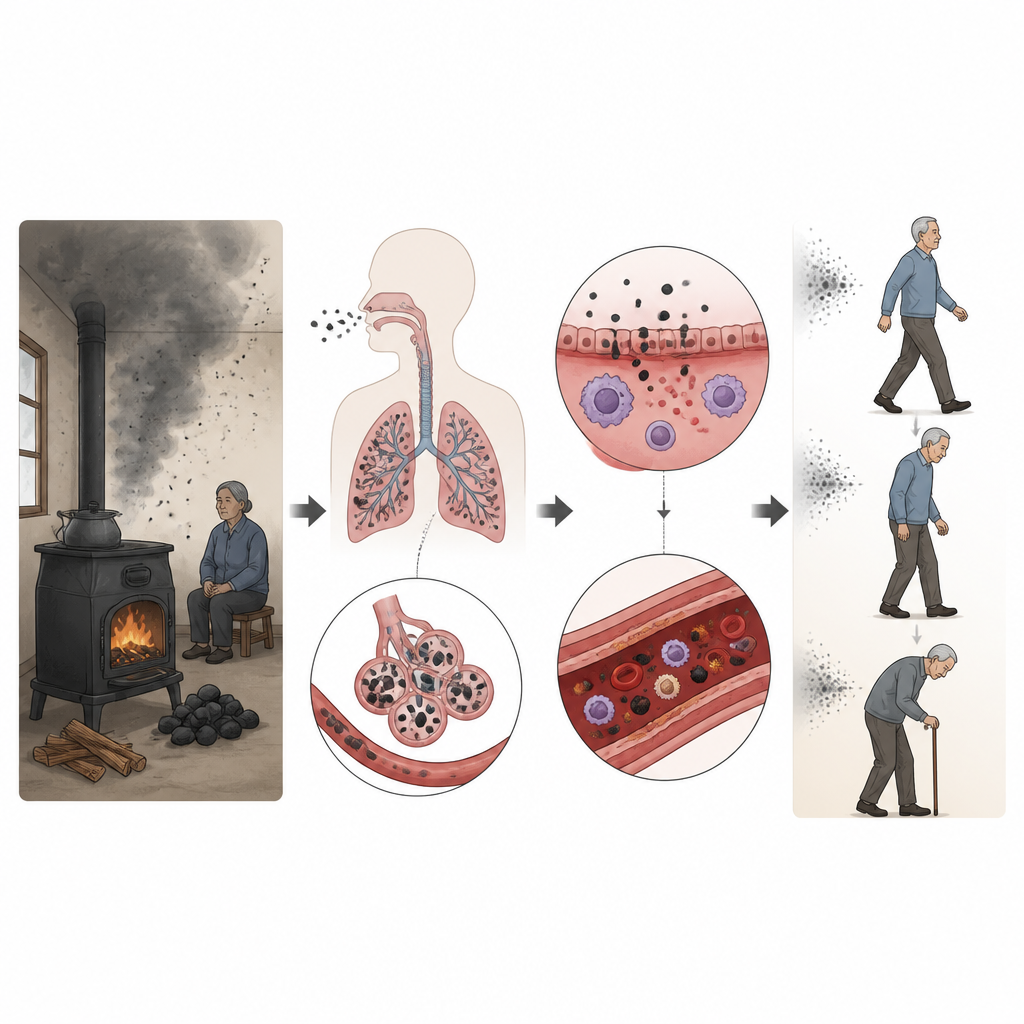
Smoke linked to higher frailty risk
The results showed a clear pattern. People using solid fuels for cooking had about a one and a half times higher risk of becoming frail compared with those using clean fuels. Those using solid fuels for heating faced an even higher risk. When both cooking and heating relied on solid fuels, the chance of frailty rose further. On average, there were roughly seven or eight extra cases of frailty per 1000 person years among solid fuel users. These differences remained even after adjusting for many other influences and in a series of extra tests designed to check the stability of the findings.
Benefits of cleaner choices
One of the most encouraging findings came from people who changed their habits. Households that switched from solid to clean cooking fuels over several years had a noticeably lower risk of becoming frail than households that kept using solid fuels. In contrast, those who moved from clean fuels to solid fuels saw their risk climb. This suggests that cleaner fuels may offer real protection, even for people who have already spent years using smoky stoves. The study also hints that women, rural residents, and people with less schooling may face higher risks, partly because they spend more time near the stove and may have fewer resources to improve ventilation or upgrade their fuel.
What this means for healthy aging
For a lay reader, the message is straightforward: the fuel burned in a home does more than cook food or warm a room, it can quietly shape how strong or fragile people become as they age. While this study cannot prove cause and effect on its own, it offers strong evidence that cutting indoor smoke from solid fuels and supporting a switch to cleaner energy and better ventilation could help many older adults stay steadier on their feet, avoid disability, and remain independent longer.
Citation: Liu, Y., Li, Z., Wu, L. et al. Household solid fuel use increases frailty risk in Chinese middle-aged and older adults: a prospective cohort study. Sci Rep 16, 15286 (2026). https://doi.org/10.1038/s41598-026-38564-x
Keywords: indoor air pollution, solid fuel use, frailty, older adults, clean cooking