Clear Sky Science · en
Impact of a low-intensity exercise prior to infrared thermography measurements on skin temperature under conditions of muscle soreness
Why sore muscles and body heat matter
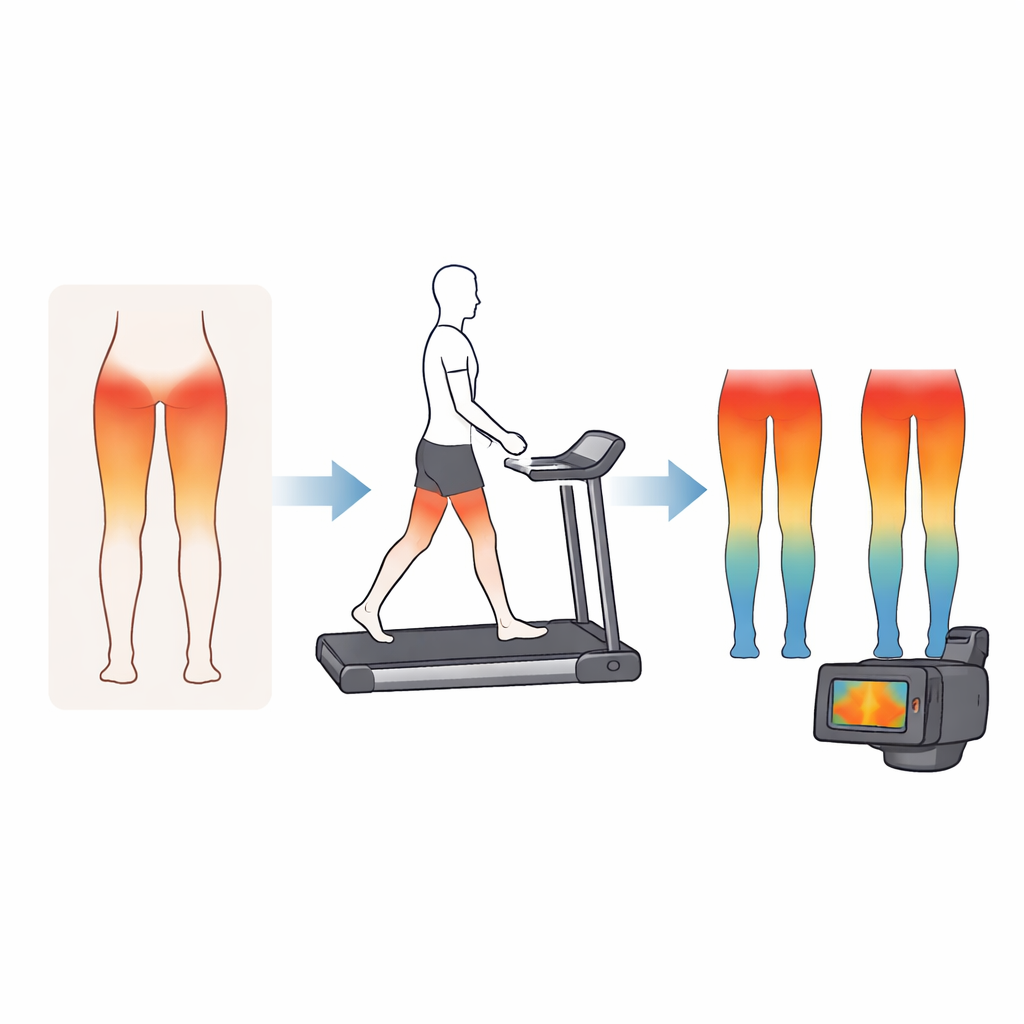
Anyone who has hobbled down the stairs after a hard leg workout knows the dull ache of delayed-onset muscle soreness, or DOMS. At the same time, contact-free temperature cameras that read heat from the skin are becoming more common in clinics, sports centers, and even airports. This study asks a practical question that matters to athletes, patients, and therapists alike: if you walk lightly just before a scan, will that simple activity change the heat pattern on your skin enough to confuse what the camera sees about sore muscles?
Looking for clues on the skin
Infrared thermography is a technology that turns invisible infrared radiation into colorful pictures of temperature on the skin’s surface. In medicine, it has been used to help detect problems such as breast tumors, diabetic nerve damage, and infections. In sports and rehabilitation, scientists hope it might also give early warning of overuse injuries or monitor how muscles respond to hard training. Because DOMS is linked to tiny muscle fiber tears and inflammation, it seems reasonable to expect that sore muscles would give off more heat and show up clearly on these images. Yet earlier research has shown that the link between deep muscle damage and surface temperature is not straightforward, and results have often been mixed.
How the study was set up
To explore this puzzle, the researchers recruited 17 physically active young adults and brought them to the lab on two occasions separated by 48 hours. On the first day, participants walked on a treadmill at an easy pace for 10 minutes, then performed a demanding squat routine designed to bring on DOMS in the thigh muscles, especially the quadriceps at the front of the leg. On both days, the team took thermal images of the front and back of the thighs and lower legs right before and right after the walking session. They also asked the participants to rate their soreness and their sense of effort during walking, ensuring the walks stayed light rather than strenuous.
What the heat pictures showed
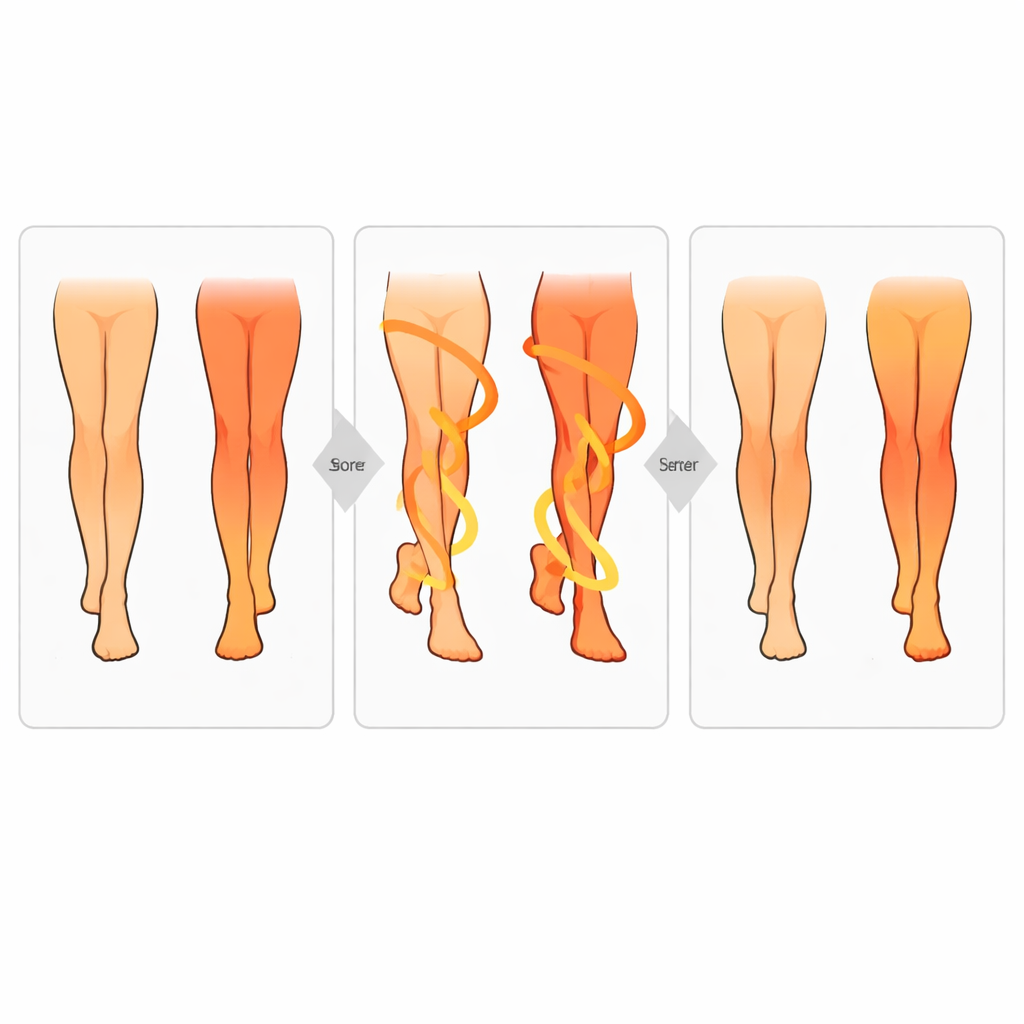
Two days after the squat workout, participants indeed reported clear soreness in both thighs, confirming that DOMS had developed. The thermal images also showed that, even before walking, the legs were warmer overall when DOMS was present than they had been on the first day. This was true for all four regions examined: front and back of the thighs, and front and back of the lower legs. However, when the team compared temperatures before and after the 10-minute walk, they found that the light exercise barely changed skin temperature, whether the muscles were sore or not. The change from pre- to post-walk was small and similar on the day with DOMS and the day without it.
Why light walking had little impact
The findings suggest that the body’s control of blood flow and heat in the legs is more complex than a simple “sore equals hotter” rule. While inflammation from the squat workout likely increased blood flow in the muscles and helped warm the area, other processes—such as tightening of small blood vessels in the skin or the onset of sweating—may have limited how much extra heat reached the surface. A short, gentle walk seems not to disturb this balance very much. It neither cooled the sore muscles nor boosted heat at the skin in a way that the infrared camera could detect as a clear before-and-after shift.
What this means for everyday practice
For coaches, clinicians, and therapists interested in using infrared cameras to monitor muscle soreness, this study offers reassuring news. The main conclusion is that a brief, low-intensity walk does not meaningfully alter leg skin temperature, even when muscles are sore. In plain terms, people do not need to stand perfectly still or avoid an easy stroll before a scan for fear of “spoiling” the picture. At the same time, the work highlights that while DOMS does tend to make the legs a bit warmer overall, the effect is modest and wrapped up in many other factors. Infrared thermography can contribute useful information, but it should be seen as one piece of a broader assessment rather than a stand‑alone thermometer for muscle damage.
Citation: Machado, Á.S., da Silva, W., Lemos, A.L. et al. Impact of a low-intensity exercise prior to infrared thermography measurements on skin temperature under conditions of muscle soreness. Sci Rep 16, 10380 (2026). https://doi.org/10.1038/s41598-026-38531-6
Keywords: muscle soreness, infrared thermography, exercise recovery, skin temperature, low-intensity walking