Clear Sky Science · en
Sustainable polyurethane-based dielectric composites from industrial and E-waste for high-voltage insulation applications
Turning Trash into Safer Power
Old electronics and worn-out car tires usually end up in landfills or informal recycling yards, where they can leak toxic substances into the environment. This study explores a different path: grinding up those wastes and turning them into a new plastic-based material that can safely withstand high voltages. Such materials are crucial for electric vehicles, power electronics, and battery systems, where good insulation keeps devices efficient and prevents dangerous failures.
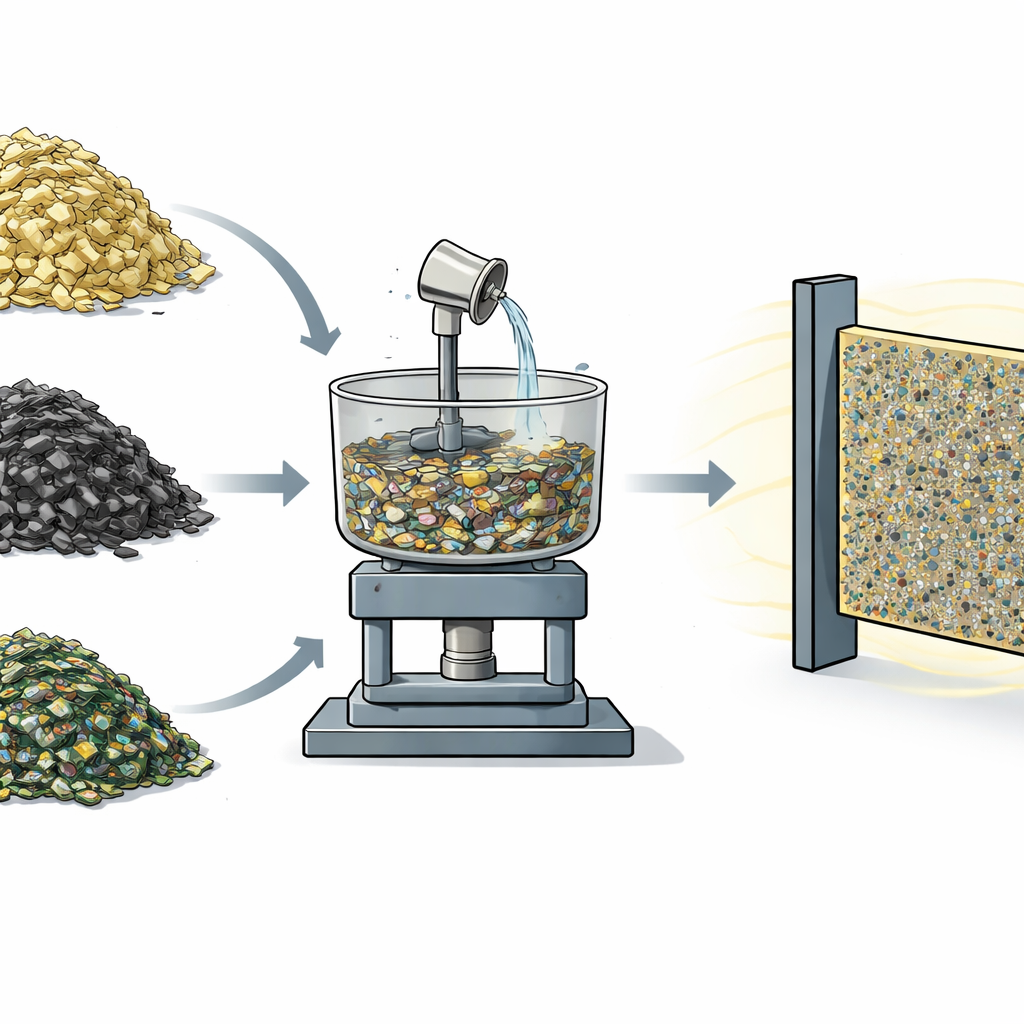
From Scraps to a New Solid
The researchers focused on three common waste streams: rigid polyurethane foam from discarded insulation products, shredded tire rubber, and scraps from printed circuit boards, which are rich in glass fiber and ceramics. They mixed these powders with a polyurethane adhesive based on a chemical called MDI and a small amount of water that helps the mixture harden. After thorough stirring, the blend was pressed into molds and cured in an oven, forming solid disks that resemble compact, stone-like plastics rather than loose waste. This simple route—shredding, mixing, pressing, and heating—offers a practical way to upcycle complex industrial and electronic trash into a single usable material.
Designing the Best Mix
Finding the right recipe is not as straightforward as just throwing in more waste. Different fillers change how well the material stops electric current, how stable it is at high temperature, and how evenly it cures. To navigate this, the team used a statistical tool called Response Surface Methodology, which systematically varies the amounts of each ingredient and analyzes the results. By testing 15 different combinations of foam waste, tire rubber, and circuit-board powder, they built a mathematical model that predicts the material’s dielectric constant—a measure of how well it stores electrical energy without letting current leak. The model revealed that having a moderate level of foam waste, a small fraction of tire rubber, and a relatively high share of PCB-derived glass and ceramic particles gave the most promising performance.
Peering Inside the Material
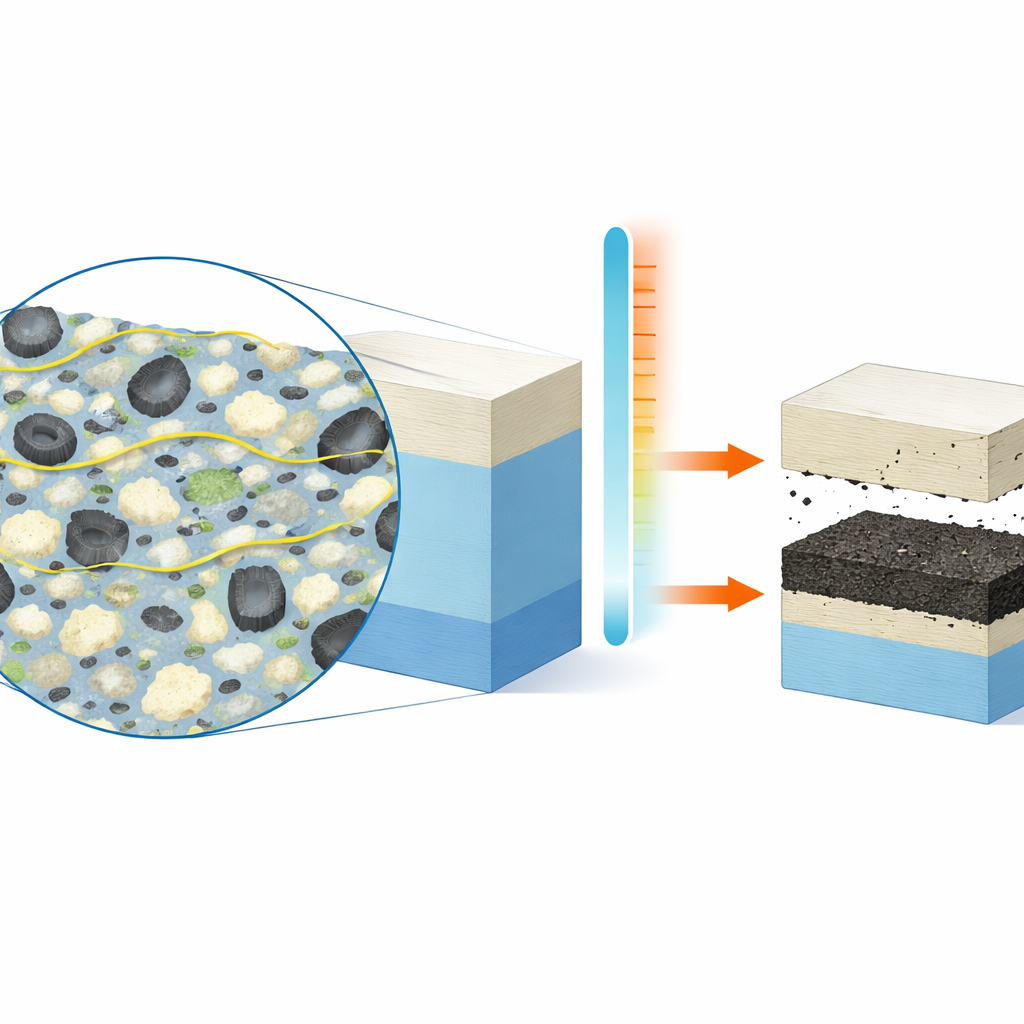
To understand why the best recipe worked, the researchers looked closely at the material’s structure and chemistry. Using high-resolution electron microscopes, they saw that the waste particles were well dispersed throughout the polyurethane glue, with no large gaps where electric charges could concentrate and cause failure. Infrared spectroscopy confirmed that the chemical groups from the adhesive and fillers had linked together, forming a continuous network. Thermal tests showed that the composite with fillers broke down more slowly and left more solid residue when heated, a sign of improved resistance to high temperatures thanks to the glassy and ceramic fragments from the circuit boards.
Putting Numbers on Performance
Electrical tests on the samples showed that the optimized mix—about 16% foam waste, 3% tire rubber, and 10% PCB waste by weight—reached a dielectric constant around 4.4, higher than plain polyurethane foams and comparable to some specialized insulating plastics. The team cross-checked these measurements against their statistical predictions and against computer simulations using COMSOL Multiphysics, which modeled the composite as a uniform block between two electrodes. The experimental and simulated values agreed within a few percent, lending confidence that the material’s behavior can be reliably predicted and tuned for different uses.
Why This Matters for Future Power Systems
In simple terms, the study shows that carefully blended mixtures of shredded foam, old tires, and circuit-board scraps can form tough, heat-resistant plastics that block electricity effectively. While more work is needed to test how these materials behave under extreme voltages and over long service lifetimes, the results suggest a path toward insulating parts in batteries, power converters, and other equipment that also helps solve growing waste problems. Instead of treating industrial and electronic leftovers as a burden, this approach turns them into a resource for building the next generation of cleaner, safer electrical systems.
Citation: Selvaraj, V.K., Subramanian, J., Selvanathan, G. et al. Sustainable polyurethane-based dielectric composites from industrial and E-waste for high-voltage insulation applications. Sci Rep 16, 11598 (2026). https://doi.org/10.1038/s41598-026-38515-6
Keywords: waste-to-materials, electrical insulation, polyurethane composites, electronic waste recycling, high-voltage materials