Clear Sky Science · en
Evaluating the impact of boiling and roasting on the properties of cashew nutshells (Anacardium occidentale L.) for biomass valorization
From Snack Waste to Useful Resource
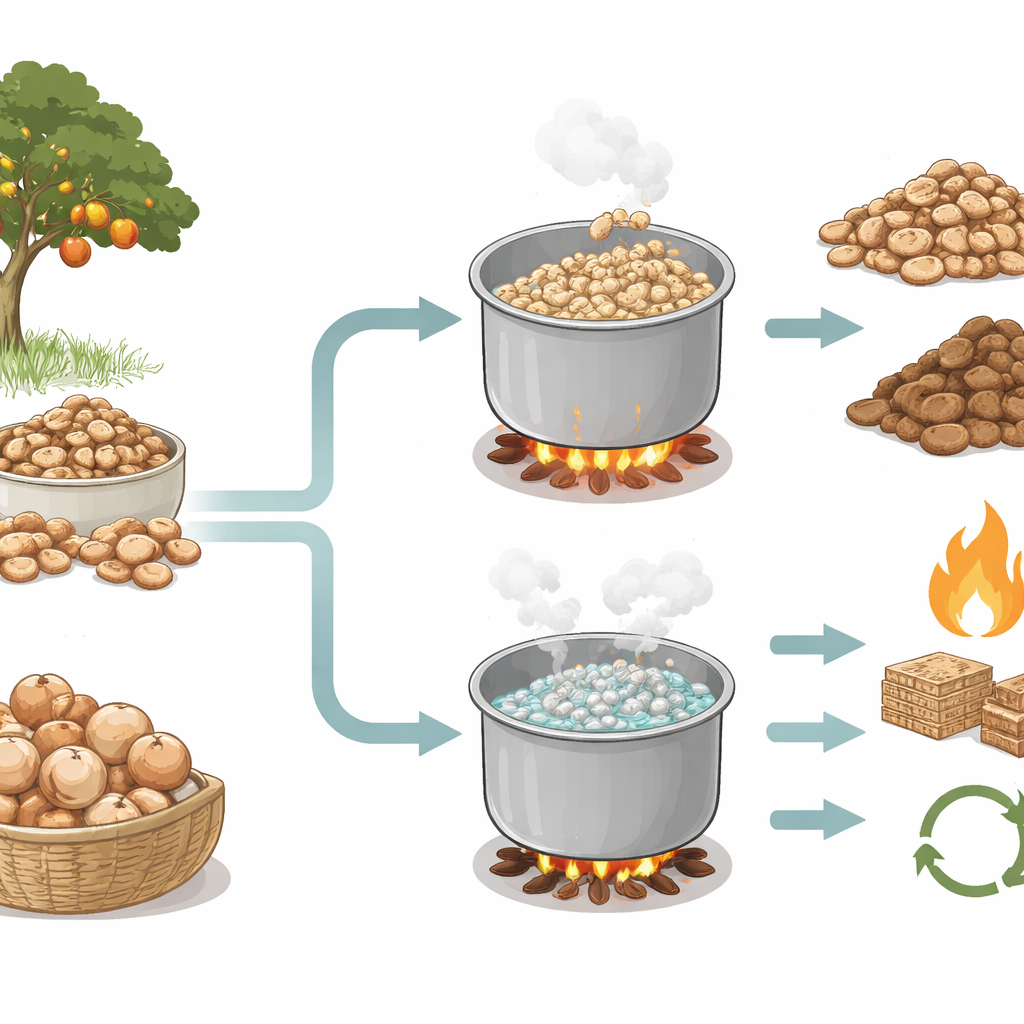
Every time cashew nuts are processed, most of what you see is actually thrown away: the hard outer shells. These shells pile up by the millions of tons each year in cashew‑growing regions, and because they contain a caustic, oily liquid, they can be both messy and polluting. This study asks a deceptively simple question with big implications: how does the way we cook cashew nuts—boiling or roasting—change the shells themselves, and what does that mean for turning this waste into valuable fuels, materials, or chemicals?
Why These Shells Matter
Cashew nutshells are not edible, but they are far from useless. They are made of a tough plant framework similar to wood and are naturally infused with cashew nutshell liquid, a thick, phenolic oil that is flammable, chemically reactive, and already used in specialty products. Globally, cashew factories generate around 3.5 million tons of these shells every year, most of which are discarded. Because the world is looking for plant‑based alternatives to fossil fuels, understanding exactly what is inside these shells and how processing alters them is crucial for weaving them into circular bioeconomy strategies that turn waste into raw material.
Boiling Versus Roasting in the Real World
Before workers can pry out the familiar kidney‑shaped cashew kernel, the whole nut must be softened or made brittle, and industry relies on two main approaches. In roasting, nuts are heated in a hot oil bath where much of the shell oil drains away into sand or the roasting pan, leaving a lighter, more brittle shell but releasing toxic fumes. In boiling, nuts are cooked in hot pressurized water or steam, a cleaner process for workers but one that tends to trap more of the oily liquid inside the shell and send the rest into wastewater. The researchers collected shells from real factories using both methods and then carefully measured their color, moisture, density, internal porosity, chemical makeup, heat response, and microscopic structure.
How Heat Changes Look and Feel
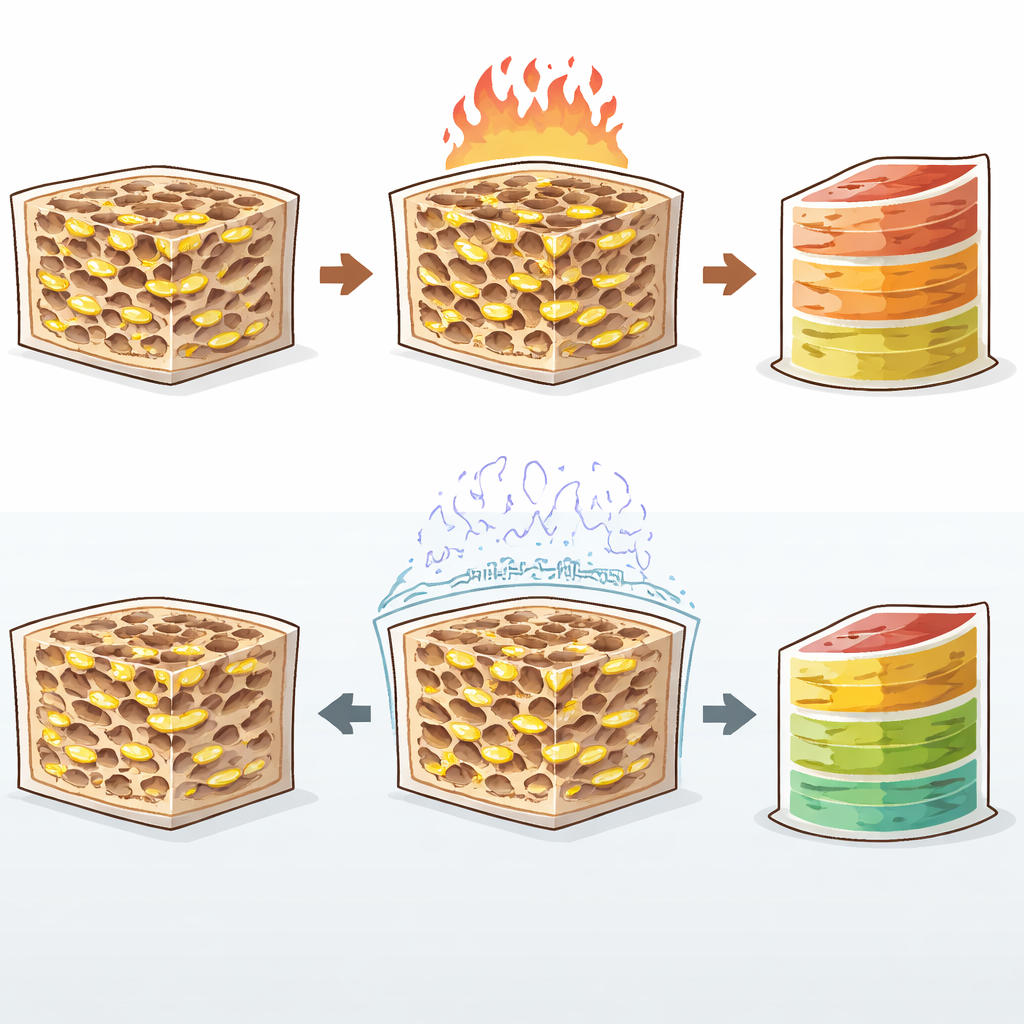
The team found that boiled shells were darker, heavier, and less porous than roasted ones. Roasted shells had a lighter brown color, higher brightness, and more open internal spaces, while boiled shells appeared almost charred and held more water. The key driver behind these differences was how much cashew shell oil remained. Boiled shells retained more of this liquid in their sponge‑like cavities, making them denser and less airy. When the oil was extracted in the lab, both types of shells converged toward similar physical behavior, revealing that the plant framework underneath remains largely the same regardless of the industrial heating method.
What Lies Inside: Chemistry and Heat Behavior
Chemical tests showed that close to half of a shell’s mass consists of extractable substances, dominated by the oily cashew liquid, alongside a plant framework rich in lignin with moderate amounts of cellulose and hemicellulose. This framework is more aromatic and thermally stable than many other nut shells, which can be good for producing char or aromatic chemicals but less ideal for processes that rely on easy biological breakdown. When the shells were heated in a controlled way, they lost weight in distinct steps tied to moisture, decomposition of the shell oil, and then breakdown of the plant framework. Boiled shells, with more trapped oil, showed extra signals linked to early oil decomposition, while roasted and defatted shells behaved more like standard plant biomass. X‑ray tests also showed that the presence of the oily liquid makes the shells appear less crystalline; once the oil was removed, both boiled and roasted samples showed similarly low crystallinity, consistent with their lignin‑rich, relatively amorphous nature.
Turning Waste Shells into Future Products
Altogether, the work shows that the way cashew nuts are heated before shelling strongly shapes the shells’ surface color, density, porosity, oil content, and heat response, mainly by changing how much cashew shell oil remains. Yet the underlying plant framework beneath that oil is surprisingly robust and consistent once the oil is extracted. For practical use, this means boiled shells, with their high oil fraction, are promising feedstock for thermochemical routes like pyrolysis or hydrothermal treatment to make bio‑oils and aromatic chemicals, while the cleaned, oil‑free shell framework could serve as a filler in plastics or composite materials. By mapping these relationships in detail, the study provides a roadmap for communities and industries in cashew‑producing regions to transform a problematic waste into a portfolio of useful products, closing loops in a more circular, bio‑based economy.
Citation: Cruz, T., Porras, J., Hernandez, C. et al. Evaluating the impact of boiling and roasting on the properties of cashew nutshells (Anacardium occidentale L.) for biomass valorization. Sci Rep 16, 11220 (2026). https://doi.org/10.1038/s41598-026-38464-0
Keywords: cashew nutshells, biomass valorization, thermal pretreatment, bio-based materials, circular bioeconomy