Clear Sky Science · en
Development of a UPLC-MS/MS method and its application for the pharmacokinetic analysis of regorafenib in rats
Why this study matters for cancer treatment
Cancer drugs often walk a tightrope between helping and harming: too little, and tumors keep growing; too much, and side effects can become unbearable. Regorafenib, a pill used for several difficult-to-treat cancers, is a prime example—patients can respond very differently to the same dose. This study explores a new way to track regorafenib levels in the body using laboratory rats and reveals how another cancer medicine, trametinib, can dramatically change how much regorafenib circulates in the bloodstream.
Following a cancer pill through the body
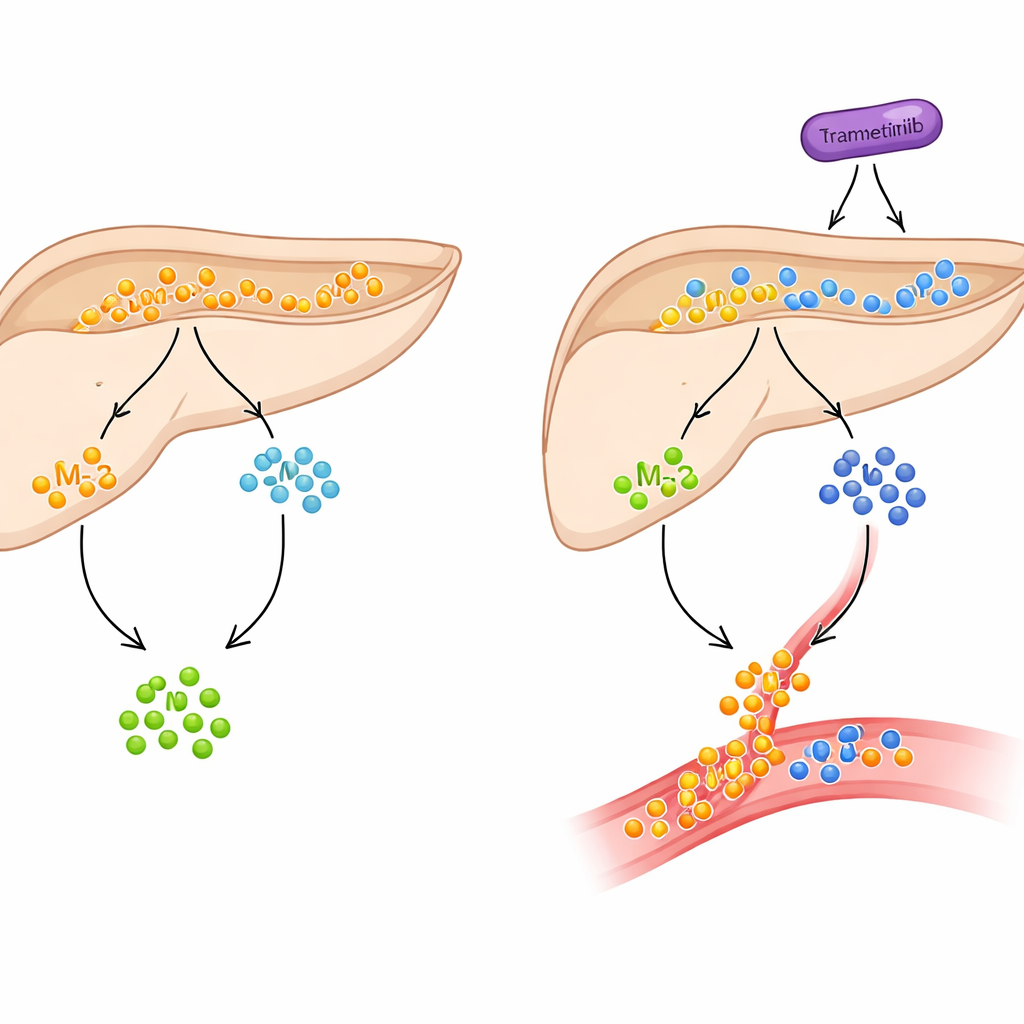
After swallowing a tablet of regorafenib, the drug is absorbed from the gut, processed mainly in the liver, and then cleared from the body. Along the way, it is transformed into several related compounds, two of which—called M-2 and M-5—are also active against cancer cells. Together, the parent drug and these metabolites shape both the benefits and risks of treatment. Because small changes in how quickly the body makes or removes these compounds can lead to large differences in blood levels, doctors are increasingly interested in measuring them directly, a practice known as therapeutic drug monitoring.
Building a precise laboratory measuring tool
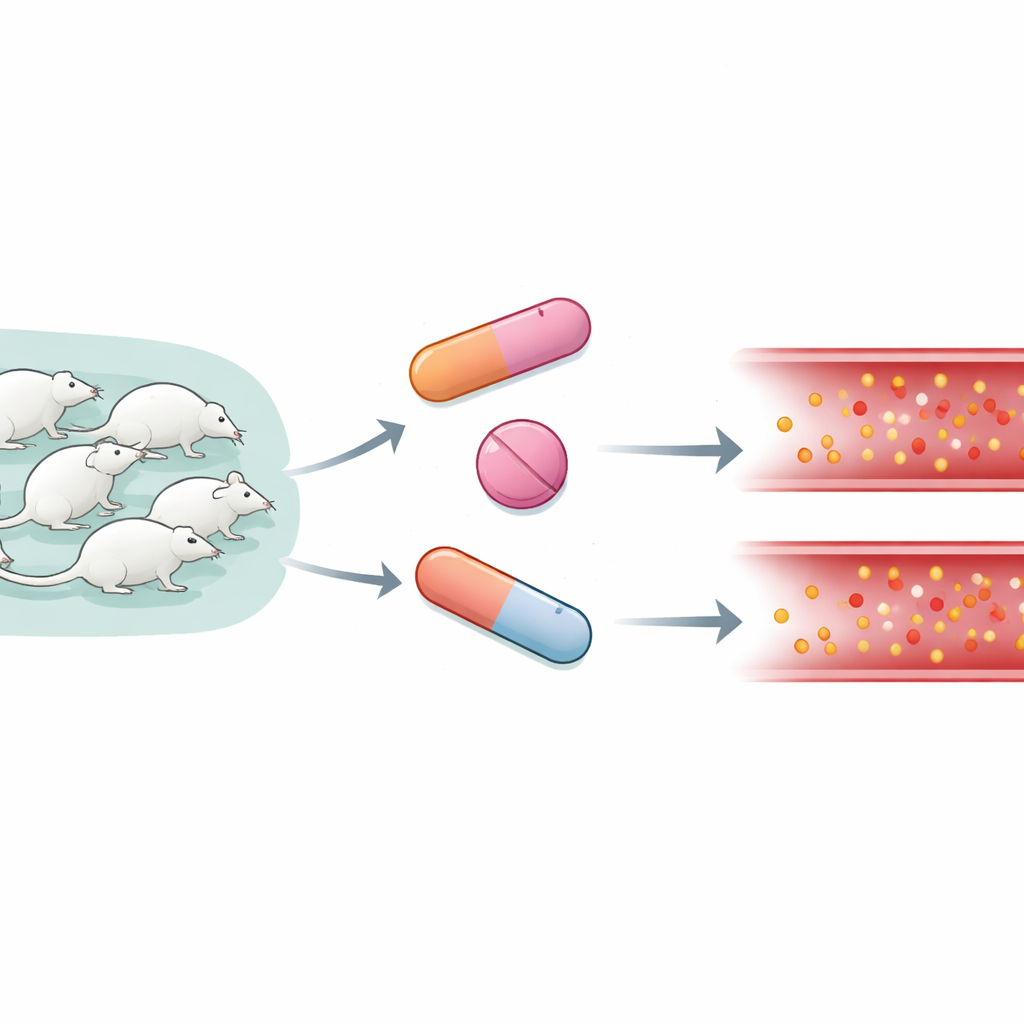
The researchers set out to develop a fast, reliable blood test for regorafenib and its two major active metabolites in rats. They used a sensitive technology called UPLC–MS/MS, which separates chemicals in a sample and weighs them with great precision. Tiny volumes of rat blood were treated to remove proteins and then injected into the instrument. The team rigorously checked that the method could distinguish the three target compounds from all other substances in blood, measure them accurately over a wide range of concentrations, and give repeatable results from day to day. The assay proved robust: errors stayed within internationally accepted limits, recovery from blood was high, and the compounds remained stable in frozen samples for at least six months.
Testing what happens when two drugs are combined
With this analytical tool in hand, the team asked a practical question: what happens to regorafenib in the body when it is given together with trametinib, another pill that targets cancer growth pathways and is sometimes used in combination strategies? Male rats received either regorafenib alone or both drugs by mouth. Blood samples were taken over three days to map how concentrations changed over time. The results were striking. When trametinib was present, peak blood levels of regorafenib jumped almost fivefold, and overall exposure—reflected by the area under the concentration–time curve—rose more than sixfold. Levels of one metabolite, M-5, also increased strongly, while the other, M-2, dropped by about half. The drug stayed in the body longer, with its apparent half-life nearly doubling.
Clues to how the interaction works
These shifts suggest that trametinib interferes not just with how regorafenib is broken down, but also with how it is transported into and out of cells. Both drugs are known to interact with a set of molecular “pumps” that move substances across cell membranes, especially in the liver and gut. The pattern seen in this study—more parent drug and M-5, less M-2—does not match a simple blockage of the main liver enzyme that processes regorafenib. Instead, it points to changes in transporter activity that alter how efficiently regorafenib reaches the liver and how its metabolites leave. Although the precise mechanism remains to be nailed down, the findings clearly show a meaningful pharmacokinetic interaction between the two medicines.
Implications for safer, more tailored therapy
For patients, the key message is that combining regorafenib with trametinib could greatly increase the amount of regorafenib circulating in the body, potentially boosting anti-tumor effects but also raising the risk of side effects. The newly developed testing method provides a foundation for future work to track these changes more closely, first in animal models and ultimately in people. If similar interactions are confirmed in clinical studies, doctors may need to adjust doses or monitor blood levels when these drugs are used together, moving closer to truly individualized cancer treatment.
Citation: Otto, F., Propisnova, V., Urjasz, H. et al. Development of a UPLC-MS/MS method and its application for the pharmacokinetic analysis of regorafenib in rats. Sci Rep 16, 10108 (2026). https://doi.org/10.1038/s41598-026-38418-6
Keywords: regorafenib, trametinib, drug interactions, pharmacokinetics, therapeutic drug monitoring