Clear Sky Science · en
Impacts of drought and manure fertilization on soil and radish resistomes
Why this research matters to everyday life
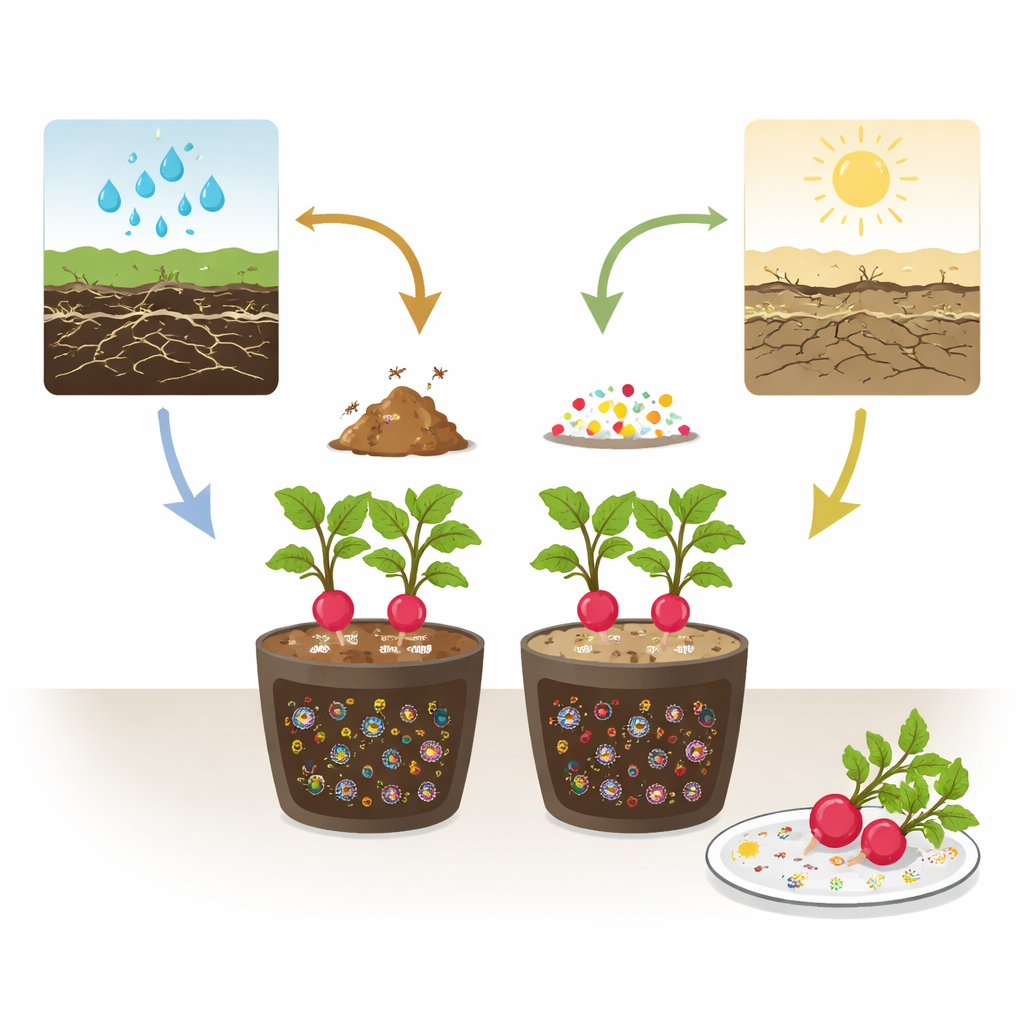
Antibiotic resistance is often framed as a hospital problem, but it is also shaped quietly in farm fields where our food is grown. This study explores whether common farming choices—using animal manure or chemical fertilizer, and growing crops under drought—encourage the spread of antibiotic resistance genes in soil microbes and into a popular root vegetable, the radish. Because radishes are often eaten raw, understanding this pathway helps clarify how farm practices and climate stress might (or might not) affect human exposure to resistant bacteria through food.
Farming choices, dry spells, and hidden genes
The researchers focused on “resistomes,” the full collection of antibiotic resistance genes in a particular environment, in this case farm soil and radish roots. They set up greenhouse pots using a loam soil from northern Spain, spiked it with copper and a weed killer to mimic real-world fields, and compared two types of fertilization: cow manure containing traces of the antibiotic oxytetracycline, and a standard mineral NPK fertilizer. Half the pots received radish plants, and soils were kept either moist (80% of field capacity) or quite dry (20%), simulating drought. Over the growing season they tracked soil microbes, resistance genes, and a set of microbial activity and plant health indicators.
Manure boosts resistance in soil, but not on the plate
The clearest signal came from the type of fertilizer. Manure greatly increased the relative abundance of antibiotic resistance genes in soil compared with mineral fertilizer, affecting dozens of different genes. Almost all of these genes were more common in manure-treated pots, consistent with the idea that manure brings in resistance genes and antibiotic residues that favor bacteria carrying them. However, when the team looked at the radish roots themselves—the portion that would be eaten—they found far fewer resistance genes overall. Only a small handful of genes showed any response to fertilization or moisture, and gene levels in radishes were typically two to five times lower than in the surrounding soil. This suggests that, under these conditions, the crop acts as a bottleneck: even when soil becomes enriched in resistance genes, relatively few appear to move into the edible tissue.
Dry soils and plant roots change how genes can move
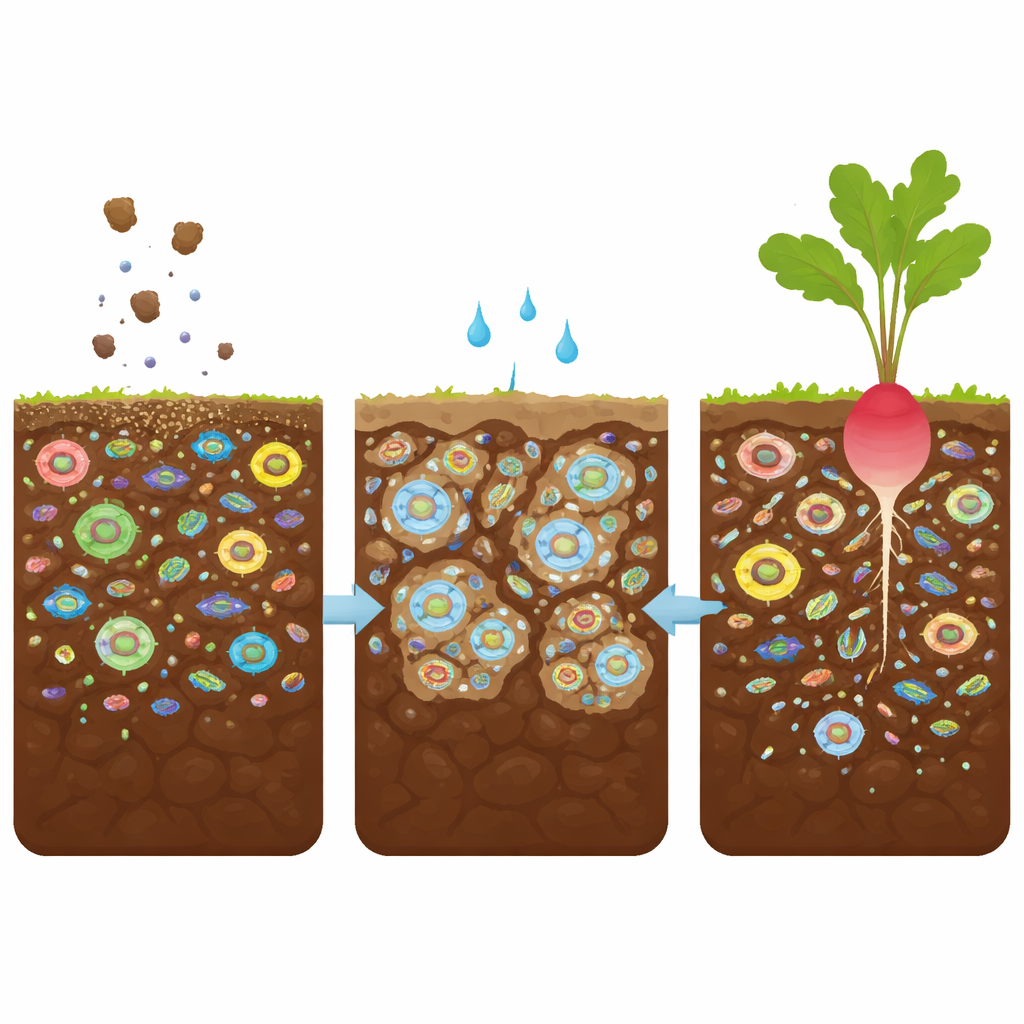
The story becomes more nuanced when looking at how easily resistance genes might be mobilized between microbes. The team examined links between antibiotic resistance genes and mobile genetic elements—pieces of DNA that help genes jump between bacteria. They found more and stronger statistical associations between these two groups of genes in drier soils and in pots with radish plants than in wetter or unplanted pots. This pattern hints that drought and root activity may foster microhabitats where bacteria are closer together and more active, conditions that can favor horizontal gene transfer. At the same time, the overall makeup of the bacterial community changed very little across treatments, and the microbial families most closely associated with mobile elements were rare, together making up only a tiny fraction of the total microbes present.
Plant health under manure and mineral fertilizer
Fertilizer choice also shaped how well the radishes grew and responded to drought. Plants given mineral fertilizer produced more leafy biomass under well-watered conditions, reflecting the quick availability of nutrients. Yet when water was scarce, these same plants lost biomass, showing they were more sensitive to drought. Radishes grown in manure-amended soil maintained similar shoot biomass under both wet and dry conditions, suggesting that the organic matter helped buffer water stress, even though their overall growth was lower. Manure-grown plants also tended to accumulate more vitamin E–type antioxidant compounds in their leaves, which may signal mild physiological stress but also slightly improves the nutritional value of the crop.
What this means for food safety and future farming
Overall, the study shows that manure fertilization can clearly raise the level of antibiotic resistance genes in soil, while drought and plant roots influence how tightly those genes are linked to mobile DNA that can move between microbes. Yet, despite these shifts underground, the radish roots themselves carried relatively few resistance genes, and their resistome did not closely mirror that of the soil. For consumers, this suggests that, at least in this experimental setting, the risk of acquiring antibiotic resistance through eating raw radishes fertilized with manure remains limited. For scientists and policymakers, the findings underscore that assessing resistance risks from agriculture requires looking across the whole chain—from soil to roots to people—and paying particular attention to conditions, like drought–rewetting cycles and manure management, that may encourage genes to move between microbes even if they do not readily enter our food.
Citation: Ruiz-Torrubia, F., Garbisu, C., Gómez-Sagasti, M.T. et al. Impacts of drought and manure fertilization on soil and radish resistomes. Sci Rep 16, 10621 (2026). https://doi.org/10.1038/s41598-026-38389-8
Keywords: antibiotic resistance, manure fertilization, soil microbiome, drought stress, food safety