Clear Sky Science · en
Multivariate and stability analysis for yield and biochemical traits in radish (Raphanus sativus L.) genotypes from Sikkim Himalaya for functional food applications
Why this radish story matters
Radishes might seem like humble salad ingredients, but this study shows they can be powerful allies for both farmers and health‑conscious eaters. In India’s first fully organic state, Sikkim, scientists explored dozens of local radish types to find those that grow well without chemicals while packing extra nutrients and protective plant compounds. Their work points toward radishes that can boost farm income, thrive as the climate shifts, and act as “functional foods” that help guard against chronic disease.
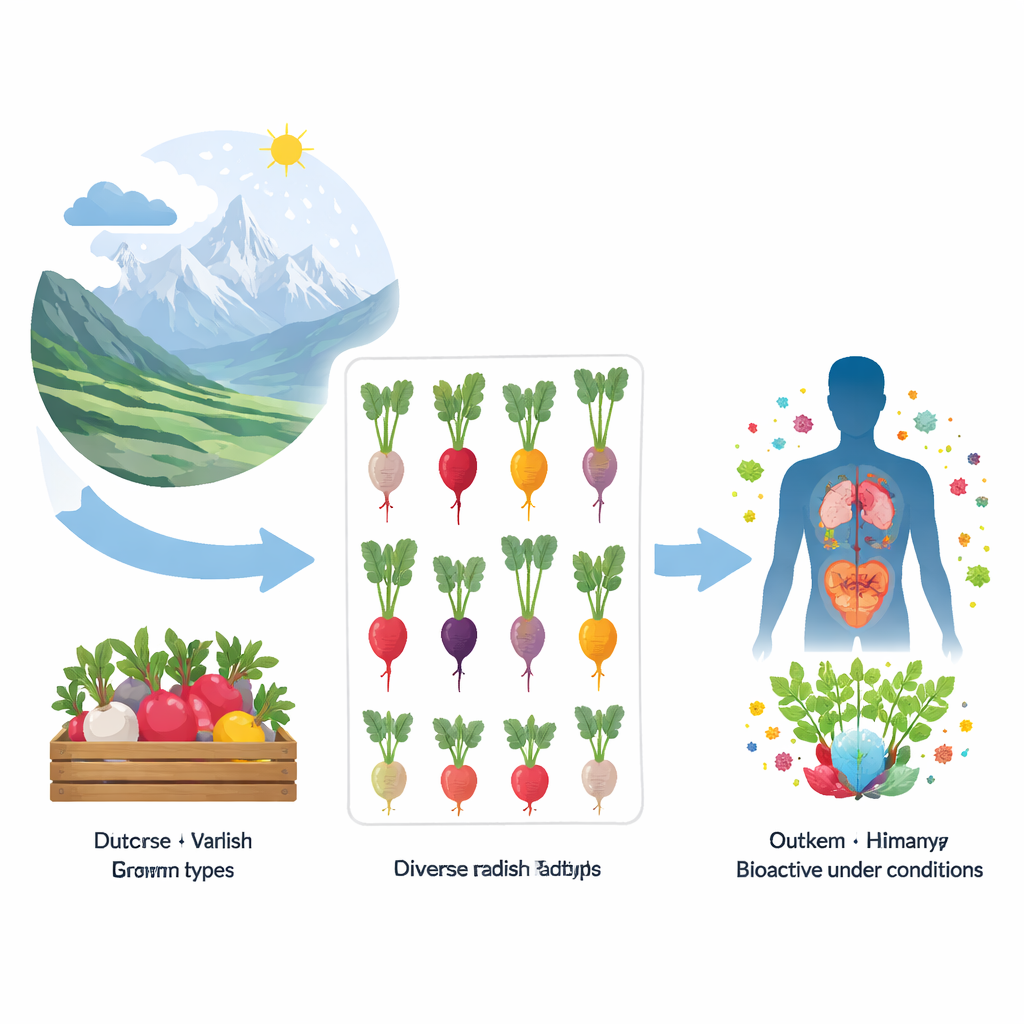
Local radishes in a mountain setting
The research took place in the cool, hilly landscape of the Sikkim Himalaya, where radish is already a popular crop. Because Sikkim is entirely organic, farmers cannot rely on synthetic fertilizers or pesticides. At the same time, global demand for organic produce and foods with health benefits is rising. Many different traditional radish types are grown in the region, but they have never been systematically compared. The team collected seeds from 57 local radish genotypes, along with four commonly used varieties for comparison, and grew them over two winter seasons in a carefully planned organic trial.
Measuring yield and hidden nutrition
To understand which radishes were truly best, the scientists looked well beyond simple root size. They measured 14 physical traits, such as plant height, leaf size, root length, root diameter, and yield per hectare. At the same time, they analyzed 16 biochemical features in the roots (and some in the leaves), including sugars, vitamin C, pigments like carotenoids and anthocyanins, protein, fiber, and several different tests of antioxidant activity. Many of these natural chemicals are linked with lower risks of heart disease, cancer, and other long‑term illnesses, so higher levels can turn a familiar vegetable into a functional food.
Finding patterns in a crowded field
Because testing so many radish types is complex, the researchers used modern statistical tools to tease apart the effects of genetics and environment. A special experimental layout allowed them to compare many unreplicated lines against repeated check varieties. They then estimated how much of the variation in traits was due to genetics versus growing conditions, and how strongly different traits were linked to each other. Techniques like principal component analysis and clustering grouped the radish genotypes into two major genetic families and eight smaller sub‑groups, each with its own profile of sweetness, color, antioxidant levels, and other qualities. Strong genetic control was found for many biochemical traits, meaning that breeders can reliably select and maintain them.
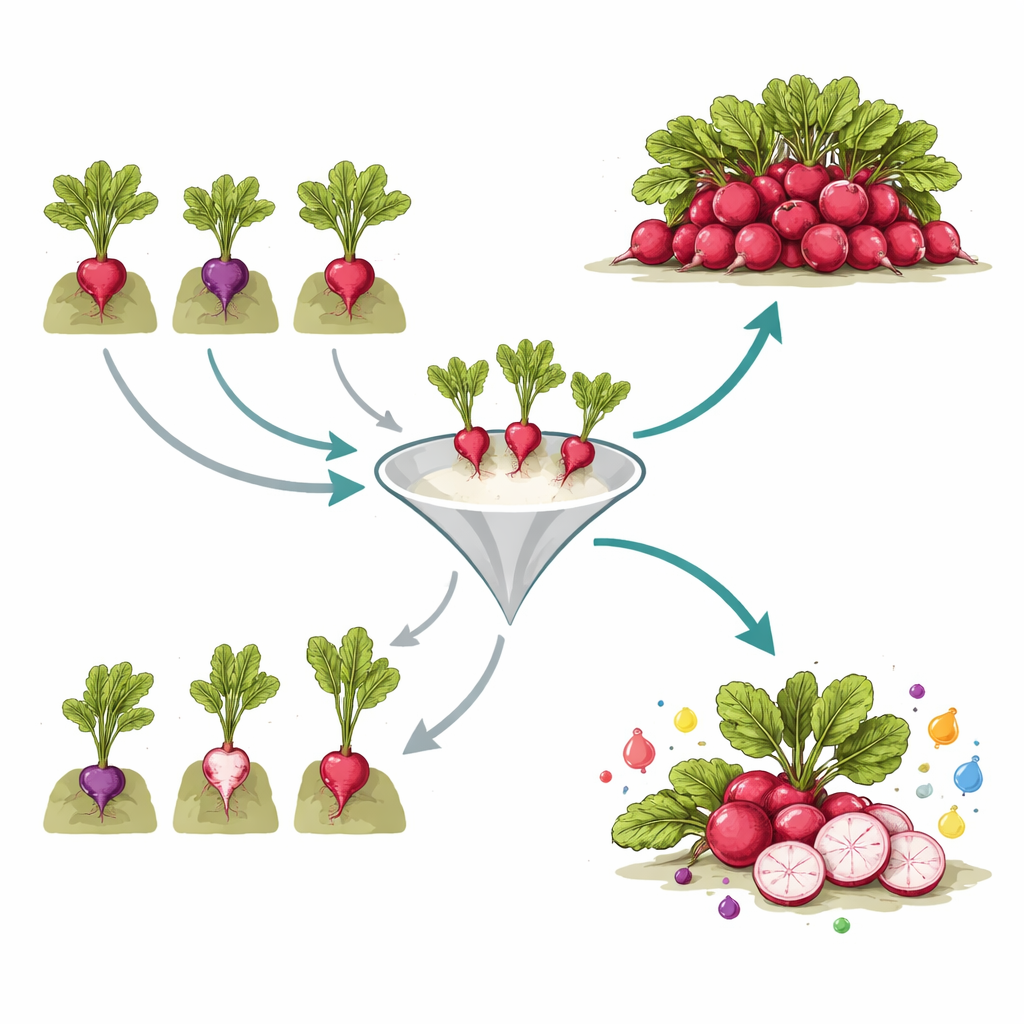
Stable stars for farms and food
The team also examined how each genotype behaved across the two seasons using stability analysis. This helped them distinguish radishes that yield very well but react strongly to yearly weather changes from those that perform more steadily. Some lines, such as SR56, SR39 and SR3, produced impressive yields and good biochemical profiles but were more sensitive to environmental shifts. Others, including SR40, SR23 and SR25, gave somewhat lower yields yet stayed stable across years. When both yield and nutritional quality were considered together, genotypes SR24, SR14, SR50 and SR42 stood out for their rich bioactive content, while SR56, SR39 and SR41 combined strong yields with desirable biochemical traits.
What it means for plates and farms
Overall, the study shows that the radish diversity of the Sikkim Himalaya harbors genotypes that can serve as hardy, high‑yielding organic crops and as nutrient‑dense functional foods. By pinpointing which lines are both productive and rich in health‑promoting compounds, the work lays a foundation for breeding new varieties tailored to organic farming and changing climates. For consumers, it suggests that future radish varieties from this region could do more than add crunch to a meal—they may also help support long‑term health while sustaining mountain farming communities.
Citation: Tare, K., Kumar, R., Kaushik, K. et al. Multivariate and stability analysis for yield and biochemical traits in radish (Raphanus sativus L.) genotypes from Sikkim Himalaya for functional food applications. Sci Rep 16, 9895 (2026). https://doi.org/10.1038/s41598-026-38280-6
Keywords: radish, functional food, organic farming, antioxidants, crop breeding