Clear Sky Science · en
Rapid test for detecting red–green color vision deficiencies using a neural network-assisted color-naming task
Why this matters for everyday life
Millions of people see colors differently without realizing it, and traditional tests for color vision can be slow, expensive, or hard to use for children, older adults, or people with limited mobility. This study introduces a quick, simple, computer-based way to spot red–green color vision differences just by asking people to say what colors they see, while an artificial intelligence system quietly figures out whether their vision is typical or not.
How color vision can differ between people
Human color vision depends mainly on three kinds of light-sensitive cells in the eye, tuned roughly to long (reddish), medium (greenish), and short (bluish) wavelengths. When one type is missing, not working, or shifted in sensitivity, people may confuse certain shades, especially reds and greens. Some are dichromats, relying on only two cone types, while others are anomalous trichromats, who have all three cones but with one shifted so that certain colors are harder to tell apart. Red–green differences affect around 8% of people, mostly from birth; others develop color problems later in life, for example due to eye disease or medication.
Limits of current color vision tests
Doctors and employers use several kinds of color tests. Well-known plate tests, where people pick out numbers or shapes made of colored dots, are good at catching problems but can be sensitive to lighting and are not always easy to put on a screen. More advanced digital tests, such as those that show moving colored shapes or require fine manual control, can measure vision in detail but often take 20–30 minutes and demand concentration and good motor skills. Other tests ask people to arrange colored chips in order or to match colored lights, which can be tiring, tricky for children or older adults, and require specialized equipment.
A simple idea: just name what you see
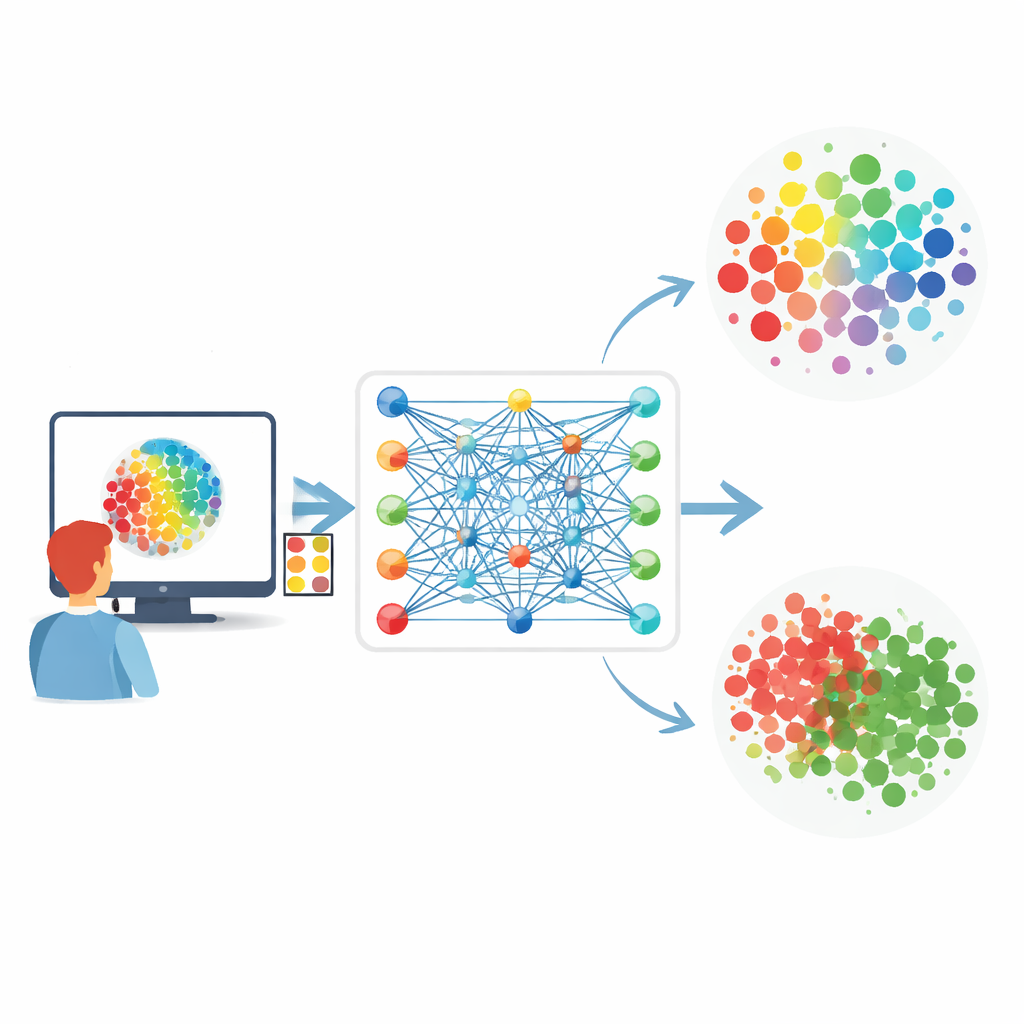
The researchers tried a different approach that mirrors daily life: naming colors. They showed 56 volunteers 182 colors drawn from natural scenes—shades similar to those found in real-world objects—and asked them to name each one using 11 basic color words in Portuguese (such as red, green, blue, or brown). This group included people with typical color vision as well as several kinds of red–green differences. Instead of relying on a human expert to interpret the answers, the team fed the pattern of names into a neural network, a type of artificial intelligence that can learn to recognize complex patterns in data.
What the artificial intelligence learned
The neural network was trained to perform three levels of judgment: first, simply decide whether a person’s color vision was typical or not; second, separate typical vision, dichromats, and anomalous trichromats; and third, distinguish five detailed categories, including specific red–green loss types. With the full set of 182 colors, it identified people with color vision differences with very high overall success: for basic screening, both sensitivity (catching those with a difference) and specificity (not mislabeling those with typical vision) were above 95%. Even when the model tried to sort people into the more detailed five-way groups, its performance remained useful, though less precise, reflecting the harder nature of that task.
Finding the most informative colors
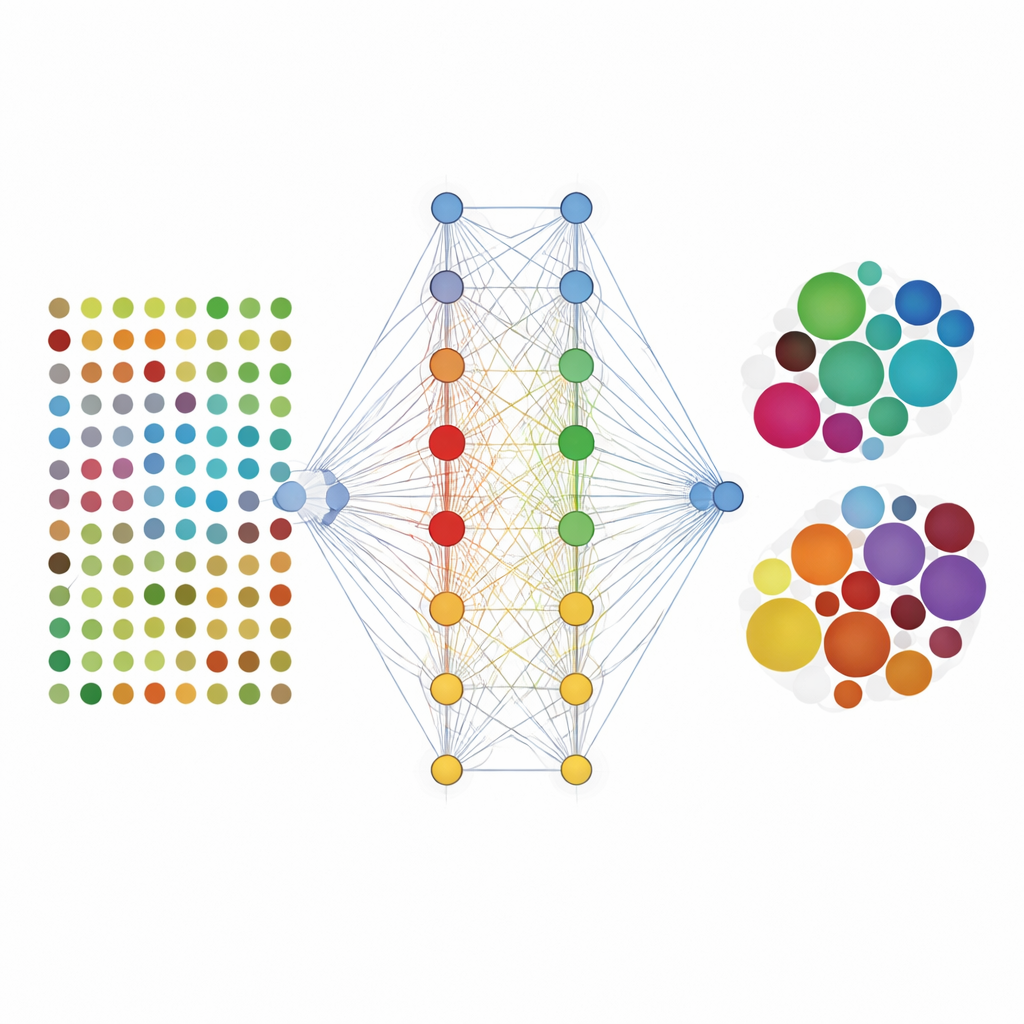
To make the test faster, the team looked for a smaller set of colors that carried most of the useful information. They used a method that explains which inputs the neural network relies on most strongly, and ranked all 182 colors by importance. By repeatedly retraining and testing the system on the top 5, 10, 15, 20, or 25 colors, they found that using about 20 carefully chosen colors actually gave slightly better screening performance than the full set. This suggests that extra colors can add noise rather than clarity and that a streamlined test could be completed comfortably in under two minutes on a standard calibrated screen.
What this means for health and daily screening
The study shows that a fast, low-effort color-naming task, interpreted automatically by artificial intelligence, can match or slightly outperform classic plate tests in spotting red–green color vision differences, while being easier to digitize and more comfortable for many users. Because it relies on spoken or simple responses and static images, it could be useful not only for routine eye checks and job screening but also for tracking eye diseases or even exploring color changes linked to brain conditions such as Alzheimer’s disease or autism. In everyday terms, the work points toward a future in which a short, app-based test might reliably flag color vision issues in just a couple of minutes.
Citation: Monteiro, J.A.R., Marques, D.N., Linhares, J.M.M. et al. Rapid test for detecting red–green color vision deficiencies using a neural network-assisted color-naming task. Sci Rep 16, 9987 (2026). https://doi.org/10.1038/s41598-026-38222-2
Keywords: color vision deficiency, red–green color blindness, neural network screening, digital eye test, color naming