Clear Sky Science · en
A transformer–XGBoost based model to fault diagnosis for CPR1000
Why smarter alarms matter in nuclear power
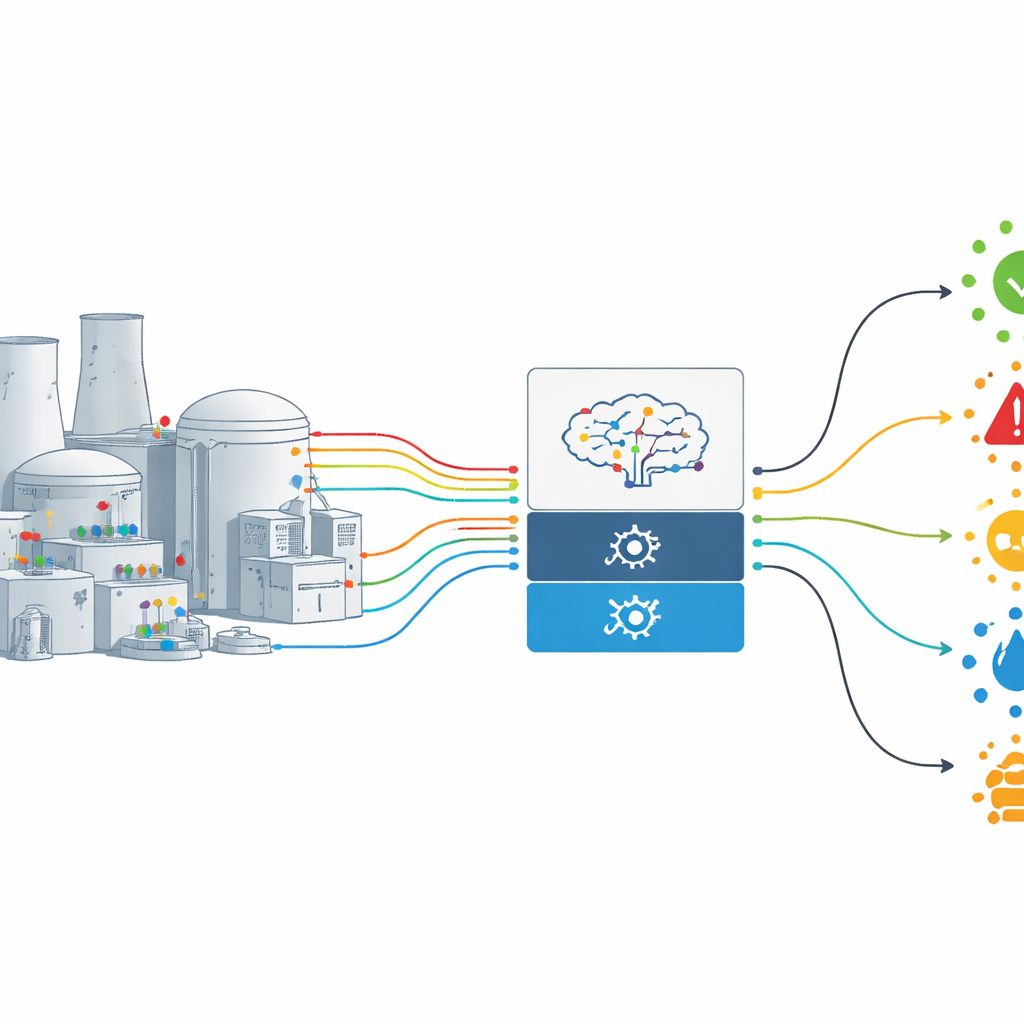
Nuclear power plants run on an intricate web of pipes, valves, and sensors that must all work together perfectly. During unusual events, control rooms can be flooded with blinking lights and shifting readings faster than any human can interpret. This paper explores how a new kind of artificial intelligence can sift through that torrent of data in real time, helping operators spot dangerous faults in a CPR1000 pressurized water reactor before they escalate. In doing so, it points toward a future where machines act as vigilant partners, quietly watching for early signs of trouble that people might miss under pressure.
A digital safety net for complex reactors
The authors focus on a Chinese CPR1000 nuclear power unit, a complex system monitored by dozens of key measurements such as temperature, pressure, water level, and flow. In normal operation this sensor network already strains human attention; in an emergency, when many alarms sound at once, interpreting what is really happening becomes even harder. The team’s goal is to turn those raw signals into an automatic "health status" assessment, so that instead of staring at individual numbers, operators can see which specific fault is unfolding and respond quickly and confidently.
Teaching a simulator to generate rare accidents
Because real nuclear accidents are mercifully rare, the researchers turned to a high‑fidelity simulator called PCTRAN, which can mimic the behavior of a CPR1000 plant under many conditions. They built a Python tool named AutoSave‑PCTRAN that automatically starts the simulator, injects faults of varying severity, and records all sensor readings over time. By repeatedly simulating three especially serious scenarios—loss of coolant, steam line break inside containment, and a rupture in one steam generator tube—along with normal operation, they amassed 120,000 examples of how the plant’s sensors behave before and during each type of event.
How the hybrid AI learns from reactor signals
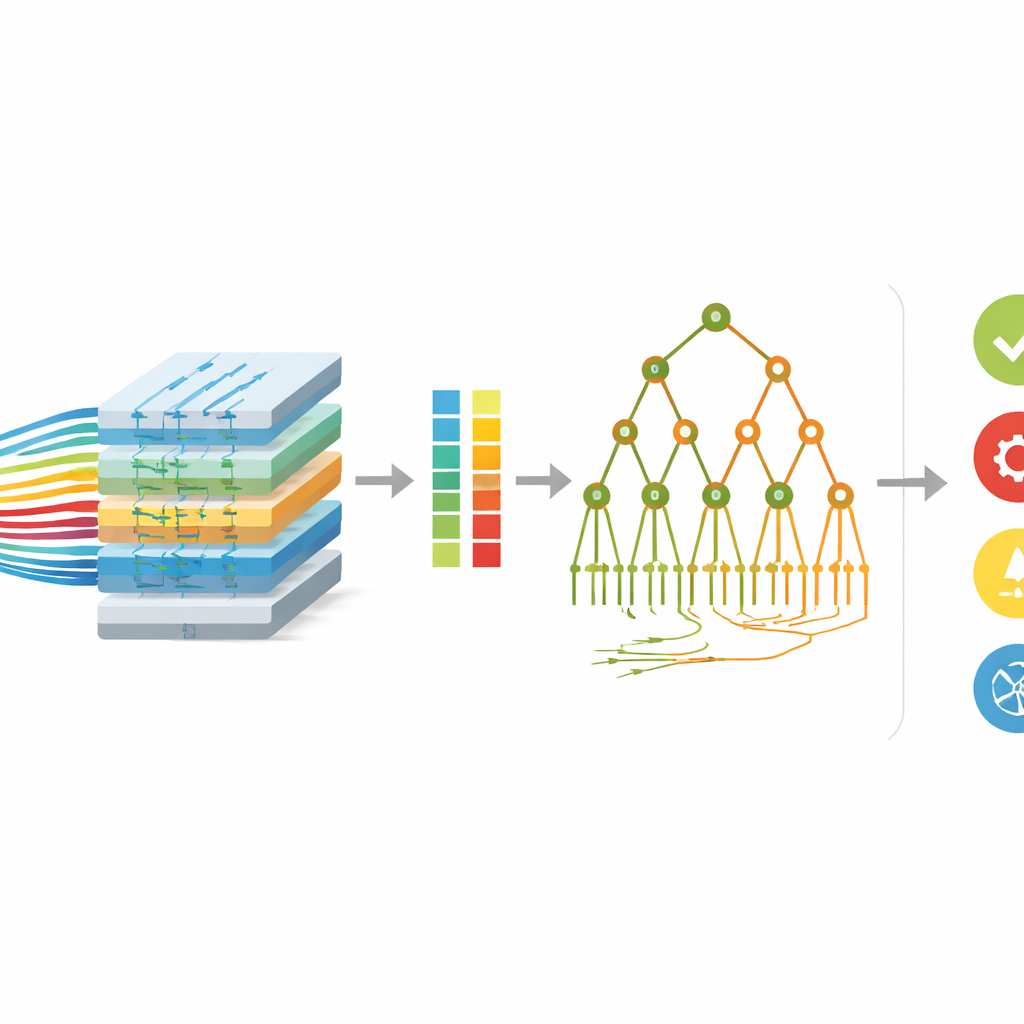
Feeding all 92 available sensor channels into an algorithm would be inefficient and noisy, so the team first used a feature‑selection procedure to identify the six most informative signals, such as key water levels, radiation monitors, and coolant inventory. These streams form short time windows of data that are passed into a modern sequence‑analysis model known as a Transformer, which excels at spotting subtle patterns that unfold over many seconds. Instead of producing a simple yes‑or‑no answer, the Transformer distills each time window into a compact set of numerical features that capture how the system is evolving.
From patterns to precise fault labels
The condensed patterns leaving the Transformer are then fed into an ensemble decision method called XGBoost, which is particularly good at classifying complex data when tuned carefully. To find the best settings, the authors apply an "intelligent search" approach inspired by whale hunting strategies, ensuring that the model does not get stuck in mediocre solutions. Training and testing are carried out using strict cross‑validation, so the system is repeatedly challenged with new combinations of simulated cases. This two‑stage design blends deep learning’s talent for handling time‑series with a more traditional decision engine that can draw sharp boundaries between different fault types.
How well the system spots danger
When the dust settled, the hybrid model was able to tell apart normal operation, steam line break, steam generator tube rupture, and loss of coolant with striking reliability. Across all four conditions, its accuracy, recall, and F1 scores were above 98%, and in some cases reached 100%. Importantly, the kinds of errors that did occur were mostly confined to the border between two steam‑related faults that naturally produce similar sensor patterns. Even there, the misclassification rate stayed below 2%. Compared with using only the Transformer or only XGBoost, the combined approach reduced misdiagnoses by several percentage points—a meaningful improvement in a safety‑critical setting.
What this means for everyday safety
For a non‑specialist, the takeaway is straightforward: this research shows that modern AI can serve as a highly alert assistant in nuclear control rooms, watching many sensors at once and recognizing early signatures of serious faults. By distilling a flood of numbers down to a clear, timely indication of which problem is emerging, the system could give human operators a crucial margin of time and clarity, reducing the chance that a confusing alarm storm leads to a wrong decision. Although the study still relies on simulated data and will need further testing with real‑world noise, it sketches a promising path toward more dependable, human‑centered safety in nuclear power.
Citation: Peng, Z., Lei, J., Ni, Z. et al. A transformer–XGBoost based model to fault diagnosis for CPR1000. Sci Rep 16, 11276 (2026). https://doi.org/10.1038/s41598-026-38211-5
Keywords: nuclear power safety, fault diagnosis, machine learning, transformer XGBoost, reactor monitoring