Clear Sky Science · en
Cold exposure increases aortic dissection risk through extracellular cold inducible RNA binding protein and toll like receptor 4 signaling
Why Cold Weather Can Threaten a Hidden Heart Vessel
Aortic dissection is a sudden, often deadly tear in the body’s main artery. It can strike without warning, even in people who did not know they were at risk. Many hospital records have hinted that these emergencies happen more often in cold weather, but why a drop in temperature might damage a deep vessel inside the chest has remained unclear. This study tackles that puzzle, tracing a link from chilly air to a stress protein in the blood and, finally, to weakening of the aortic wall. 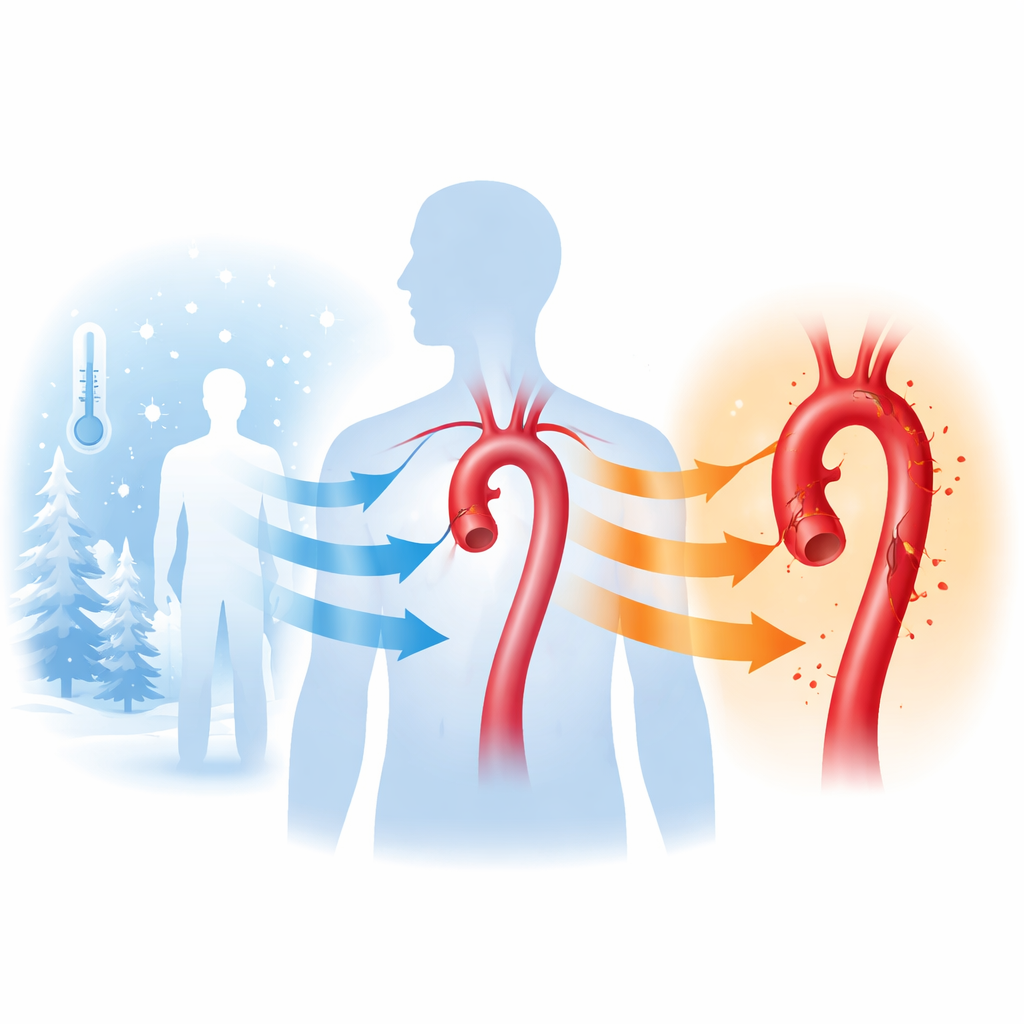
Hidden Dangers Inside the Main Artery
The aorta is the large artery that carries blood from the heart to the rest of the body. For most of us, it silently does its job for a lifetime. But if its wall weakens, it can balloon (an aneurysm) or split open (a dissection), causing massive internal bleeding. Untreated, many patients die within hours. Doctors know that age, high blood pressure, and smoking raise the risk, and that bursts of cold weather seem to bring more cases to emergency rooms. Yet weather itself cannot cut an artery; something in the body has to change in response to the cold.
A Stress Signal That Turns Harmful Outside Cells
The researchers focused on a molecule called cold-inducible RNA-binding protein, or CIRP. Inside cells, CIRP normally helps them survive stress by protecting their genetic messages. Under strong stress, however, some CIRP leaks outside the cells into the bloodstream. There, in its “extracellular” form, it can act as a danger signal, stirring up inflammation. Earlier work showed that this outside CIRP can latch onto a sensor on immune cells and vessel-lining cells called Toll-like receptor 4 (TLR4), flipping on a cascade of inflammatory reactions. The team suspected that in cold weather, rising levels of this stress protein might provoke damage in the aorta.
Linking Cold Days to Real-World Emergencies
To see whether cold really coincides with more aortic dissections, the scientists combined two huge datasets in Taiwan: daily weather reports and national health insurance records. They examined over five years of data from three major cities that together cover more than half of the country’s population. On the coldest 10 percent of days, with the lowest night-time temperatures, the rate of aortic dissection was significantly higher than on milder days, even in this generally warm, subtropical region. When forecasts triggered official cold alerts, predicting temperatures below 10 °C, the relative risk of dissection was roughly doubled compared with comfortable 25 °C days. 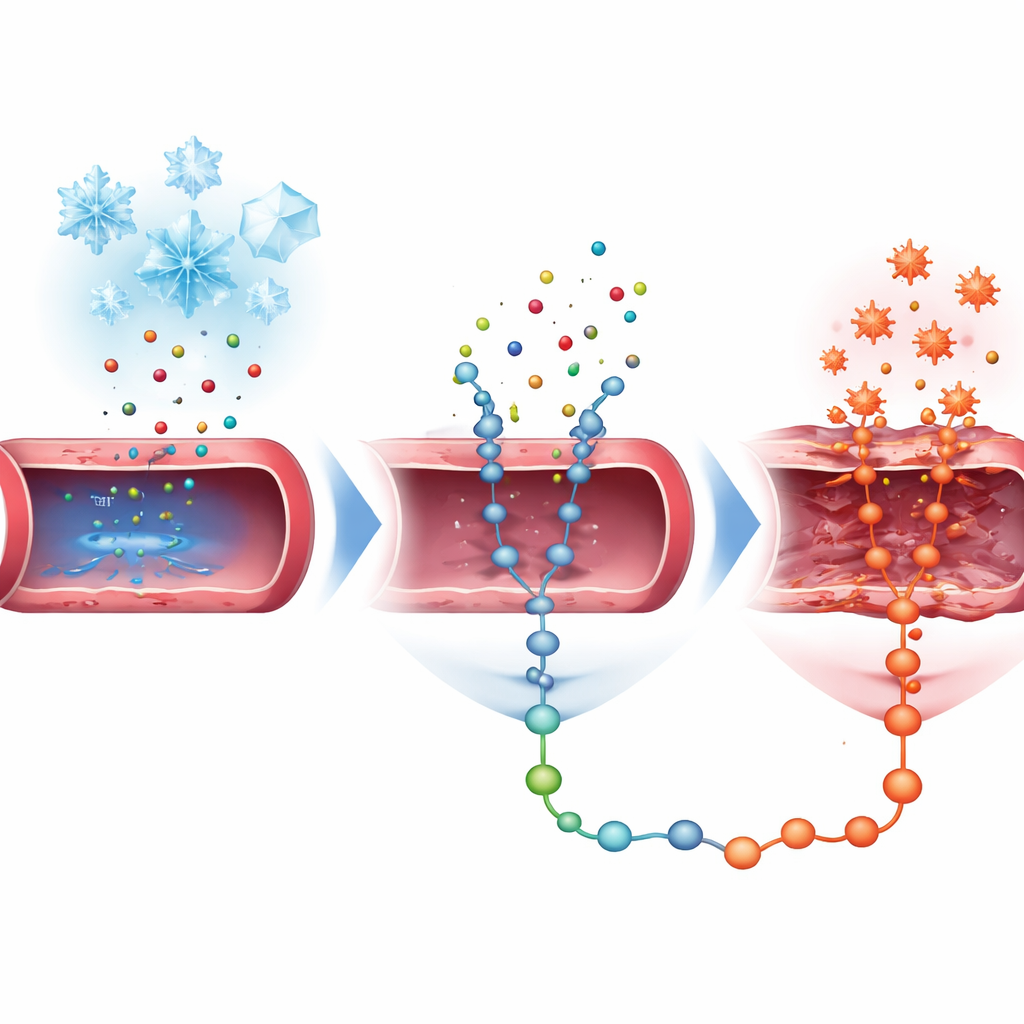
From Cold Stress to a Fragile Vessel Wall
Statistics alone cannot prove cause and effect, so the team turned to laboratory and animal models to follow the chain of events inside the body. In human aortic endothelial cells grown in dishes, mild cold stress or added CIRP turned on inflammatory switches inside the cells, including a master regulator called NF-kB. This, in turn, boosted production of destructive enzymes like matrix metalloproteinase-2, which can chew up the elastic fibers that give the aorta its strength. In mice bred to be prone to aneurysm and dissection, short bursts of cold exposure enlarged the aortic arch, increased blood levels of CIRP and the inflammatory messenger interleukin-6, and worsened the severity of aneurysms and dissections. Injecting extra CIRP made things still worse, while giving a small peptide called C23—which competes with CIRP and blocks its action—protected the aorta, reduced inflammation, and improved survival.
A New Target for Protecting At-Risk Patients
Taken together, the findings outline a simple story with serious implications. Cold weather pushes cells to release CIRP into the bloodstream; this outside CIRP then activates TLR4 on vessel-lining cells, igniting inflammation and enzyme activity that erode the aortic wall and make dissections more likely in people whose arteries are already vulnerable. By blocking this stress signal with a drug like C23, it may be possible one day to blunt the impact of cold snaps on high-risk patients. For now, the message is practical as well as molecular: in cold weather, people with known aortic problems or severe cardiovascular disease may need extra protection and closer monitoring, because the chill outside can quietly strain the body’s largest artery from within.
Citation: Tsai, HY., Chien, WC., Chung, CH. et al. Cold exposure increases aortic dissection risk through extracellular cold inducible RNA binding protein and toll like receptor 4 signaling. Sci Rep 16, 12964 (2026). https://doi.org/10.1038/s41598-026-38164-9
Keywords: aortic dissection, cold exposure, vascular inflammation, stress proteins, cardiovascular risk