Clear Sky Science · en
Comparative clinical study of total thoracoscopic surgery and thoracoscopy-assisted small-incision surgery for multiple rib fractures
Why this matters for people with chest injuries
Severe chest injuries from car crashes or falls can break several ribs at once, making every breath painful and dangerous. Doctors now use keyhole-style operations to stabilize these ribs from the inside, but there is more than one way to do it. This study asks a simple, patient-centered question: when you need surgery for multiple broken ribs, which modern technique leaves you with less pain, smaller wounds, and a better recovery?
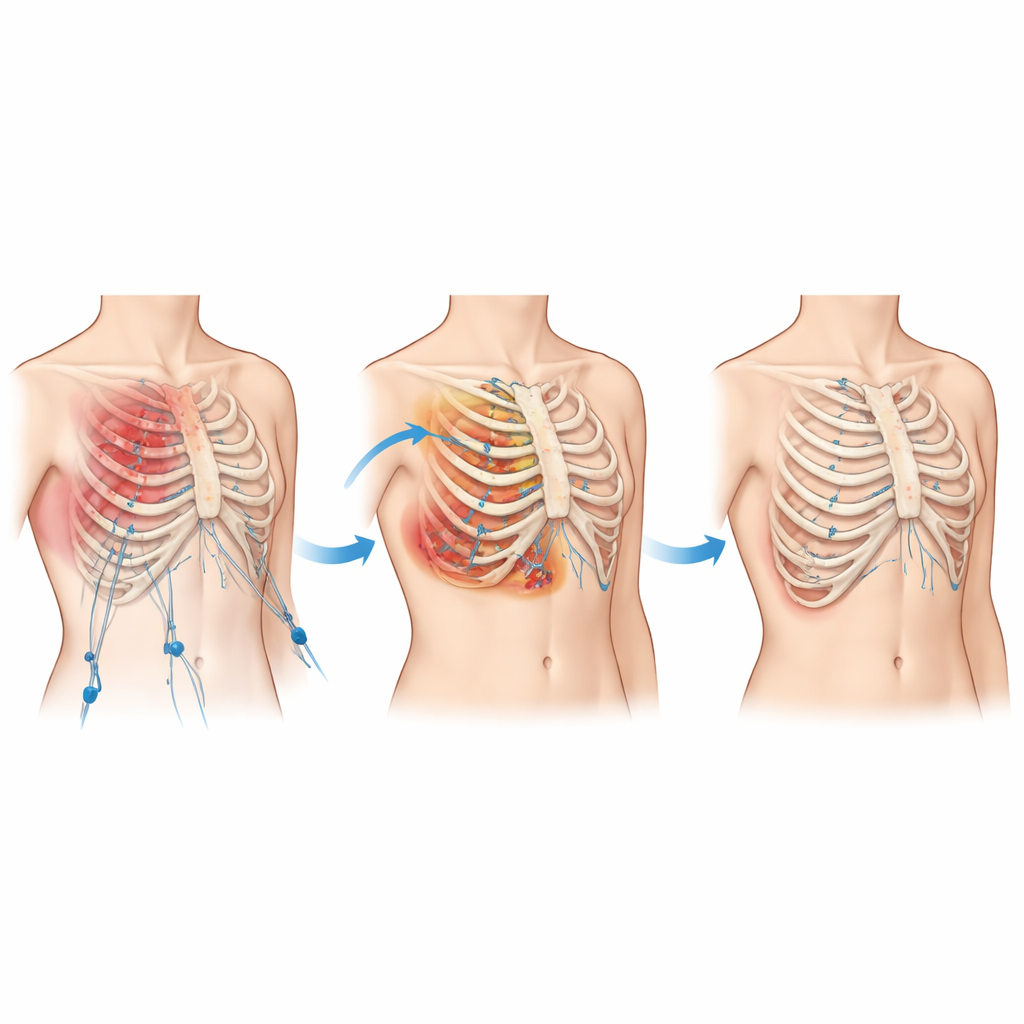
Two modern ways to fix broken ribs
The researchers compared two minimally invasive operations in 95 adults with several broken ribs. In both approaches, surgeons look inside the chest with a camera and fasten the ribs using small metal devices made from a memory alloy that gently squeezes around the bone. One method, called total thoracoscopic surgery, works almost entirely through tiny openings between the ribs, using long instruments and a video screen. The other, thoracoscopy-assisted small-incision surgery, adds a short open cut on the chest wall so the surgeon can work more directly with their hands while still using the camera to see inside.
How the study was set up
Because sicker or more severely injured patients might be steered toward one technique or the other, the team used a matching method to pair up 70 patients with similar ages, injury patterns, and causes of trauma. This helped ensure that any differences seen later were mainly due to the type of surgery rather than who happened to receive it. They recorded details such as how long the operation took, how much blood was lost, how long chest tubes stayed in, and how many days patients remained in the hospital. They also tracked complications like lung infections and fluid buildup, measured pain with a standard 0–10 scale on days 3 and 7 after surgery, and checked how well patients were doing three months later.
Small cuts, longer time in the operating room
Both operations proved safe and effective overall. Total thoracoscopic surgery required more time in the operating room—about half an hour longer on average—because surgeons must work entirely with long instruments through narrow spaces. However, the trade-off was clear: the skin cuts were dramatically smaller, only a few centimeters compared with more than 10 centimeters in the mixed open-and-camera approach. Other short-term measures, such as blood loss, how much fluid drained from the chest, how long the chest tube stayed in, and the length of the hospital stay, were very similar between the two groups. Complication rates were also low and did not differ meaningfully.
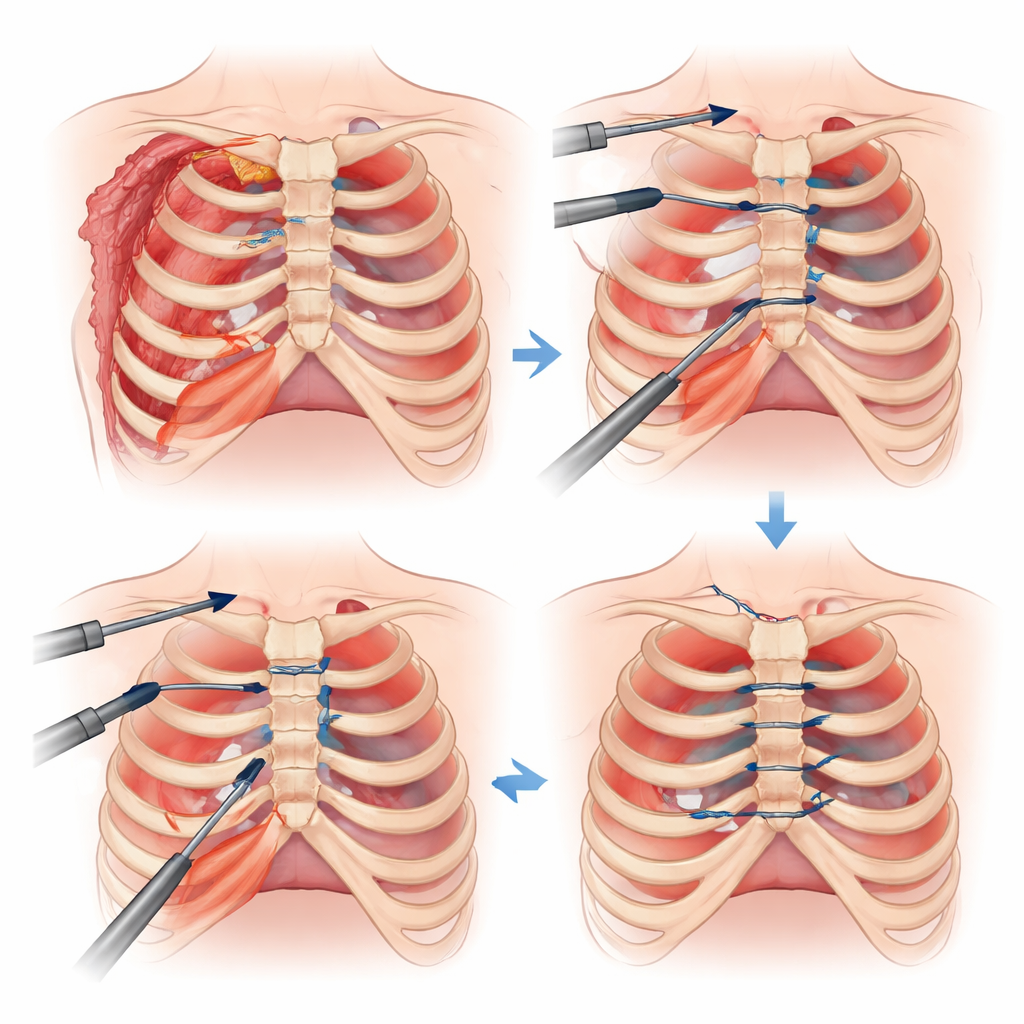
Pain relief, healing, and patient satisfaction
Where total thoracoscopic surgery stood out was in how patients felt afterward. Pain scores on day 3 and day 7 after the operation were clearly lower in this group, even though both sets of patients received the same pain medication plan. Statistical analyses suggested that the type of surgery itself—especially the shorter cuts and less muscle disruption—was linked to less pain, while age and other factors played a smaller role. Three months later, more people in the fully thoracoscopic group reported being essentially free of chest pain and breathing problems, and they were more likely to say they were highly satisfied with their recovery and the look of their scars.
What this means for future patients
For people with several broken ribs, both of these modern operations can stabilize the chest and help prevent serious breathing problems. This study suggests that, when the surgical team has the right training and equipment, doing as much as possible through tiny keyhole openings may give patients an edge: smaller wounds, less pain in the first week, and better comfort and function a few months later. Because the more advanced method takes longer and requires specialized skills, it will not be available everywhere, and the mixed small-incision approach remains a sound choice. Larger, multi-hospital studies will be needed, but for many patients the future of rib fracture surgery is likely to involve fewer stitches, easier breathing, and a smoother path back to normal life.
Citation: Huang, X., Wang, D., Jiang, X. et al. Comparative clinical study of total thoracoscopic surgery and thoracoscopy-assisted small-incision surgery for multiple rib fractures. Sci Rep 16, 14559 (2026). https://doi.org/10.1038/s41598-026-37976-z
Keywords: rib fracture surgery, minimally invasive chest surgery, thoracoscopic rib fixation, postoperative pain, trauma recovery